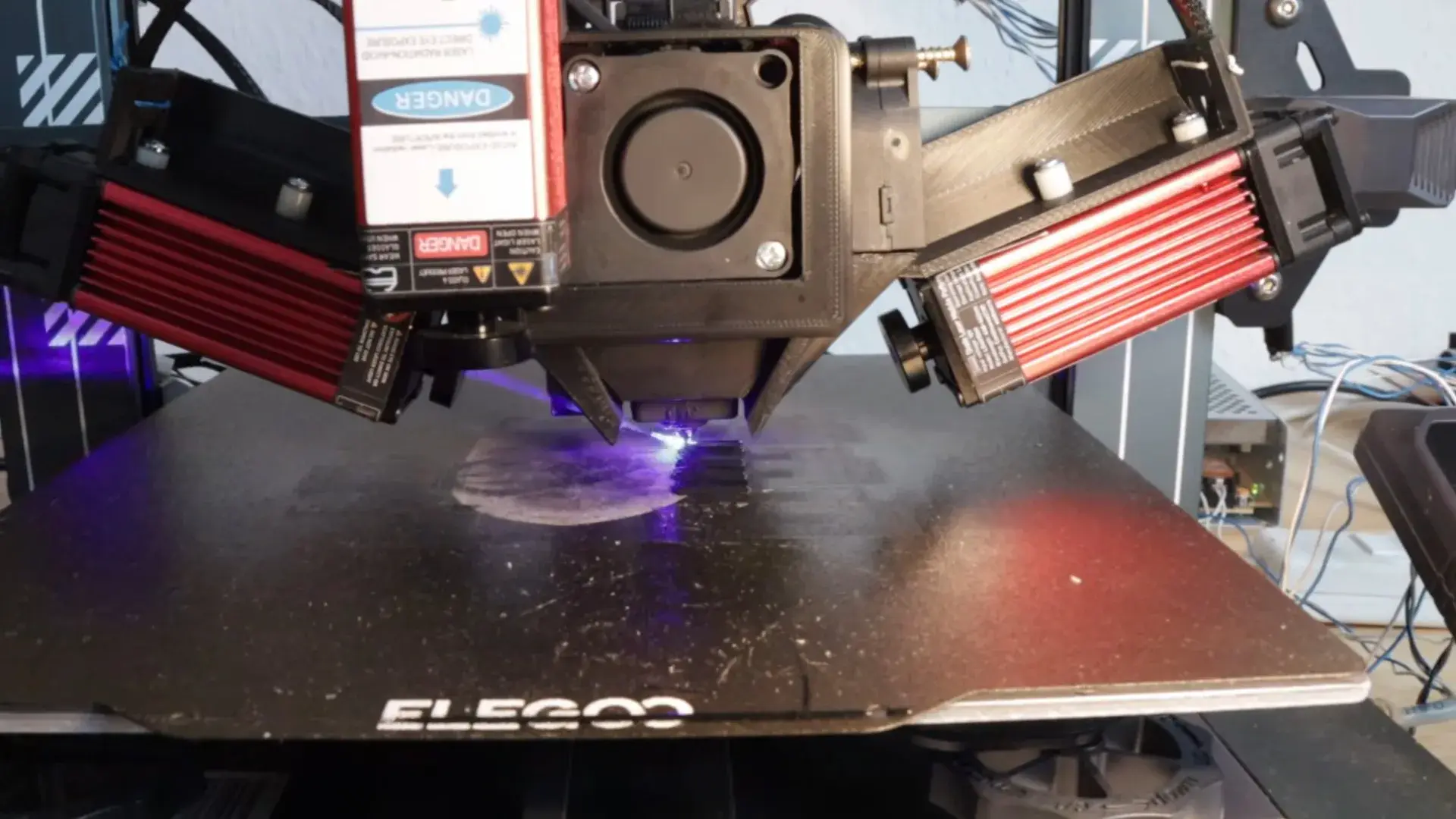
This printer already had the sensor needed to calibrate its extrusion
PrusaPATuner repurposes the Nextruder load cell to measure extrusion response and estimate Pressure Advance without adding another sensor.
Archive
IRZ archive, page 31.

PrusaPATuner repurposes the Nextruder load cell to measure extrusion response and estimate Pressure Advance without adding another sensor.

A study of 12,180 PyPI releases shows why provenance, byte-for-byte identity and build equivalence answer three different trust questions.

Augmented Carpentry adds vision, tracking and feedback to ordinary handheld power tools. A one-to-one fabrication campaign shows what this compromise gains, and where it breaks.

STL does not know the unit, color or material of your part. It turns curves into triangles and forgets almost everything about the original model. That loss is also part of why it became so hard to replace.
RYBN’s project connects human computers, Mechanical Turk and data annotation. Behind the metaphor is a practical question: where does the work that makes a system computable hide?
Carved bones, clay tablets, punched cards and human operators tell a less abstract story of data: matter that must be prepared, moved and checked.
Stewart Brand’s book and BBC series shift attention to life after handover: building layers age at different speeds, and that friction can become design material.
A deployed device cannot record everything. Its logging system must decide in advance which evidence will survive the next incident.
DS8 Drumstream does not revive the PS Vita through nostalgia. It turns its buttons, sticks and limits into an instrument grammar.
Around the TR-808, repair, extension and reconstruction are not three kinds of nostalgia. They are three ways of deciding what an instrument should remain capable of being.