Cutting a podcast usually means finding the right place in a waveform, zooming in, and hoping you recognised the right stretch of silence. Vocal Slice replaces that whole operation with something closer to editing a document: you read the transcript and select the text you want to keep.
The tool transcribes podcasts, interviews and voiceover locally — word-accurate, at source quality, fully offline.1 The transcript becomes the timeline. Highlight a passage, and the matching audio is selected; export the text you chose and you get a named, ready-to-deliver audio clip.1
It appeared on Hacker News in mid-August as a Show HN project, aimed at the very ordinary problem of cleaning up spoken audio without fighting a waveform editor.2
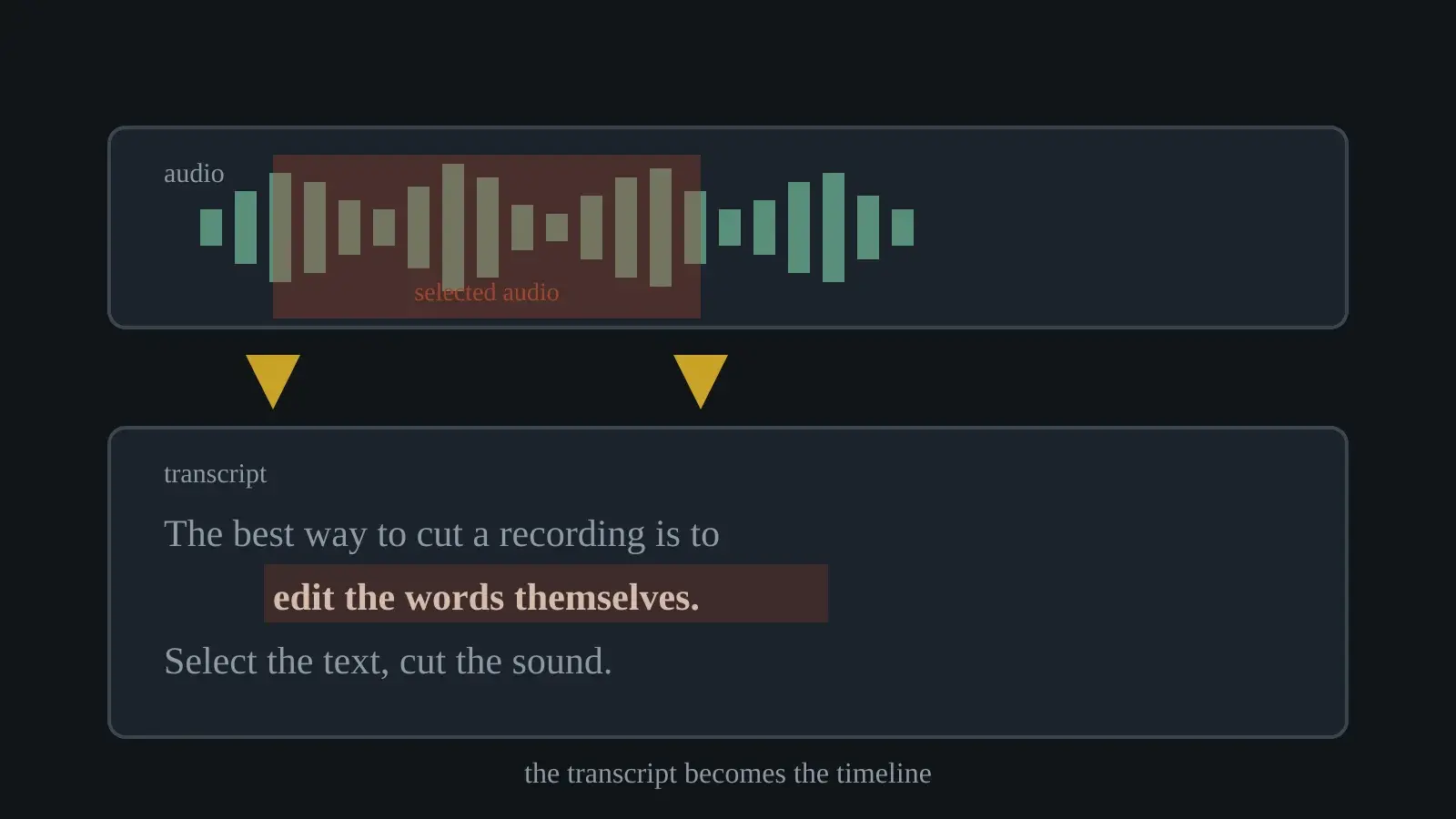
Words become controls
The shift is more than cosmetic. A waveform is a visual representation of sound; a transcript is a representation of meaning. Editing by meaning rather than by shape is a genuinely different way of working, and it is one that matches how most people actually think about what they recorded. “Remove the part where I stumbled”, not “delete the segment between 4:12 and 4:18”.
The timestamps are the technical foundation. The tool uses word-level Whisper timestamps, corrected for the lag that raw transcription output usually carries, so the text and the audio stay aligned when you select.3
No upload required
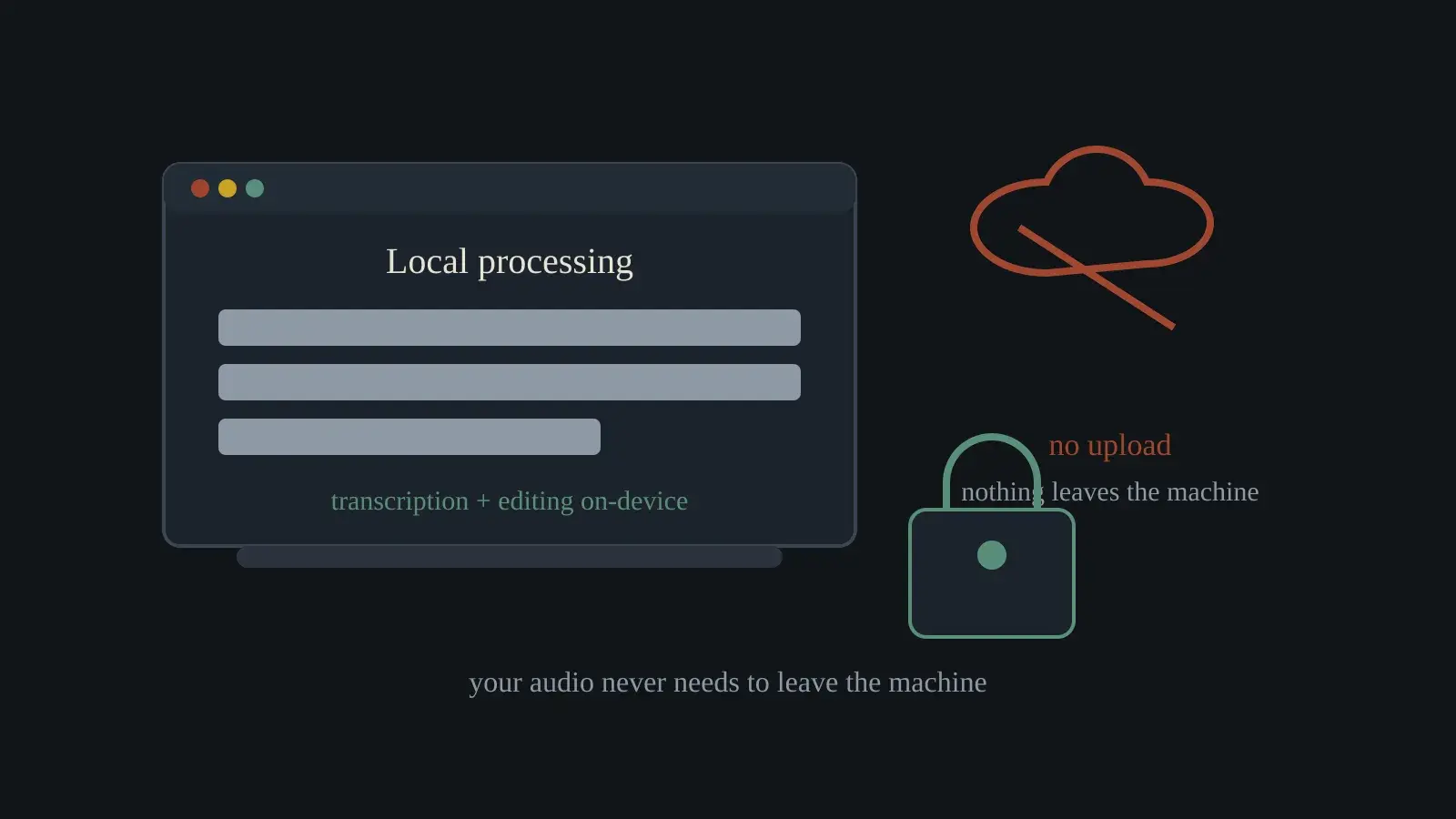
The other decision worth noting is that everything runs on-device. No upload, no cloud transcription bill, no audio leaving your machine.1 For interviews or voiceover work that is not just a privacy nicety — it removes a whole category of friction that podcasters and editors routinely accept without thinking about it.
The workflow is short: record, transcribe locally, select the words you want, export a named clip. Because the transcript carries word-level timestamps, jumping between text and audio is instant — you highlight a sentence and the matching sound is selected.3
It is a young project, so adoption and long-term reliability are still to be proven. But as a workflow idea it is a good one: take a task that has always been visual and mechanical, and let the words do the work. The waveform was never the point. The sentence was.
For podcasters and interview editors, the promise is that the hardest part of editing — finding the right moment — stops being a hunt through a waveform and becomes a reading task. And because nothing leaves the machine, the tool also removes the quiet background worry of sending raw interviews to a third party. That alone is a reason to watch where this goes.