
For four years, flashing a development board from a browser meant one thing: open Chrome. The Web Serial API, which lets a web page read and write to a serial port, has been available in Chrome since version 89 back in 2021,3 but it stayed a Chromium-only capability. With Firefox 151 for desktop, shipped in May 2026, it finally exists in a second major engine.1
For workshops, classrooms and everyone tinkering with microcontrollers, this is not a compatibility-matrix footnote. It is the end of a monopoly.
The browser as a serial port
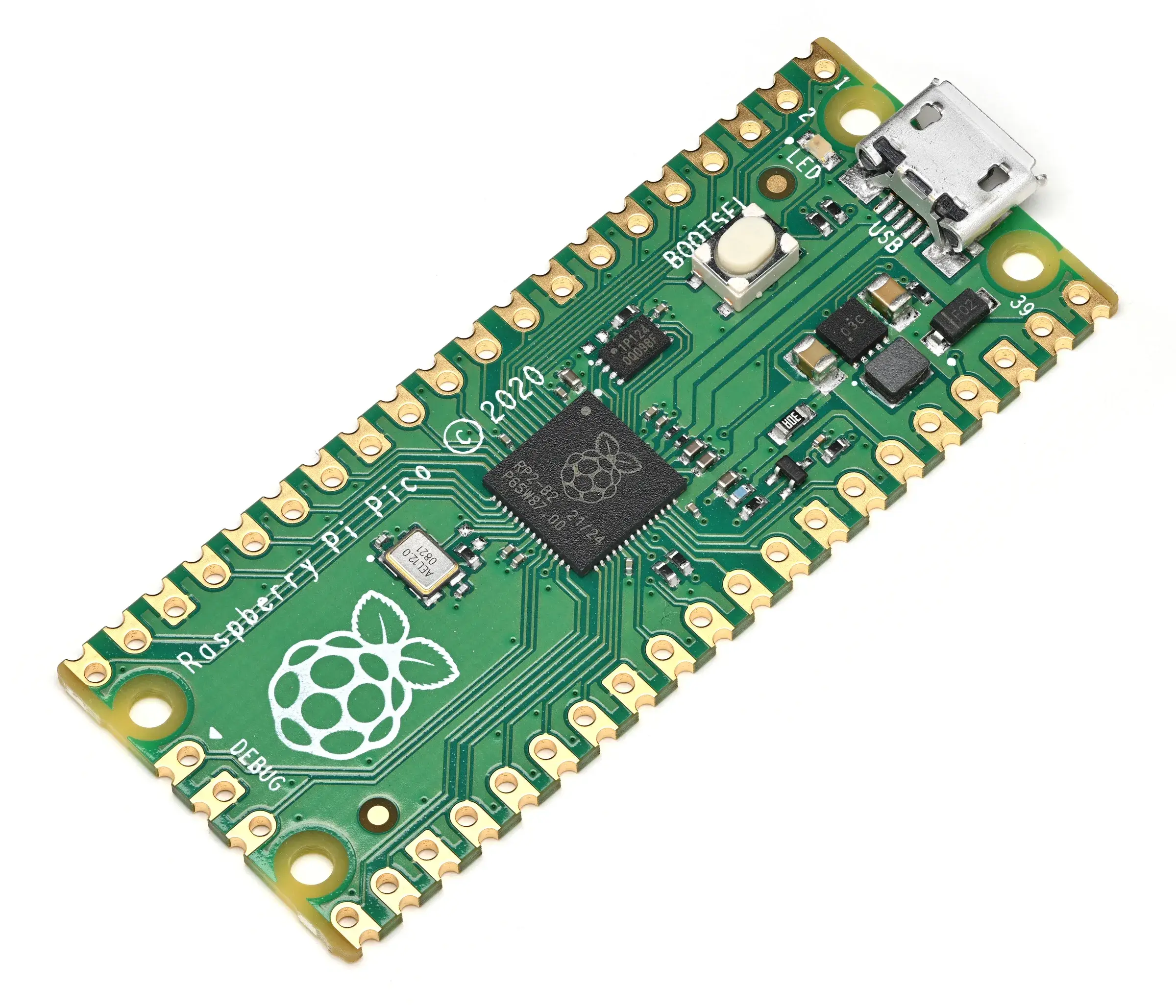
Web Serial lets JavaScript talk to devices that advertise themselves as serial ports, whether plugged in over USB or paired over Bluetooth.2 In practice, the hardware list reads like a maker's drawer inventory: Espressif ESP32 boards, Raspberry Pi Picos, 3D printers, LEGO modules, USB power meters.1
Mozilla worked with Adafruit to test the implementation against real workflows. The most telling example: installing CircuitPython on an ESP32-S2 board straight from Firefox through Adafruit's web tool, then having a web page talk to the Python program running on the board.1 No native installer, no vendor driver.
Mozilla also demonstrated a less obvious use. Engineer Florian Quèze reads live power consumption from an off-the-shelf USB meter, plots the curve in a page, then exports everything into the Firefox Profiler. Three meter models were validated, including the AVHzY C3 and Joy-IT TC66C.1 A piece of bench hardware becomes a web sensor.
The price of access
The most interesting part is not the demos; it is the prompt. A site sees no serial ports until the user says yes. The request goes through navigator.serial.requestPort(), which opens a picker where you choose exactly which port to allow, per site and per port. The browser hands out no list of connected devices, so there is no useful fingerprinting material beyond the port you picked.1
Firefox adds a layer of its own: an explanatory screen shown before the picker the first time a site asks, the same “gating” mechanism introduced for Web MIDI. And on managed machines, the feature is disabled by default in enterprise policies, controllable through DefaultSerialGuardSetting.1
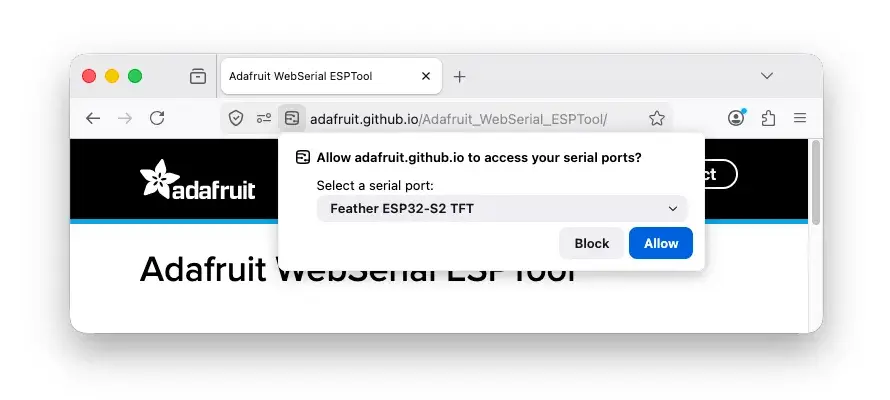
This model deserves a close look because it settles a real question: how do you give the web access to hardware without turning every page into one giant USB cable? Mozilla's answer keeps a human in the loop at the exact moment a page becomes dangerous, instead of blocking the whole capability.
What changes for workshops
For five years, web-based flashing and configuration tools had to document an absurd constraint: “use Chrome”. The affected projects are not marginal. ESPHome, which builds Home Assistant-compatible firmware for home automation, installs and configures boards in a few clicks over Web Serial.1 The web installers for CircuitPython, Arduino and educational frameworks all rest on this API.
A second engine supporting it changes three concrete things: Firefox users no longer switch browsers to tinker, the tools' developers can escape single-browser testing, and Linux distributions or environments that avoid Chromium keep a native option.
Standardization pending
One important caveat: Web Serial is still not a finished standard. The API lives in incubation at the WICG, and Safari does not support it.4 Mozilla is pushing a proposal to standardize it in the WHATWG through a new workstream dedicated to peripherals.5 The battle is not technical but institutional: deciding which body sets the rules for hardware access from the web.
For a maker, all of this fits in one sentence: next time a tutorial tells you to open Chrome to flash a board, check whether Firefox already does it. Increasingly often, the answer will be yes.