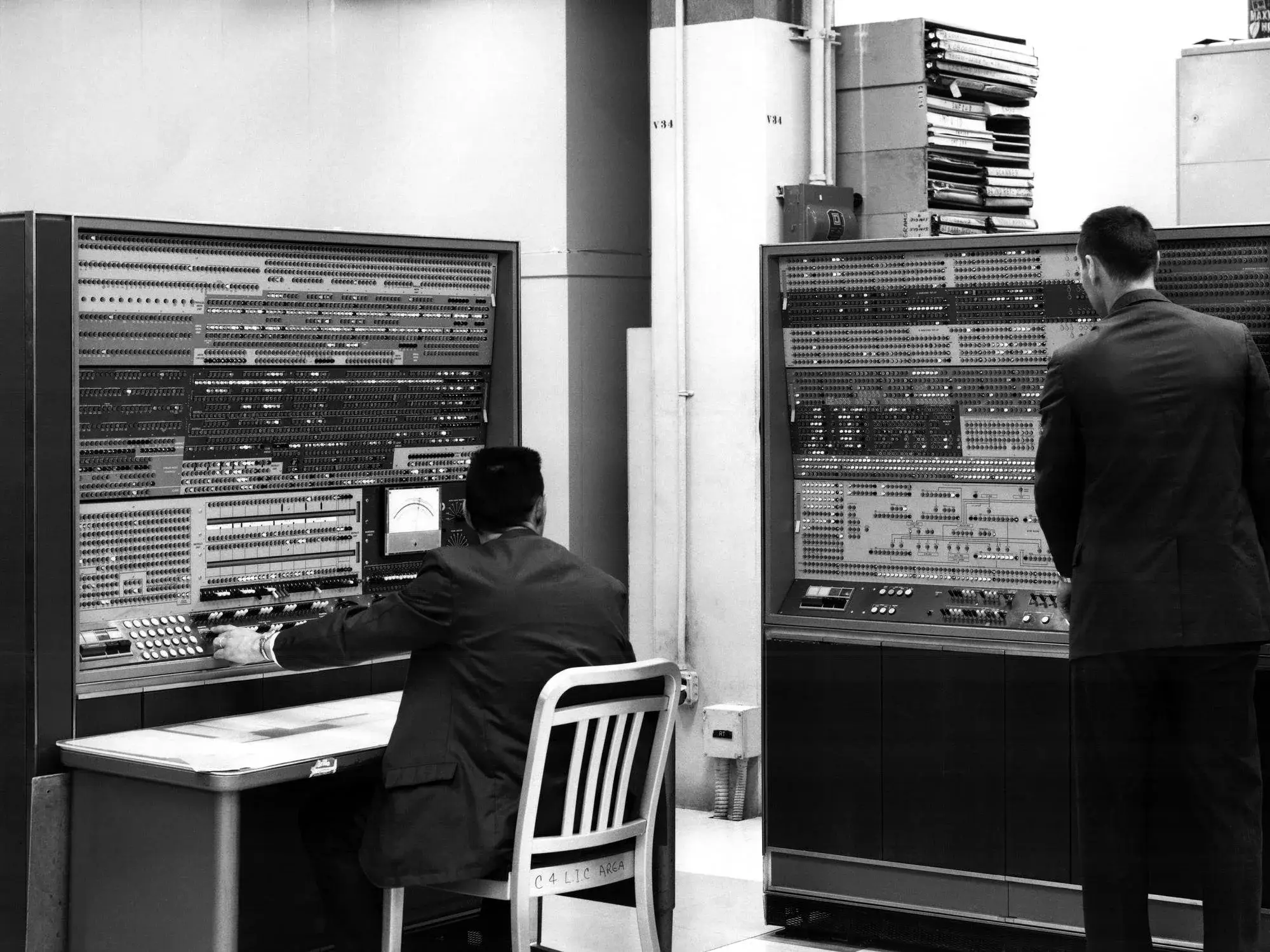
On February 27, 1976, operators at the NSA shut down a computer the general public would only learn about decades later. It did not die because technology moved past it. A custom mechanical part inside its tape library wore out, the company that made that part had gone out of business, and nobody could build another.1
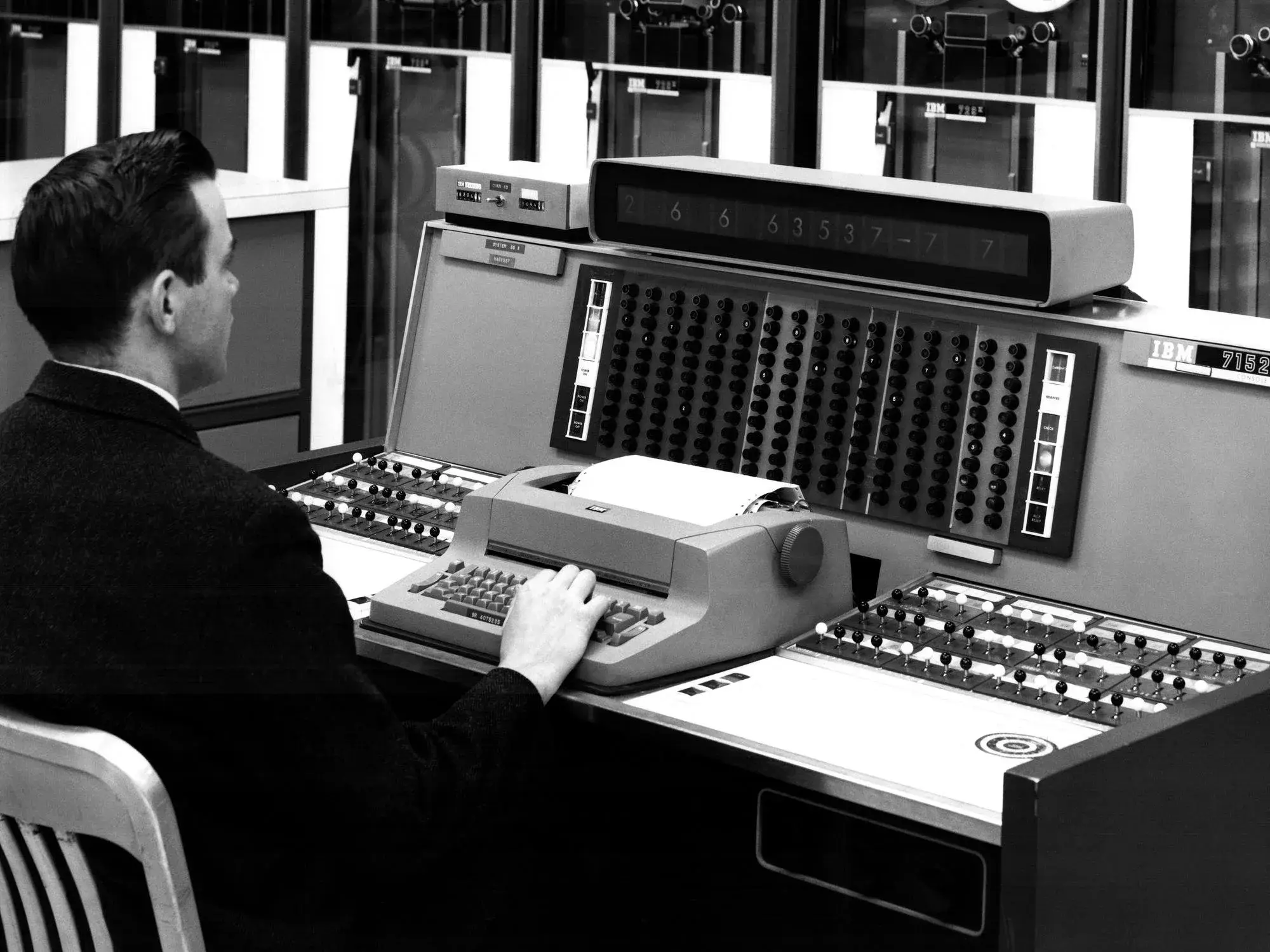
Fourteen years earlier, this same machine was running as the main cryptographic processor of an agency so quiet even its suppliers didn't know what they were supplying. Harvest, officially the IBM 7950, ran some tasks up to 200 times faster than any other computer on Earth, on the most sensitive intercepts of the Cold War, from the 1962 Cuban Missile Crisis through the 1975 Helsinki Accords.19
The story just resurfaced: IEEE Spectrum published a long feature on the machine this month, built on declassified and digitized NARA records, and a 2025 ACM Transactions on Storage article formally credits its Tractor tape system as the world's first automated tape library.15 The declassified 1960 system manual even lets you follow the coprocessor's logic step by step.3 The secrecy itself is old news by now. What grips you in this dossier is watching engineers reason their way through constraints, component by component, and realizing each of those reasons still applies if you build tools today.
An impossible commission
In the early 1960s, the NSA was drowning in intercepted traffic. Its cryptanalytic computers were batch machines where operators manually mounted tapes, one run after another. The volume of messages captured around the world had outgrown what that human chain could absorb.1
The agency wanted something else entirely: a system that could swallow a continuous river of data, automatically, around the clock. That single requirement shaped the whole architecture. IBM took two rejections before landing the contract in 1958: a machine based on Stretch, its coming scientific giant, augmented by a custom coprocessor and a radically new tape storage system.1
Work started so early that a preliminary manual of the Harvest system shows up at IBM in May 1957, when the Stretch project itself existed mostly on paper.28 Meanwhile in Poughkeepsie, the team led by Stephen Dunwell recruited Fred Brooks, John Cocke and Jim Pomerene to build what was supposed to be a hundred times faster than the IBM 704.8
Dunwell's own background carries a certain irony. Before IBM, the Army Signal Corps had recruited him in 1942 as technical director of the machine branch of a new US cryptographic center; he ended the war a lieutenant colonel.8 The man steering the project that produced the NSA's code breaker knew exactly, from firsthand experience, what processing masses of intercepted traffic meant.
In 1957, an internal committee called "Three-in-One" even tried to split the work into three sibling machines: a common base, a scientific processor named Sigma for Los Alamos, and the specialized Harvest processor for the NSA. The approach was adopted in June 1957 and dropped in April 1958, but it left a durable mark: Harvest kept precisely that structure of a Stretch plus a dedicated processor.8
A temperamental host
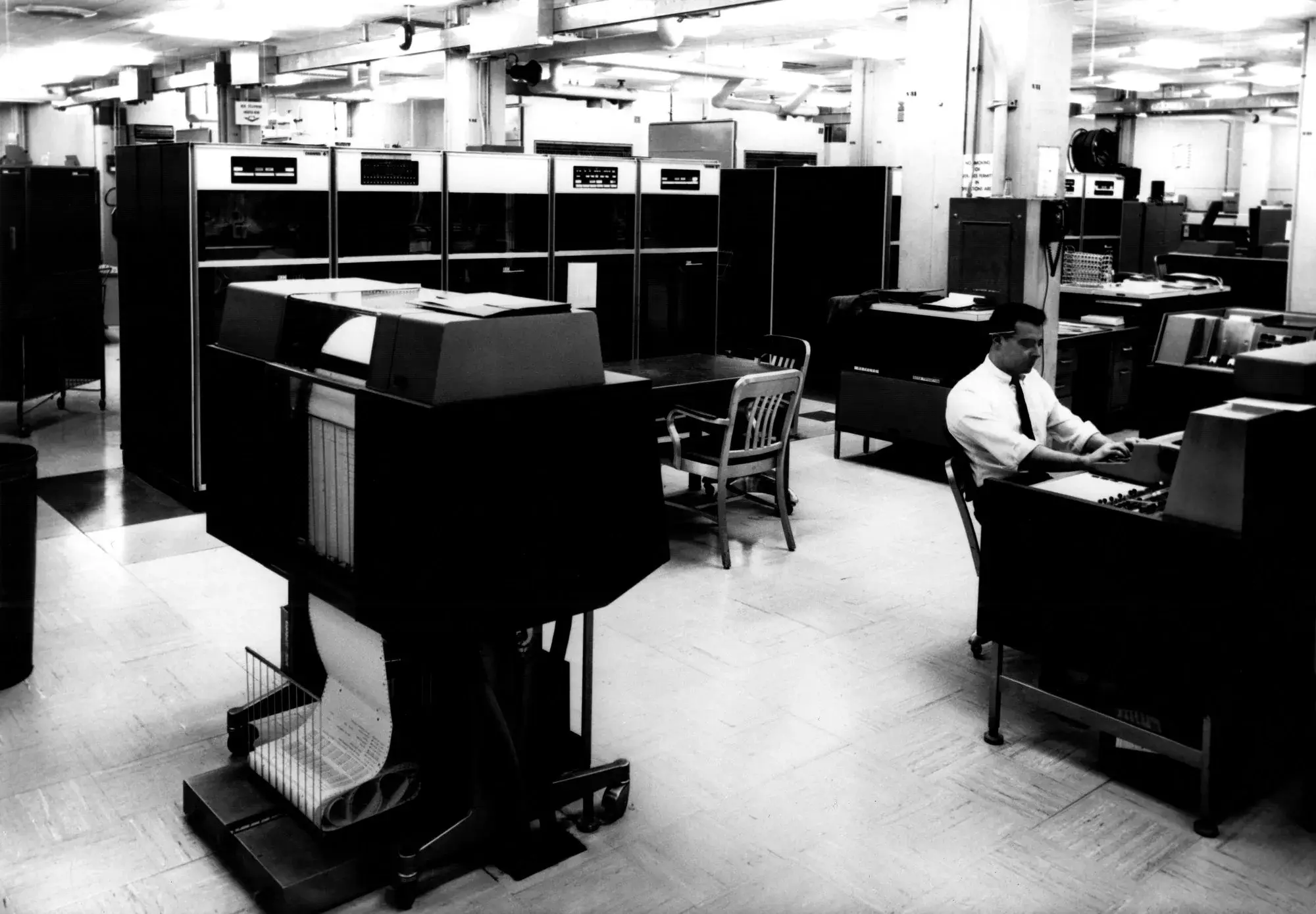
To understand Harvest you have to understand its host. IBM delivered the 7030 Stretch to eight or nine customers starting in 1961, mostly weapons labs and weather services. It was among the first large fully transistorized computers, the machine that introduced what became the standard 8-bit byte, packed with instruction look-ahead ideas that foreshadow modern processors.1[8](#ref-8]
Stretch was also a spectacular commercial failure. IBM had promised a hundred times the speed of the IBM 704; benchmarks delivered much less, and Tom Watson Jr. cut prices then withdrew the machine from sale in May 1961.8 Frances Allen, who worked on the compiler, recalls that an early version of weather prediction took 18 hours to forecast 24 hours.4
For the NSA, none of those flaws mattered much. Stretch remained the non-classified world's fastest computer through its first years, and its specialty, floating-point scientific computing, wasn't even what the agency wanted. It needed to sort and compare characters, intercepted text. Hence the graft.
The whole system shared two memories: a large main bank and a smaller, faster one, accessible to both units. When Stretch switched to streaming mode, it suspended itself and let the coprocessor tear through memory at full speed. One worked or the other did, never both at once.1 A brutal arbitration scheme, but it eliminated every access conflict in a machine where each microsecond counted.
Seven instructions
The coprocessor bolted onto Stretch, the IBM 7951, was the opposite of a general-purpose processor. It didn't run varied programs: it followed one fixed sequence of steps and applied it to everything streaming past. A streaming computer, in today's vocabulary.1
The mechanism deserves the detour, because it prefigures what we now call a pipeline. While one pair of bytes was being compared, the next pair was already being fetched from memory. Nothing waited for anything. The coprocessor pulled two data streams, P and Q, from the memory it shared with Stretch, applied its operations, and wrote results back as a third stream, R. Each stream could be anywhere from 1 to 8 bits wide, and memory was bit-addressable: you could ask for exactly 5 bits without filling a byte.1
Two functional units did the actual work. The simpler one performed the bitwise logic operations any programmer would recognize today. The stranger one was a table-lookup unit: it combined data from P and Q to form a memory address, then used that address to bump a counter, set a bit, or fetch a stored value. Spectrum likens its role to the rotor wheel of a cipher machine, the electromechanical substitute of one value for another.1
Frances Allen, who would become the first woman to receive the Turing Award in 2006, described an almost unclassifiable machine: roughly seven instructions, thousands of variants, and instructions that could keep running for hours. "One instruction could do sorts, and do statistical analysis of the data that was streaming by it," she recalled in 2001.4 All of it moving one byte every 0.3 microseconds, around three million characters per second, against roughly 800 kilobytes of addressable memory held in six magnetic-core banks submerged in oil baths to manage the heat.19
An anecdote recorded by historian James Bamford shows how much the beast unsettled its own owners. During employee tours, agency officials would point at the machine and sneer: "It's beautiful, but it doesn't work." It worked. Nobody else had ever built anything like it.6
The robot librarian
Having the fastest computation in the world means nothing if the data never arrives. In 1962 disk storage was in its infancy: costly and tiny next to the mountains of intercepted text. Storage therefore meant tape, with one radical twist.1
The Tractor system, IBM 7955, is what the ACM Transactions on Storage now recognizes as the first automated tape library in history: a servo-driven robotic arm traveled racks of cassettes, grabbed the right one, delivered it to a reader, collected the finished one. No human hands between job and data.51
The cassettes themselves are worth a look. Each one resembled a boombox before boomboxes: twin reels under a window, a carrying handle, six to seven kilograms on the scale, roughly a bowling ball. Inside sat 550 meters of 1.75-inch tape holding some 120 megabytes. Each storage unit held up to 160 of them.15
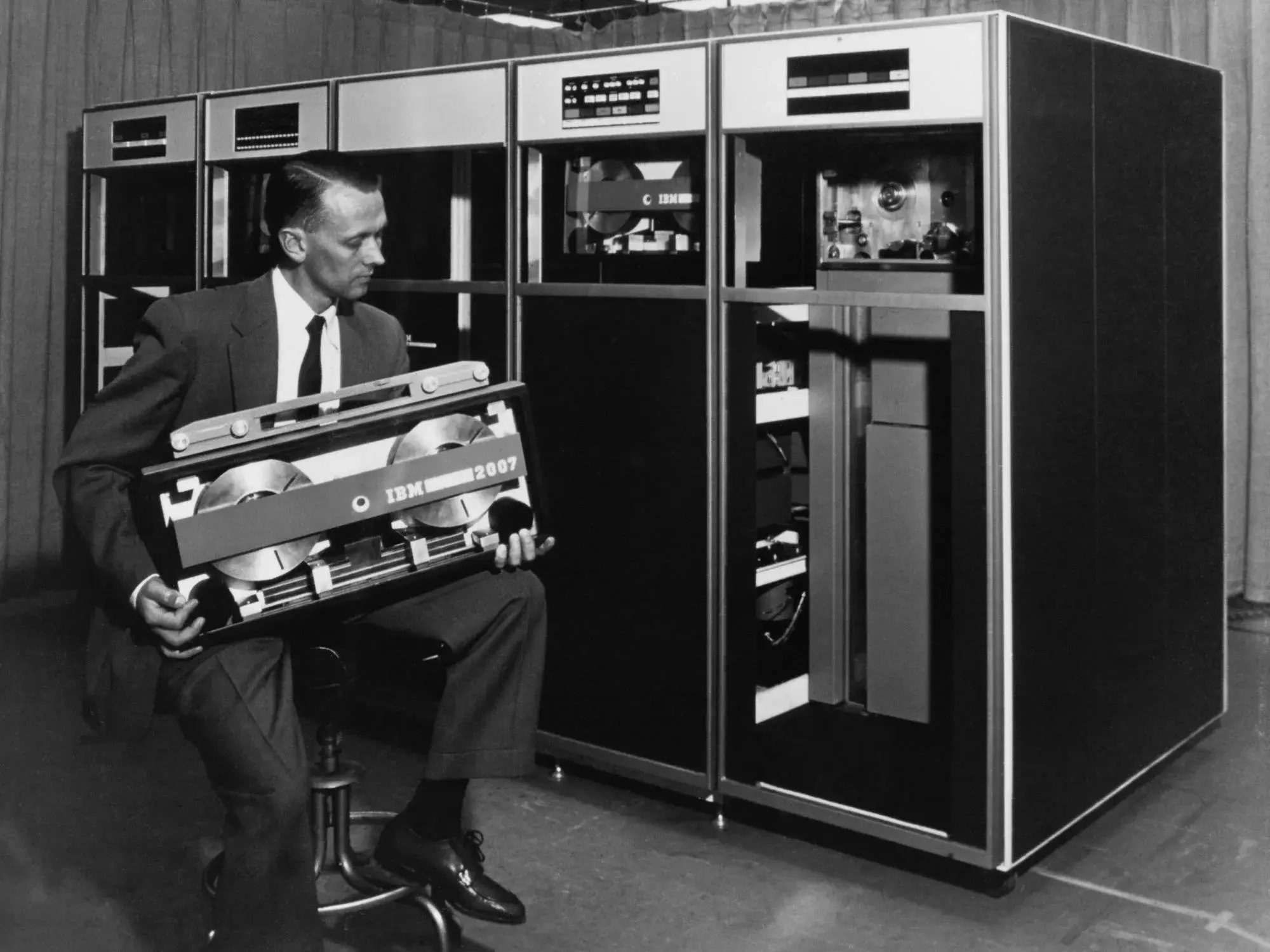
At launch, three automated cartridge units served six drives, giving 44 gigabytes accessible online.7 For scale: the IBM 2314 disk system announced in 1965, among the largest on the market, offered 233 megabytes across eight drives. The NSA's tape library carried about 190 times more accessible data, four years earlier.1
Pacing matched the machine's appetite. Tape ran at 6 meters per second, faster than the eye could follow. Moving from one cassette to the next took about 18 seconds when the cassette had already been fetched and was ready to mount.1 And the system ran like that 24 hours a day, seven days a week: Tractor doubled as permanent storage, where old files were retrieved, and as a giant working memory for jobs in progress. In a typical 1962 computing center, "available data" meant racks of reels an operator fetched one at a time.1
One operational detail says a lot: alongside Tractor, the system kept conventional open-reel drives attached to Stretch. Imports and exports went through them; there was no other practical way to move large datasets into or out of the machine.1 Even the most automated library of its era needed an ordinary door to talk to neighboring systems.
It took until 1987 and the StorageTek 4400 for an automated tape library to become a commercial success, with its robotic silos and its "nearline" storage concept. Between Tractor and broad adoption, some thirty years passed. Exactly one unit of the original system was ever built.5
The lineage didn't stop there. Modern libraries reach tens of thousands of slots and more than a hundred drives per system, and the 2025 ACM article still devotes its closing sections to tape's archival use cases: sixty years after Tractor, the same medium remains the economical answer to the same problem, keeping enormous amounts of data reachable without paying disk prices.5 The mechanism changed; the reasoning didn't.
Naming the unknown
One problem the hardware couldn't solve remained: how do you describe cryptanalysis to a streaming machine? IBM and the NSA designed a dedicated language together, Alpha. According to a declassified Pentagon history, the acronym stood for Advanced Language for Programming Harvest. Frances Allen, who developed part of the compiler and spent about a year on site during installation, remembered Alpha standing for nothing at all. The gap between documents and memory is part of the record.14
The language let programmers define the alphabet the data would be processed in, and introduced two characters with no equivalent in civilian computing of the era. The "scab", typed as a question mark on the console, marked a character that was real but unknown. The "pad", a blank space, marked an intentional void. Rules governed how those unknowns propagated through computations, anticipating what computing would later call NaN. Strings aggregated into cords, cords into ropes: a hierarchical vocabulary for describing complex intercepts.1
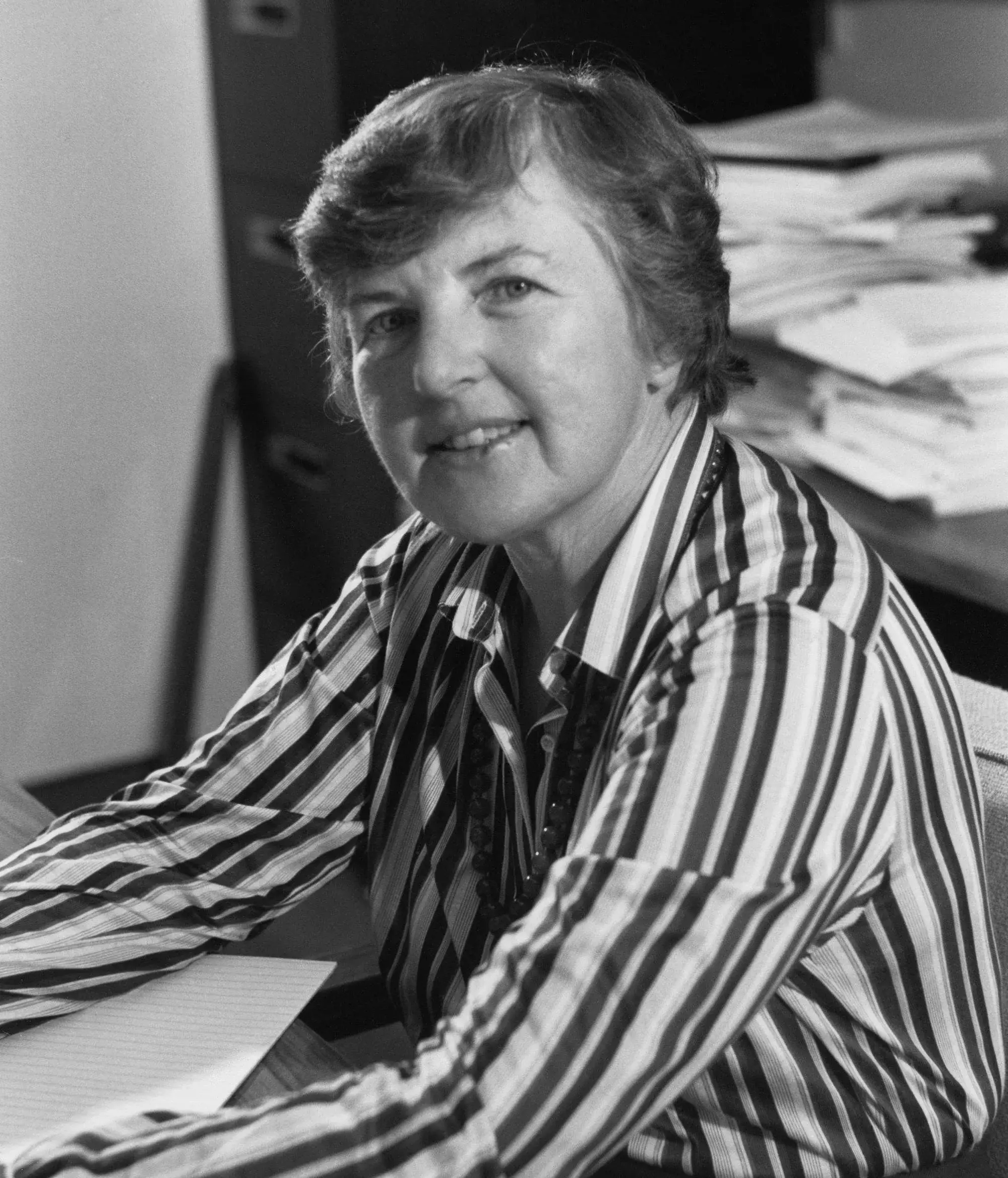
Allen also told the story of secrecy lived from inside. When she started, the NSA was unknown outside classified circles. "We thought of ourselves as working for the Bureau of Ships, because that was the code name for NSA in the budget!"4 At the end of the project she wrote the final technical report on her portion of the software, several months of work. It promptly disappeared into the archives at Fort Meade, inaccessible even to its author. The NSA people went on to develop their own successor language, Beta, without IBM.4
Eleven million messages
What did all this actually deliver? Documented examples are rare, but enough to gauge the scale. Bamford reports one case where the machine searched 3.5 billion characters for 7,000 target terms in just under four hours.6
Robert Looney, an agency analyst, described in unclassified 1972 remarks a job codenamed "Moretown": eleven million messages spanning sixteen years of intercepted traffic, checked against a list of some 8,000 search terms, in about ten hours.1 By 1971 the machine was running 115 hours of production per week, more than two-thirds of the time. Yet since 1967 the number of jobs had been dropping: ordinary work migrated to newer general-purpose machines, leaving Harvest the heavy jobs nobody else could carry.1
That trajectory defined its strange destiny: a machine so specialized it became irreplaceable precisely because it was useless for everyday work. On its tenth anniversary, Looney concluded that Harvest had been "conceived in the fifties, born in the sixties, and irreplaceable in the seventies". He got the last part wrong.1
Killed by one part
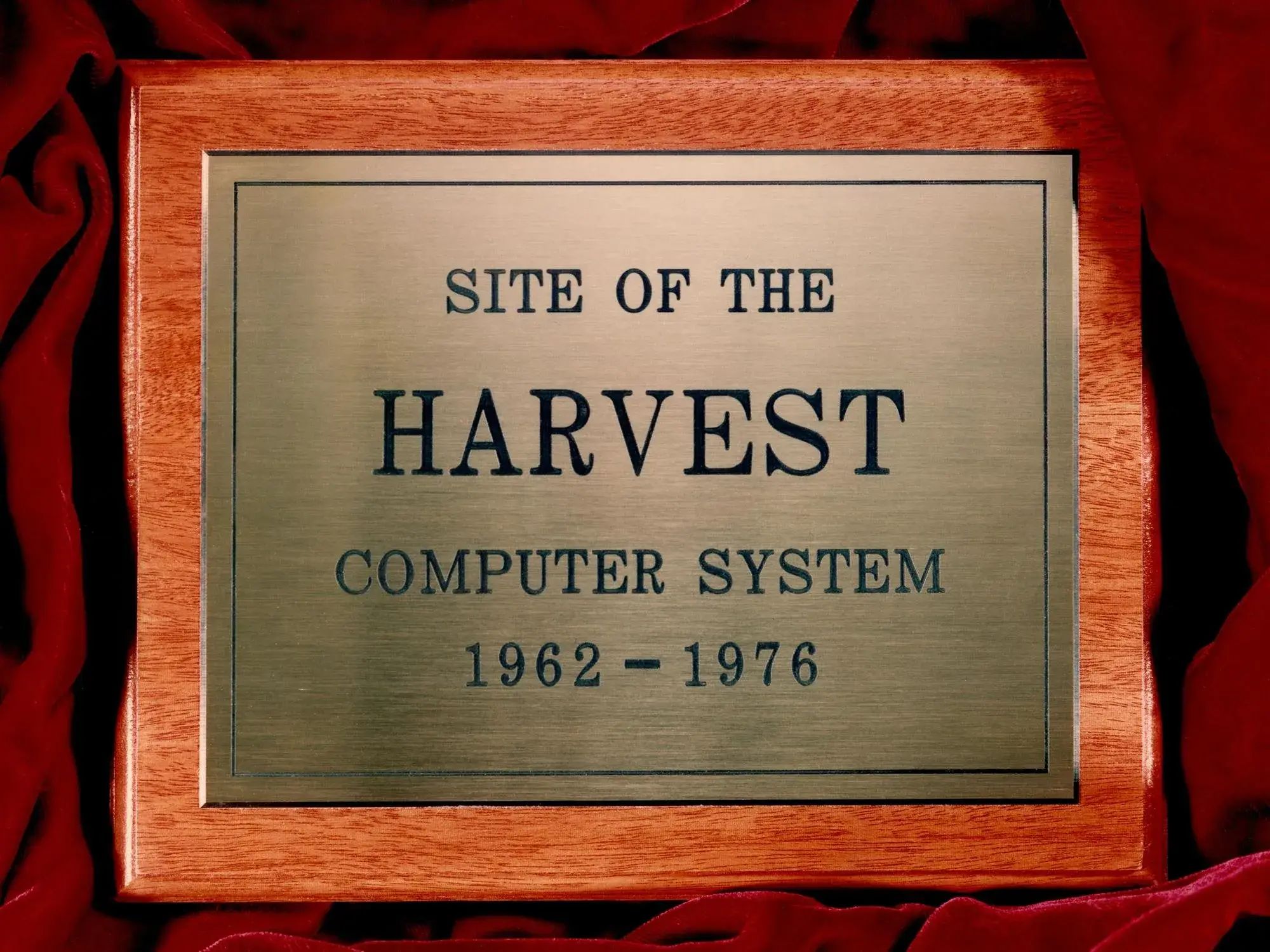
On February 27, 1976, operators shut the machine down for good. The cause fits in one sentence: a custom mechanical component of the Tractor library had worn out, and its manufacturer had vanished. IBM declined to rebuild the architecture in modern technology. Fourteen years of service, ended by an unfindable spare part.19
Someone at the agency decided to commemorate the machine with a mock telegram written in its name, preserved today in the agency's archives: "Although not widely known, I was probably the largest, fastest, and most technically advanced computer system in the world. And now, fourteen years later, the time to retire has come."1
The NSA replaced it with a Cray-1. The reasoning behind the replacement is almost more instructive than the one behind the construction: the Cray, built for numeric computing, sold enough units to enough customers to justify its upkeep and evolution. Harvest's custom text-processing hardware had exactly one customer, and one customer stops being enough once maintenance outweighs technological advantage.1
What survived
Secrecy cut Harvest off from any direct lineage. No manufacturer could openly learn from it, because nobody knew it existed. But the ideas resurfaced anyway.1
Tractor's automated library anticipated the robotic storage silos that became standard in enterprise data centers through the 1980s.15 The coprocessor's pipeline architecture prefigured the dataflow computing movement of the eighties. And the continuous pattern-detecting logic of its match units echoes directly in hardware packet inspection, the intrusion detectors and programmable network switches that route today's Internet traffic at wire speed.1
Wikipedia adds a quieter but telling trace: the Harvest-RYE setup appears in a 1972 review as one of the first two attempts at multi-level security, a concept now central to computer security.9
And the overall pattern became the very fabric of modern computing: a general-purpose processor delegating intensive loads to a specialized accelerator. That is exactly the relationship between a CPU and a GPU today. Harvest practiced it in 1962, for a single mission, with no way for anyone to know.1
Take, and leave
Three lessons survive, and they speak directly to people who build tools.
First: the bottleneck wasn't where you'd expect. IBM didn't start by accelerating computation; it automated the logistics of data, the tape swapping, the staging. The gain came from removing human hands between steps, not just from faster transistors. The equivalent question for a current project isn't "which framework is fastest" but "whose hands still pass between two of my steps".
Second: extreme specialization has a cost that only shows up years later. A unique part, custom-made by an isolated supplier, becomes the failure point of the entire system. Fourteen years of service came to an end because one component had lost its maker, plain and simple. Any small-scale production shop lives the same tension between millimeter-level optimization and the ability to repair.
Third, transmission. Alpha, the dedicated language, rigorously described problems nobody knew how to formulate otherwise, yet Allen's final report vanished into an unreachable archive and the architecture was never published. A secret machine transmits nothing. That may be the real difference between a feat and a process: a process can be handed down, a feat merely happened.
Sources and method
The facts in this article rest mainly on the IEEE Spectrum dossier by Peter Capek, a retired IBM engineer who worked alongside Harvest's creators, which synthesizes declassified NARA records digitized on fpgacpu.ca, the Frances Allen oral history (2001) and National Cryptologic Museum archives. The storage figures and Tractor's designation as the first automated library come from "Magnetic Tape Storage Technology" in the ACM Transactions on Storage (2025). Job examples come from Bamford (2001) and Robert Looney's remarks as reported by Spectrum. The National Cryptologic Museum exhibit cited by the original issue was unreachable during verification (server error); no fact is attributed to it alone, with the StorageTek bridge carried by the ACM source.