Saying “that color” to someone standing next to you is easy. You point at the sample. Saying the same thing to a printer, textile manufacturer or supplier thousands of kilometers away is harder. The screen is different, the paper is different, the ink is different and the light is different. Even the word “red” becomes dangerously vague once a production chain enters the room.
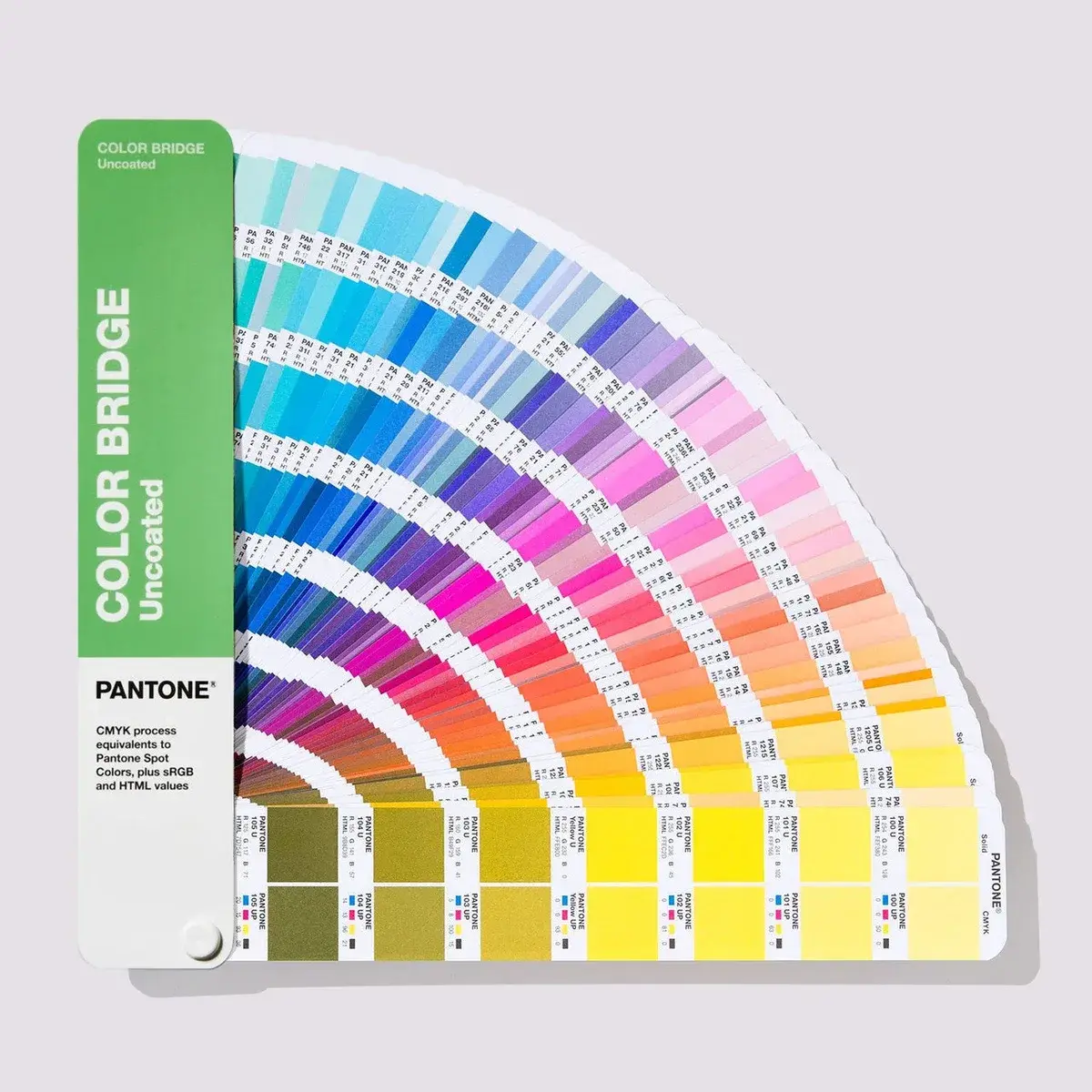
Pantone built a business around that coordination problem. Its systems give designers and manufacturers a common language for specifying and controlling color across workflows.12 What Pantone sells is therefore not merely a catalog of attractive shades. It sells the ability for several actors to work separately while aiming at the same reference.
The distinction matters: Pantone does not own the colors of the world. It owns and licenses, among other things, its proprietary numbering system and trademarks, along with the data and tools that embody its standards.14 Its digital “Master Standard” uses spectral data established for Pantone Matching System colors under specified substrate, printing, ink and press conditions.13
That detail changes the subject. A standardized color is not an abstract essence. It is a target defined precisely enough that several people can test whether they are talking about the same thing. The standard does not eliminate material reality; it organizes agreement around it.
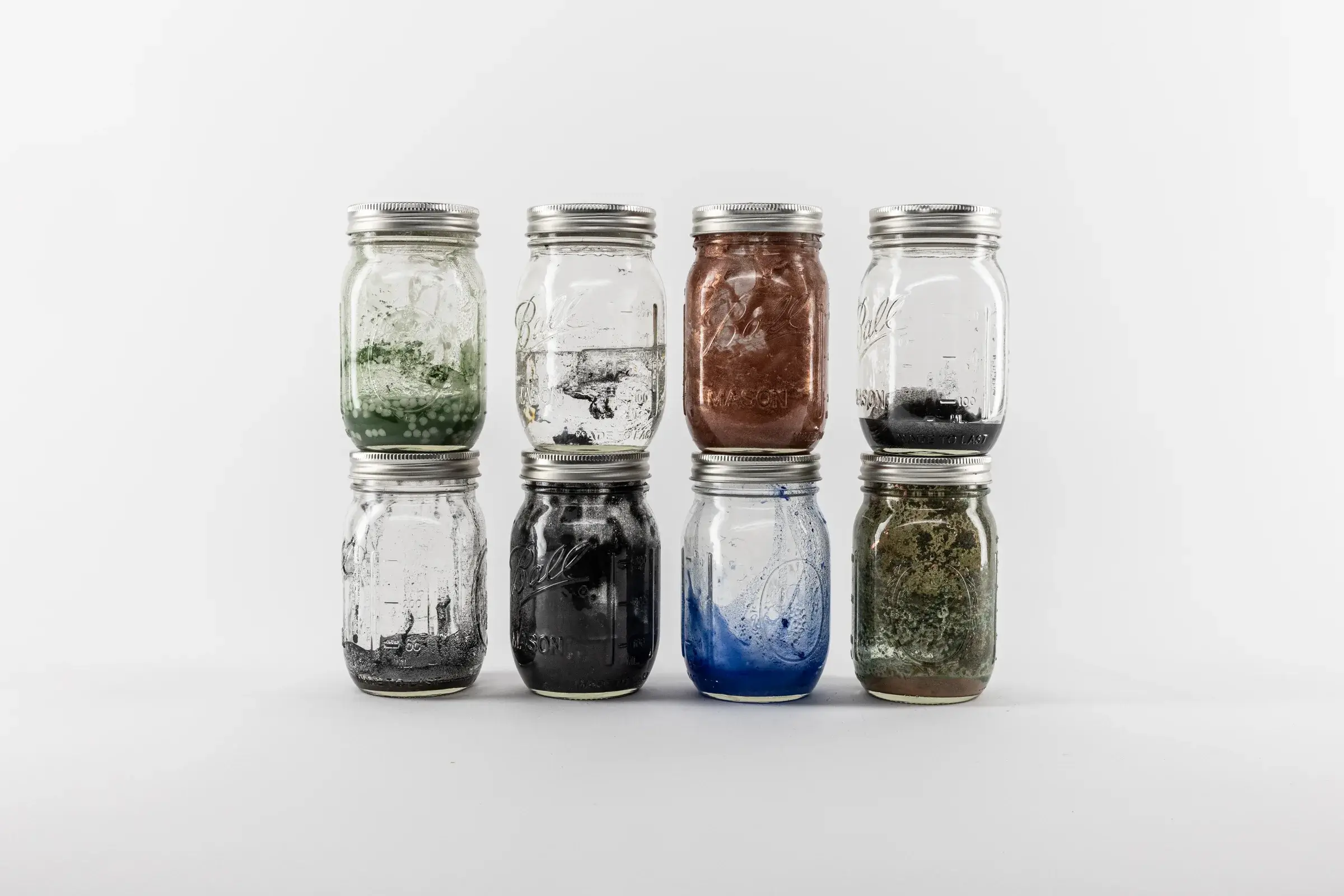
Sophia Collender's Experimental Paint Archive approaches the same problem from the opposite direction. It contains 28 paints, gels, pigment skins and functional materials and invites visitors to submit experiments of their own.1 Collender describes it as an open-source collection of biodegradable, non-toxic and reusable fine-art materials.1 designboom frames it as an attempt to bring some material-making back into the studio, using relatively accessible combinations of pigments, binders and vehicles.2
The idea is attractive. A tube of paint hides a small industry: formulation, pigment dispersion, binder choice, rheology, preservatives, drying, stability and labeling. Publishing a recipe sounds like doing to paint what GitHub did to software: open the box, let other people reproduce it, modify it and learn from it.
Then you click a recipe.
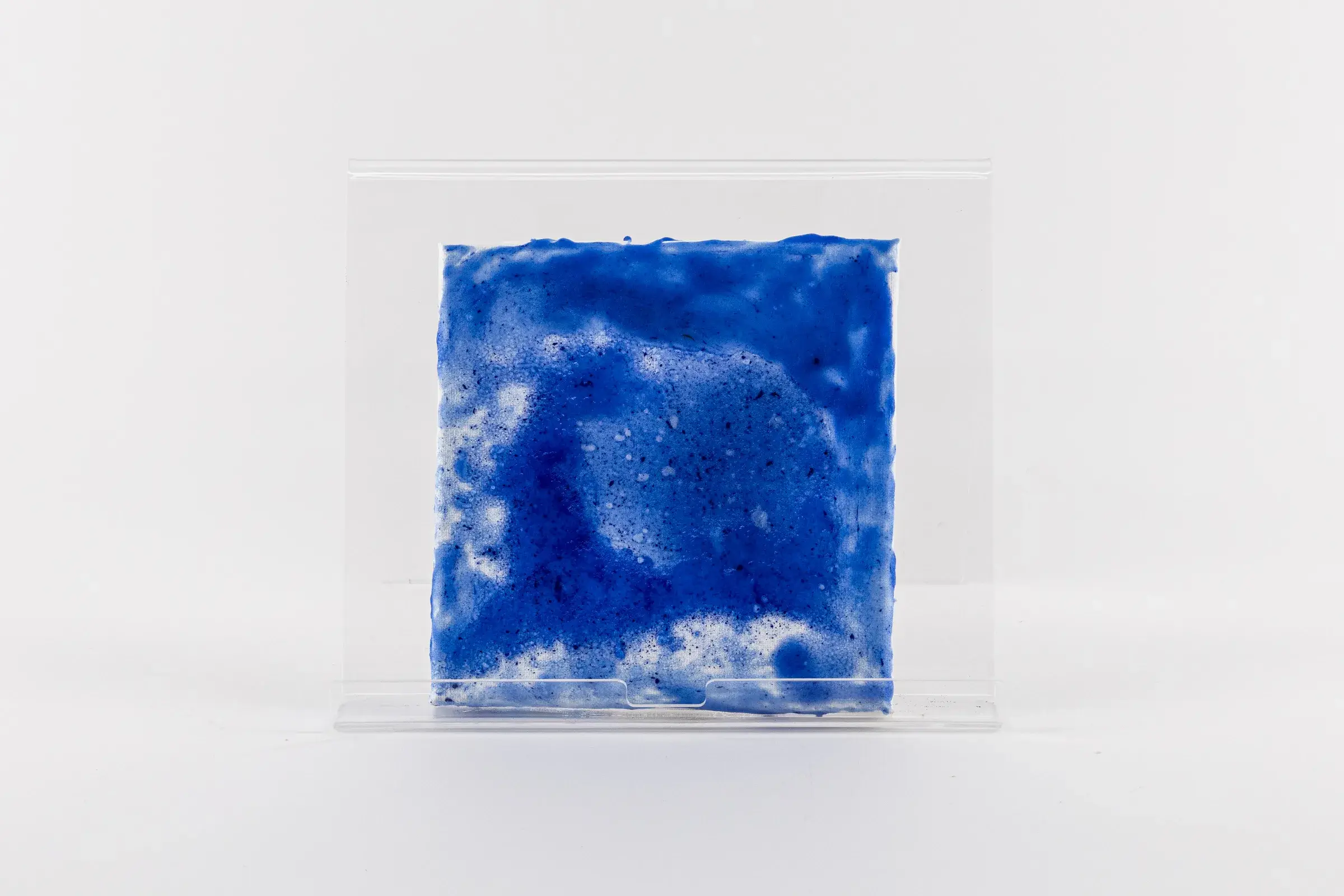
Salt Blue lists salt, ultramarine pigment, glycerin and xanthan gum. The method is “cold mix.” A note warns that too much glycerin prevents the piece from drying completely.3
That is useful information. It is also a long way from a fully reproducible process.
How much pigment? What ratio of glycerin to gum? In what order are the ingredients added? What particle size? How long is the material mixed? At what temperature and humidity did it dry? On what substrate? Six months later, does the film crack, remain tacky or shift color?
Those gaps do not make the archive useless. They reveal a more interesting problem: opening a material is harder than opening a file. Pantone reveals the other half: precise documentation is not sufficient either. Other people must accept the reference.
What Pantone sells
A standard becomes powerful when people no longer need to verify everything from first principles. If a designer specifies a Pantone reference and the printer uses the same system, each side relies on a chain of conventions, samples, measurements and procedures neither personally reconstructed. Pantone itself describes its systems as a universal language of color and explicitly licenses their use for matching inks, paints, fabrics, plastics and other materials.1214
That is a circle of trust. The point is operational trust: the designer trusts the reference, the printer trusts the formulation and controls, and the client trusts that both are speaking the same language. Nobody has to redefine color from scratch for every job.
The system works because that trust is collective. A perfectly measured swatch book that nobody else uses can still be useless. An imperfect standard understood across an entire supply chain can become extraordinarily powerful. The precision of the reference matters. So does the number of actors willing to coordinate around it.
Banknote, meter, padlock
Color is not the only field where an object becomes useful because a group accepts the convention around it. Money is the clearest example. Modern banknotes are no longer claims redeemable for a fixed amount of gold. The Bank of England explains that money works because people trust its value and expect others to accept it in turn.16 The paper matters little without the institution, stability and social agreement that give it function.
The meter tells a more technical version of the same story. Since 2019, SI units have been defined using constants of nature.17 A company does not need to own “the true meter” to make a 10 mm component compatible with one made in another factory. The reference is public, reproducible and governed as common infrastructure.
Even the HTTPS padlock in a browser rests on a trust circle. A site presents a certificate, and the browser validates a cryptographic chain back to a root authority it has chosen to trust.18 We do not personally verify every server's identity; we rely on an architecture that makes verification shareable.
These systems are obviously not equivalent. Currency depends on states and monetary institutions, SI on international metrology, and HTTPS on distributed authorities and software. But they share one property with Pantone: they turn an individual verification problem into a collective convention. The useful question becomes less “who is right?” than “who defines the reference, how can it be verified, and what happens if access to that reference changes?”
Proprietary trust
This is where Pantone becomes more interesting than a story about expensive swatch books. Its role as a de facto standard creates a network effect: the more printers, manufacturers, agencies and brands use it, the more expensive it becomes for any single participant to use something else. Unlike the meter, however, the reference layer remains proprietary.14
The partial split with Adobe made that dependency visible. Adobe says preloaded Pantone color libraries began disappearing from Illustrator, InDesign and Photoshop in updates released from August 16, 2022. The last remaining Pantone books were removed from Illustrator in the October 2023 release. Users who need Pantone libraries in those workflows now require a Pantone license through Pantone Connect.15
The colors themselves obviously did not stop existing. The files had not suddenly run out of photons. What changed was access to a shared convention. That is why the episode matters: when a professional vocabulary belongs to one company, a commercial decision can change how an entire field accesses that vocabulary.
Pantone's position also has a real technical basis. Maintaining a serious physical standard costs money. Spectral data, samples, production controls, substrates and methods are part of the work.13 The issue is not that Pantone charges for infrastructure. The more interesting question is whether an entire field's trust infrastructure should depend on a single proprietary actor.
The pieces exist
An open Pantone would not start from zero. The International Color Consortium was founded in 1993 specifically to create an open, vendor-neutral, cross-platform color-management architecture. Its profile format lets color data move between device spaces and platforms.19 ICC profiles operate at a different layer from a spot-color catalog such as the Pantone Matching System. They are already a major piece of open color infrastructure.
The German nonprofit freieFarbe goes closer to the original problem. Its work around CIELAB HLC and DIN SPEC 16699 “Open Colour Communication” describes professional color communication using open mathematical standards and spectral data. It also publishes color data under a Creative Commons license.20
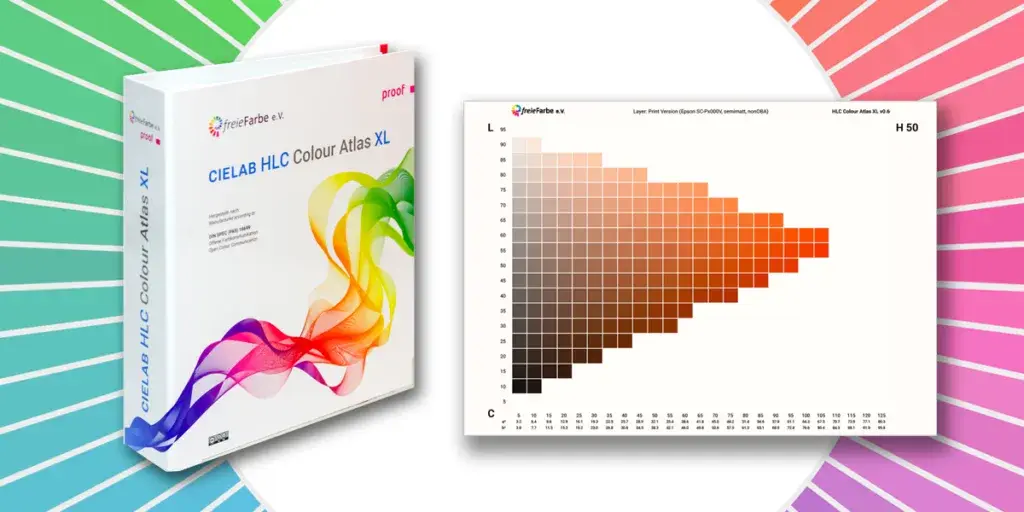
So the technical ingredients exist: measurable color spaces, ICC profiles, spectral data and open standards. What they do not yet match is Pantone's accumulated adoption, physical references, industrial procedures and network trust. Anyone can publish 10,000 free color values tomorrow morning; that does not magically create 10,000 references every printer in the world will accept on Monday. Standards have the deeply inconvenient habit of requiring other people.
That is what makes the Experimental Paint Archive more interesting than a recipe website. It lets us ask the same question at the material level: if we want an open standard, how do we document the formula and the conditions under which someone else can reasonably say, “yes, I obtained sufficiently the same thing”?
Paint is a system
A paint formula sounds simple because it is often reduced to three words: pigment, binder and vehicle.
Pigment supplies color and sometimes other properties. The binder creates the film and holds particles to the support. The vehicle makes the mixture workable before evaporating, reacting or partly remaining in the material. Formulations can also contain thickeners, plasticizers, fillers and functional additives.
In the archive, Blue Gel combines ultramarine, guar gum and water.4 Pigment Skin: Violet uses violet pigment, vinegar, glycerin, cornstarch and water, with heat.8 Ferro-Watercolor combines iron filings, glycerin and gum arabic; a magnet can influence the particle distribution while it dries.6
These examples immediately make “paint” feel too narrow. A formulation can be colored, magnetic, conductive, sculptable or reusable. Material becomes an interface between an artistic gesture and a physical property.
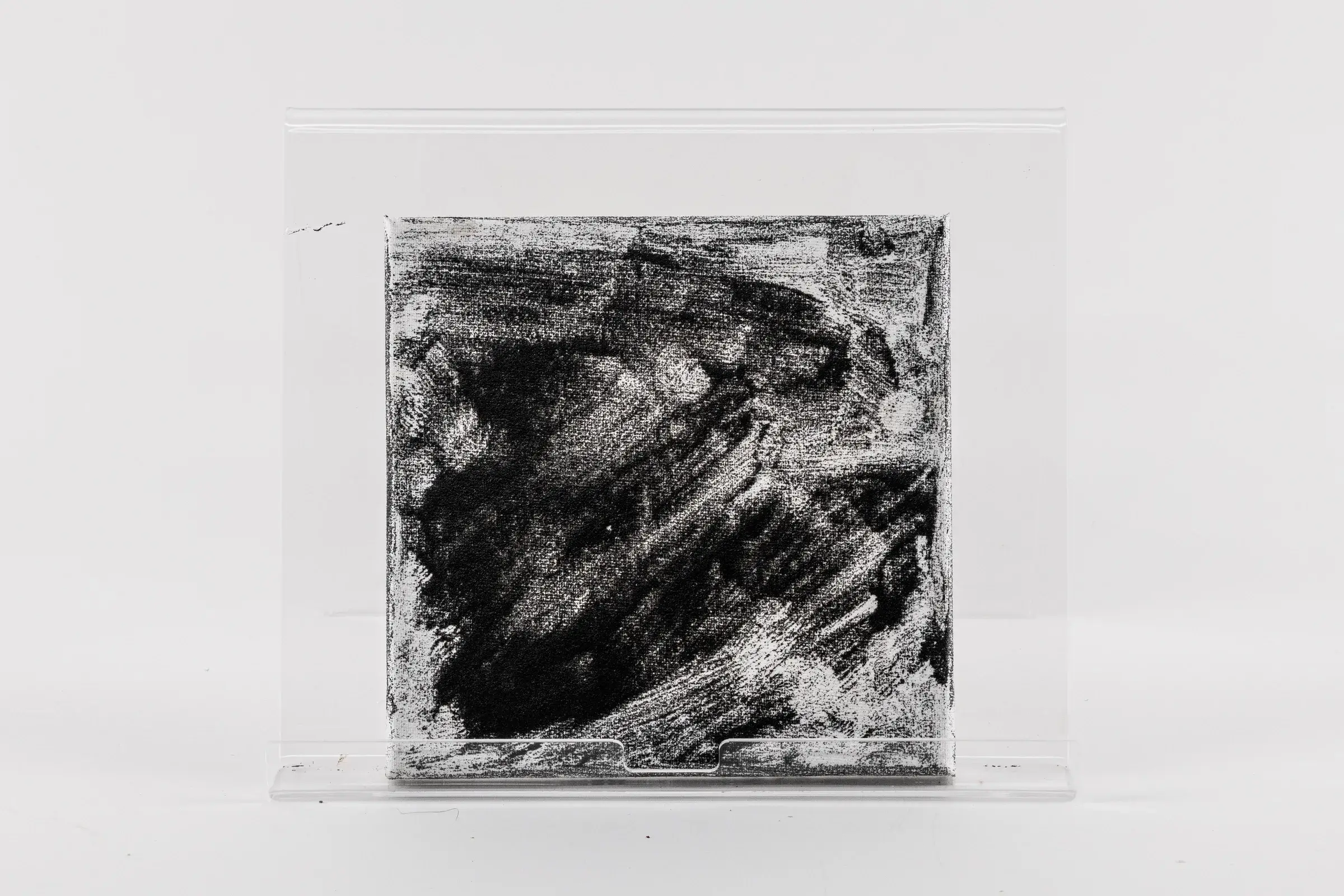
Liquid Obsidian pushes that further. Museum gel and graphite produce a material described as perpetually soft or melting, mildly conductive and more conductive when squeezed. The archive suggests it as a “squishy switch.”7
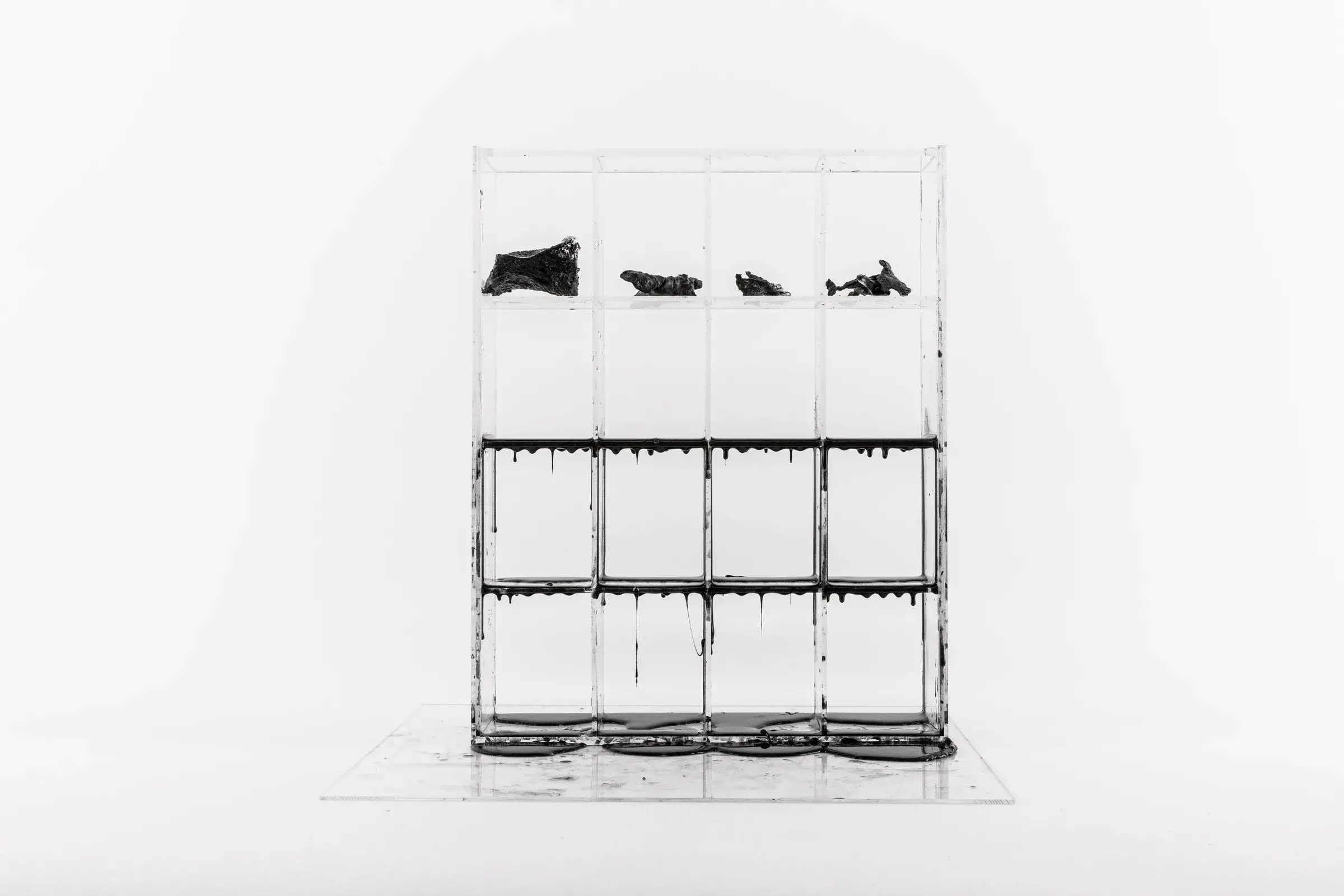
At that point the project is not merely substituting a safer colorant. It is designing behavior.
And once behavior matters, the documentation requirement changes.
Would a different brand of guar gum alter viscosity? Would a different graphite particle size change conductivity? Does 5% glycerin keep a pigment skin flexible while 15% makes it tacky? Does a workshop at 30% relative humidity produce a different drying time than one at 70%?
In software, a library version can break the build. In material practice, a powder batch, humidity level or thirty seconds of mixing can be the undocumented dependency.
Recipe, no quantities
The archive pages are refreshingly direct. Each gives a title, medium, attributes, a description, materials and a broad method. The structure is pleasant to browse and good at making experimentation feel approachable.1
But in the pages we examined, quantities are generally absent.
That is a fundamental difference from a cooking recipe, and an even bigger one from a laboratory protocol. “Xanthan gum + glycerin + pigment” defines a region of possible experiments. It does not define a point in that region.
Salt Blue's warning demonstrates the problem almost perfectly: excessive glycerin stops the piece from fully drying.3 The proportion matters enough to make the material fail, yet the proportion is not stated.
Ferro-Watercolor offers similar tacit advice: keep glycerin minimal or drying will not occur, and prefer a stickier gum-arabic solution to improve bonding.6 Again, useful workshop knowledge is transmitted without a measurable formulation.
That is not a criticism of experimentation. Laboratory notebooks often begin exactly this way: try, observe, change something. The tension appears when the language of openness and reproducibility enters the project.
For someone else to know whether they produced the same material rather than something that merely resembles it, the archive would gradually need more data: mass ratios, mixing time, temperature, substrate, approximate film thickness, drying time, water response, flexibility, abrasion and conductivity where relevant.
No one needs to turn every artist into a certification laboratory. A minimal protocol would already change the archive dramatically.
Something like 100 parts water / 4 parts gum / 12 parts pigment by mass, mixed for two minutes, applied at approximately 200 µm on cotton paper and dried 24 hours at room temperature gives another person a common starting point.
Then openness can accumulate. Someone reproduces it, changes one variable and publishes the difference.
Without those anchors, the archive inspires. With them, it could also learn collectively.
The hand programs
Materials have another problem software repositories encounter less often: part of the program lives in the hand.
“Cold mix” sounds like an instruction. In practice, two people can mix very differently. Whisk, spatula, mortar, slow stirring, high-shear vortex: the same pigment and binder can trap different amounts of air, break agglomerates or leave them intact.
Heating a starch formulation creates the same issue. Pigment Skin: Violet gives the ingredients and says “mix and stir over heat.”8 Temperature, heating rate, duration and the moment mixing stops are likely to affect gelatinization and evaporation.
Traditional craft solves this through transmission. You watch someone work. You touch the paste. You learn that it is ready when it pulls a certain way. The knowledge is not less real because it is difficult to quantify.
An open archive simply has to decide how much of that tacit knowledge needs to become transmissible clues.
Video can help. Step photographs can help. Sensory descriptions may be more useful than fake precision: “mix until no visible lumps remain,” “stop when the film releases from glass,” “the paste should form a continuous ribbon.” A material protocol does not have to imitate analytical chemistry to become precise.
This is where Collender's project could become a genuine practice infrastructure. The site already accepts contributions.1 If each submission documented both formula and gesture, variation would stop being an error. It would become searchable evidence.
“Non-toxic”?
The archive uses several attributes: biomaterial, non-toxic, reusable, functional, sculptable. Their coexistence is useful because the structure at least avoids making “natural” an automatic synonym for “safe.”1
Some entries nevertheless show why those terms need explicit definitions.
Copper Paste is tagged biomaterial, non-toxic and lists copper powder, gum arabic and xanthan gum.5 That does not mean the dried paint is dangerous. But raw copper powder has occupational exposure guidance, so “copper” cannot be treated as a context-free safety category.
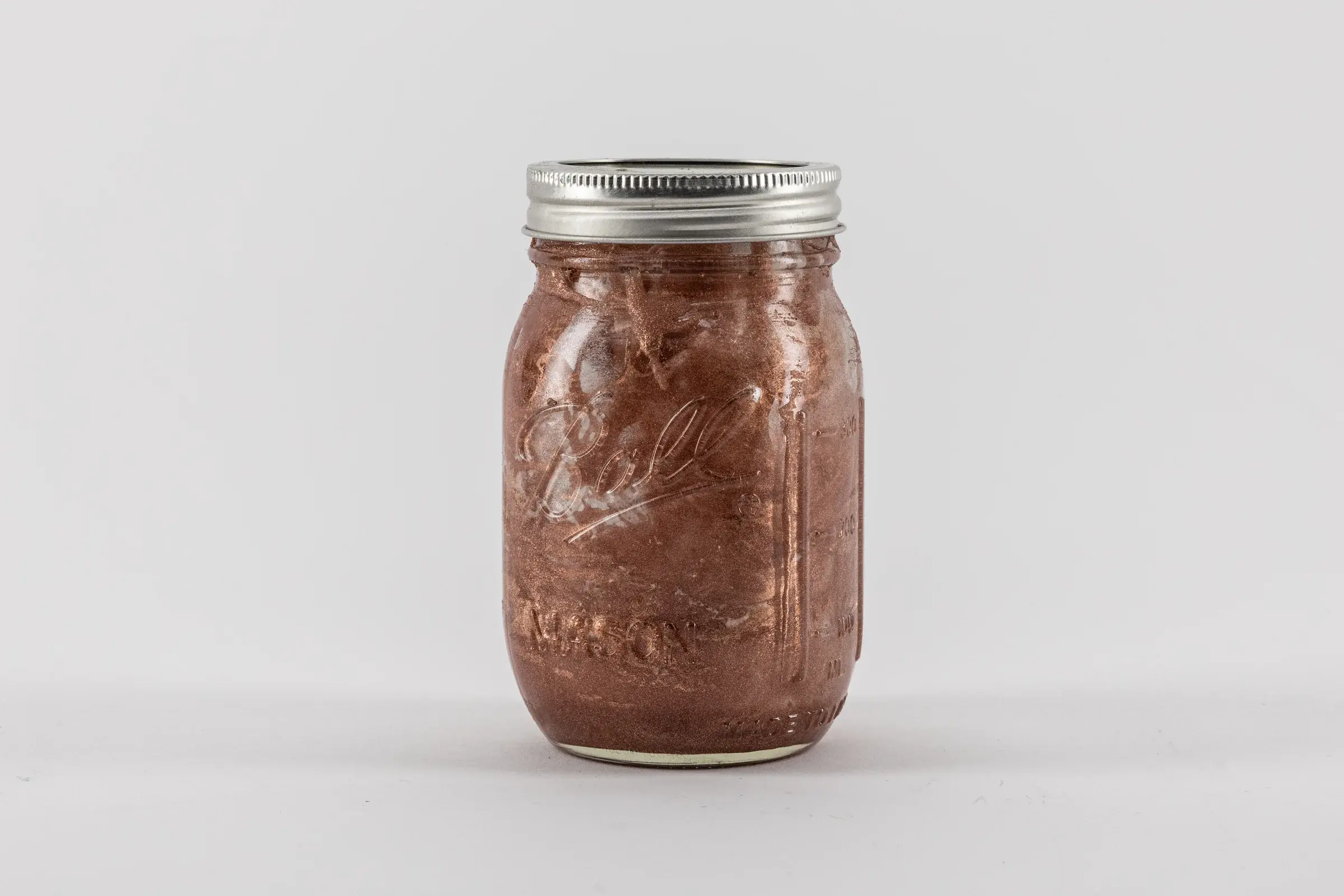
NIOSH sets a recommended time-weighted exposure limit of 1 mg/m³ for copper dusts and mists and lists inhalation, ingestion, skin and eye contact as exposure routes, with eye and respiratory irritation among possible effects.9
That number must not be converted into a verdict on Copper Paste. We do not know the airborne concentration produced by this recipe, particle size or amount handled. The useful point is narrower: if an archive wants to help artists minimize material hazards, a non-toxic badge becomes more useful when paired with the physical form of the ingredient and handling context.1
Dry powder and pigment already bound into a wet medium do not present the same scenario. Heating, spraying, sanding and drying can change exposure again.
U.S. regulation of consumer art materials shows how deep the subject can become. The Consumer Product Safety Commission says art materials must undergo a toxicological assessment for chronic hazards at least every five years and carry a statement of conformance to ASTM D‑4236.10
A free experimental archive is not a commercial manufacturer, and it would be silly to mechanically impose that regulatory process on a studio notebook. The comparison is useful for a different reason: in professional material safety, saying an art product is safe is not simply a matter of recognizing familiar ingredient names. It is an assessment discipline.
An open project could add a much lighter layer: link the relevant safety sheet for a powder, note whether dust should be avoided, mention ventilation or gloves where appropriate, flag heating, and avoid implying suitability for children without evidence. Those metadata can matter as much as the color.
Disappear or endure
The project also explores binders and media intended to reduce material impact through biodegradability or reuse.12
That creates an interesting tension: an artwork may be designed to disappear cleanly, or it may be expected to survive two hundred years. Those goals do not require the same paint.
Conservation research shows how strongly formulation affects long-term behavior. The Getty Conservation Institute studies naturally aged artists' paints and notes that mechanical properties vary with binder composition, pigments, extenders, driers, additives, manufacturing and aging. Stiffness, strength and fracture behavior evolve with composition and time.11
That does not condemn biomaterials. It simply separates “works today” from “stays stable.”
For an exhibition poster intended to last three weeks, a paint that easily rehydrates may be a feature. For an artwork sold as permanent, the same behavior might be a problem. For an interactive electronics prototype, a reusable conductive gel could be ideal even if nobody expects it to enter a museum collection.
A material archive would therefore benefit from documenting intended lifetime.
Temporary. Re-wettable. Compostable under specified conditions. Stable indoors. Humidity-sensitive. Not tested beyond six months. Those phrases are less glamorous than a “sustainable” badge and much more useful to someone choosing a medium.
The archive already contains the beginnings of this honesty in its observations: too much glycerin prevents drying; oxidized copper shifts appearance; some materials deliberately remain soft.37 Turning observations into a timeline would make them far more powerful.
The missing license
There is another meaning of open source, this one legal and social.
In our review of the public homepage and recipe pages, we did not find an explicit reuse license governing the archive as a whole.1 The project nevertheless calls itself open-source and invites outside contributions.1
That does not stop someone from reading the ingredient list and doing their own experiment. But if the ambition is to build a material commons, licensing answers practical questions: can a recipe be republished? included in a book? imported into another database? can photographs be remixed? under what terms can user submissions be redistributed?
Software communities spent decades making those permissions boringly explicit, and that is a success. The social meaning of a fork depends on people knowing what reuse is allowed.
Materials add another layer. A functional recipe is not the same thing as the text and photographs documenting it. An archive might want broad reuse of instructions while requiring attribution for media. Contributions can also be accepted under a common license so the collection remains coherent.
The project does not need to become a legal foundation. A clear content license and explicit contribution terms would remove a great deal of ambiguity.
Opening material also means opening its documentation cleanly.
28 commits
There is an even more useful way to borrow from software practice.
In a repository, the final version matters, but the history is often more revealing. It shows what changed, why a dependency was replaced and when a regression appeared. Knowledge lives in the differences.
A paint archive could work the same way.
Blue Gel v1: 5% gum, too brittle. v2: more glycerin, still tacky after three days. v3: half the plasticizer, flexible film after a week. Photographs at fixed intervals. Mass before and after drying. Notes on smell, shrinkage and adhesion.
That format would finally accept what material practice is fundamentally good at producing: variation.
The goal would no longer be to pretend one recipe yields exactly the same paint everywhere. It would be to make differences comparable.
The Experimental Paint Archive already contains the seed of this model: a Test Journal, multiple Pigment Skin variants, several magnetic and conductive gels, failure notes and an invitation to contribute.1 The 28 cards are not twenty-eight finished products. They look more like twenty-eight commits in an ongoing investigation.
That is a more generous and more useful reading than criticizing the project for not behaving like an industrial formulation catalog.
An open material does not have to be perfectly stable. It needs to show enough of its history that another person knows where to resume the experiment.
Same name, different material
Another problem appears as soon as someone actually tries to reproduce a formulation: “graphite,” “ultramarine pigment” or “gum arabic” do not identify one standardized physical object.
Two graphite powders can have different particle sizes, purities and morphologies. Two gums can contain different moisture levels or produce different viscosity at the same concentration. Pigments sold under the same color name can come from different manufacturers, receive different surface treatments or contain different extenders.
For a purely decorative paint, those differences may sometimes be negligible. For Liquid Obsidian, where graphite contributes to conductivity, they may become part of the material's function.7 In Ferro-Watercolor, the size and shape of iron particles can plausibly affect how freely they move through the liquid and respond to a magnetic field.6
A reproducible archive does not need to mandate one brand. It can simply record provenance: supplier, product reference, particle size when known, a photograph of the package or a technical data sheet. If a formula works across several alternatives, that is even more valuable: compatibility becomes a documented result.
This also helps when a supposedly sustainable recipe has to survive the disappearance of one ingredient. Instead of searching for the same product name from another shop, a maker can ask which property actually needs to be replaced.
The paradox is useful: documenting a material more precisely can ultimately make the recipe less dependent on a particular commercial material.
The studio-lab
Making your own paint is not automatically economical or ecological.
A specialist manufacturer can buy ingredients in volume, control dispersion, test stability and fill tubes efficiently. Reproducing that separately in thousands of studios could consume more time and material, not less.
The archive's strongest value lies somewhere else.
It returns formulation to the artist as a creative variable.
An artist may want paint that can be reactivated, a material that responds to magnets, a deformable conductive paste or a freestanding colored skin rather than pigment bound to canvas. In those cases, making the medium is no longer a chore before the artwork. The medium is part of the artwork.
Ferro-Watercolor and Liquid Obsidian make that explicit: their physical behavior is the point.67
Environmental choices can also become more inspectable. Instead of trusting a “green” label on a tube whose formulation remains opaque, an artist can compare ingredients, see what can be reused, change a binder and observe the consequence. Openness cannot guarantee sustainability. It can make some decisions visible.
That is a modest but deep change. Many modern creative tools let users choose among finished products. Here the choice moves down one layer: the material itself can be edited.
The missing button
The Experimental Paint Archive already works well as an editorial object and invitation to experiment. To become an infrastructure for collective reproduction, it mainly needs additional documentation layers.
Not a spectacular redesign. A few fields would do a lot:
- quantities or mass ratios;
- source and grade of pigments or powders when relevant;
- mixing sequence, duration and temperature;
- substrate and approximate film thickness;
- drying time and conditions;
- observations after a week, month and six months;
- handling notes for powders, heat or unusual ingredients;
- experiment status: exploratory, reproduced, failed;
- license for recipe text and media;
- variants linked back to the original formula;
- colorimetric or spectral measurement where relevant;
- an acceptable tolerance: how different can a result be before it stops being “the same” material;
- a public calibration and comparison method so no single supplier is required.
The most interesting feature might be a simple “I reproduced this” button. A contributor records what changed and what happened. The recipe stops being an authority and becomes a node in a network of experiments.
That is where the open-source analogy finally becomes powerful.
Not because a jar of paint is software. Because a technical commons appears when one person can inspect another person's work, reproduce enough of it, change one variable and return the result to everyone else.
Failure becomes data
The most revealing detail in the whole archive may not be a color. It is a small warning repeated across several pages: too much glycerin and the material will not dry.36
That knowledge came from a problem. Someone mixed, waited, touched a surface that remained tacky and learned that a parameter needed to change.
In a commercial product, that failed iteration disappears. Customers buy only the formulation that survived development.
In an experimental archive, failure can become public data.
If paint is going to become genuinely “open,” those are exactly the details worth preserving: ratios that fail, films that crack, powders that need different handling, recipes that look beautiful for one day and become disappointing six months later.
An ingredient list opens the door. Reproducibility begins when the conditions under which the material refuses to behave are documented too.
The Experimental Paint Archive is young and incomplete as a recipe standard. That is not a defect worth hiding. It already shows where the next useful work is.
The source code of a paint is not only what goes into the jar.
It is also how much, in what order, for how long, with what risks, under what license, and what happens to the mixture after you stop watching it.
Pantone shows the last step: even a perfect description becomes a standard only when other people trust it enough to build on it. An open-source equivalent would therefore not be an enormous free palette. It would publish the method, measurements, tolerances, versions and governance, then allow any workshop to verify the reference without asking its owner for permission.
The real project is not to free colors. They are already free. It is to free the circle of trust that lets two people know they are talking about the same one.