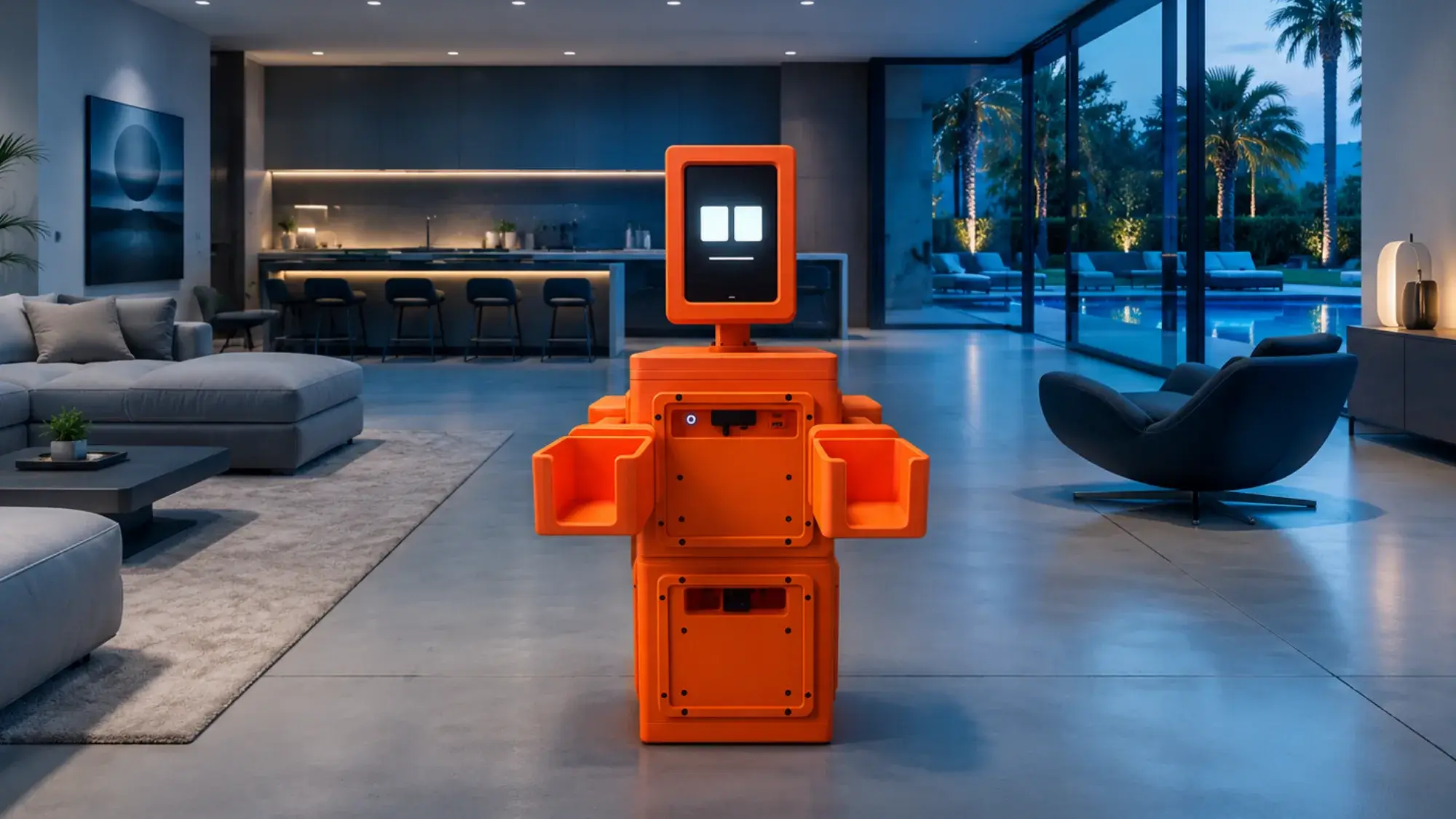
A 3D-printed robot becomes much less “repairable” when an entire side comes off the printer as one piece. A crack beside a motor mount can then force the owner to print hours of plastic again to replace a fault that occupies only a few centimetres.
MillieBot, the domestic robot being developed by Dream Cloud, approaches the problem from the opposite direction. Its fully 3D-printed body is divided into independent components, with each part intended for separate printing, assembly and replacement.2 Dream Cloud also says it provides an editable FreeCAD assembly, giving builders a source model for altering panels, brackets and mounting points instead of beginning again with exported meshes.2
That mechanical decision is more interesting than the voice-assistant pitch. An AI model can be exchanged for another service in software; a badly partitioned shell can make every physical repair start again on the printer bed.
The important caveat is the gap between what the project describes and what an outside builder can currently audit. As of 23 August 2026, the official pages promise printable files, source code and a complete FreeCAD assembly, yet the public website provides no obvious link to an official GitHub repository or downloadable source archive. IRZ also could not locate a matching official repository through public GitHub search.12 Openness is therefore an explicit project claim, not yet a reproduction chain we have verified end to end.
Shrink the failure
“Modular” is easy to use as an abstract product adjective. For a printed part, it can be made concrete with a simpler question: how much material has to be discarded when one point fails?
Dream Cloud describes MillieBot's body as a set of independently replaceable elements.2 Relative to a large monolithic shell, that arrangement reduces three kinds of exposure at once: material, machine time and the amount of finished work lost when a print fails. In exchange for a few more interfaces and fasteners, the builder can reduce the cost of a local mistake instead of treating the whole body as disposable.
A large shell concentrates those risks because a late nozzle blockage, bed-lift problem, tolerance error or misplaced hole can ruin a nearly finished component after hours of work; with several modules, the failed region stays local and a larger share of the printed structure remains usable.
The original editorial brief mentioned individual prints lasting more than 30 hours. IRZ found no primary public source supporting that figure, so it is not repeated here. The design principle does not need it: dividing a large printed volume into smaller assemblies reduces the scope of a failed print even though exact duration depends on printer, nozzle, layer height and material.
Interfaces matter
Splitting the shell solves only half of the problem, because every new boundary between parts becomes a mechanical interface that has to be designed and maintained.
Those interfaces add fasteners, clips, inserts, clearances, mating surfaces and cable paths. A replaceable part becomes useful only when removal does not require dismantling half of the robot and when the new print returns to the same position inside the assembly.
FreeCAD becomes relevant at this point because Dream Cloud says it provides the complete editable assembly model, allowing builders to inspect how the components fit together and change one region while preserving the rest of the design.2 For repair work, a parametric source model carries more information than a pile of STL files: dimensions, relationships among parts and part of the original design intent all remain available.
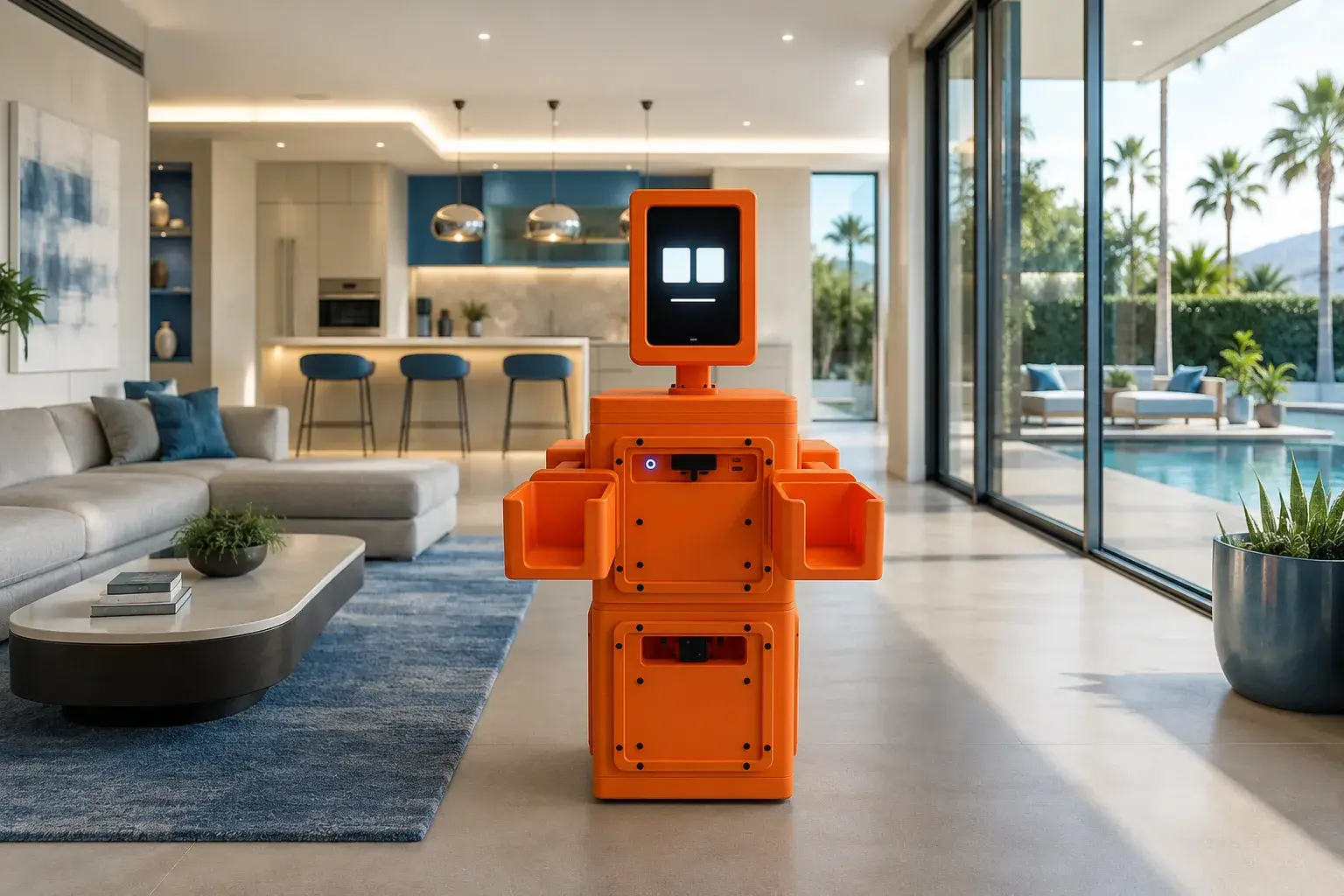
The stated ambition goes further. Official documentation says builders should be able to redesign body panels, mounts, sensors, wheel arrangements or accessories while preserving compatibility with the rest of the platform.2 If the promised files become openly accessible and versioned, a community improvement could target a single area rather than forcing a complete mechanical fork.
That is the difference between publishing a model of a robot and publishing the boundary on which another person can work.
Ordinary electronics
Mechanical modularity becomes more useful when the hardware inside follows the same logic. MillieBot is described around relatively ordinary components: a mini PC, Arduino Nano Every, LiDAR, depth camera, DC motors, a 12V LiFePO₄ battery and a travel Wi-Fi router.2
Robot-side software uses ROS 2 Humble, Nav2 and SLAM Toolbox for communication, navigation and mapping across the system.2567 The control interfaces use Flutter, while Dream Cloud describes most of the remaining software as Python.2
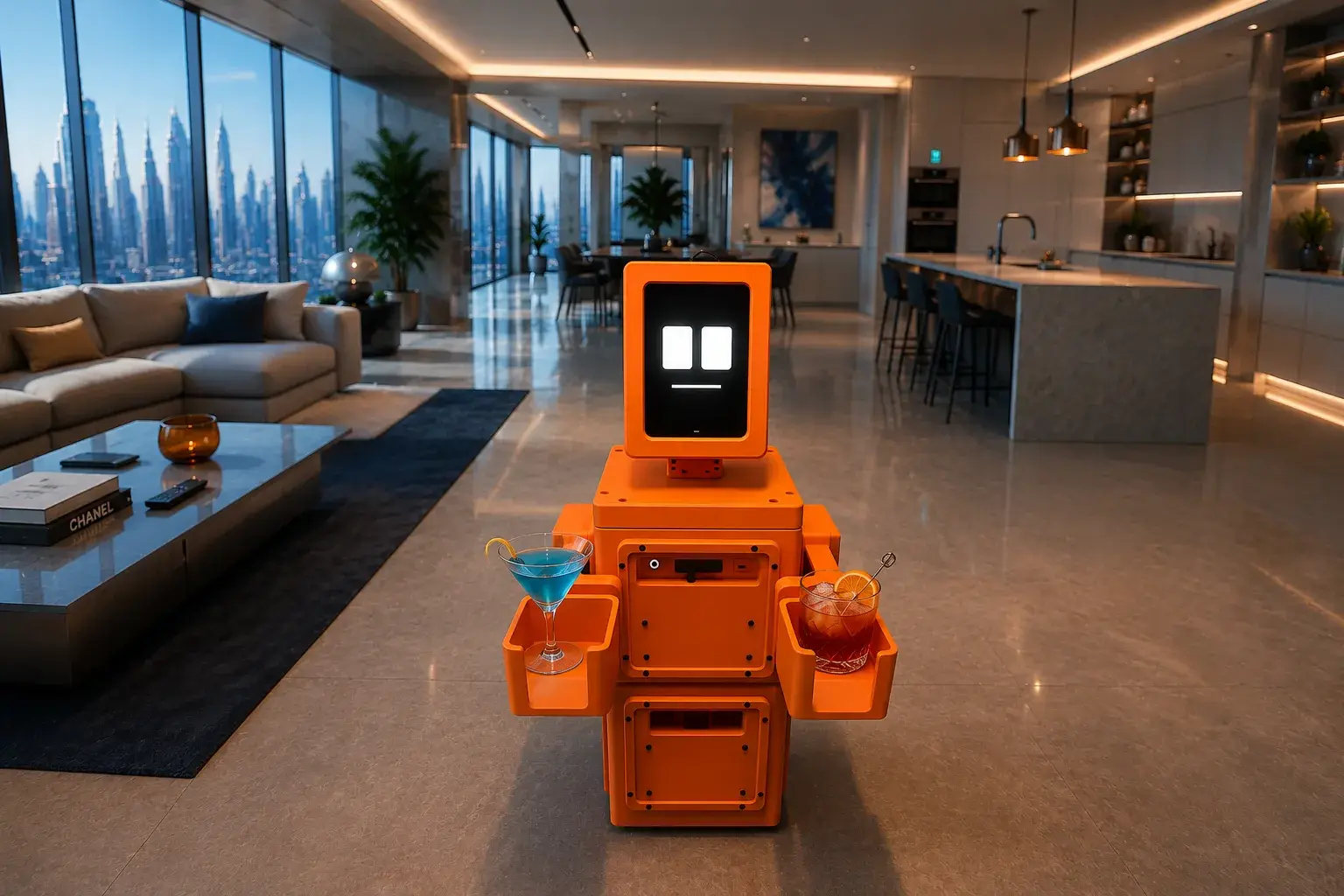
The value does not depend on every component being ideal. In the long term, standard motors, computers and sensors can be sourced again or substituted; by contrast, a proprietary module can disappear from the market before the robot that depends on it.
Dream Cloud makes the same argument in its Kickstarter launch material: motors, sensors, cameras and computers are meant to be replaceable or upgradeable as the technology changes rather than freezing the robot as a sealed appliance.3
How open?
“Open source” is the claim that deserves the most caution.
MillieBot's pages state that the code, hardware, FreeCAD model and printing files are open.12 They also describe the face application and controller application as modifiable.1
A licence, however, cannot be audited from a marketing paragraph. A builder needs to be able to download the sources, inspect their history, identify the exact licence, reconstruct a version and understand which parts still depend on outside services.
MillieBot uses OpenAI's Realtime API for voice conversations, for example.12 An open robotics layer can coexist with a major user-facing feature that depends on a proprietary service, although the boundary between the two deserves the same documentation as the mechanical interfaces.
More immediately, the official pages checked by IRZ do not provide an obvious public path to the source files they describe. The architecture and stated intent are visible; the key promise still remains beyond independent testing by IRZ, namely downloading one mechanical part, editing it, printing it and reinstalling it on a real MillieBot with no special access from the manufacturer.
The useful test
MillieBot is currently tied to a Kickstarter campaign that Dream Cloud presents as the move from a working prototype toward production.34 That wording matters: the advertised characteristics should not be treated as specifications from an already mature production fleet.
The useful test therefore has little to do with whether the talking face is charming. In the event of a cracked bracket, the practical questions concern the amount of the robot that must be dismantled, the amount of plastic printed again and whether a third party already possesses the files and rights required for the repair, rather than needing the manufacturer's permission.
The modular mechanical design offers a credible answer to the first half. It makes a physical fault more local and gives contributors defined areas of the machine on which to work; during the final stage of a repair, that difference decides whether the printer replaces one bracket or an entire body panel.
The second half still needs a public demonstration because a repairable robot is more than a collection of small pieces: its interfaces, source files and rights have to travel with the part after it leaves the factory, otherwise the modularity stops at the enclosure.
Should MillieBot publish everything it currently promises, its best idea may have little to do with AI; the more durable contribution would be making the size of a failure resemble the size of the component that actually broke.