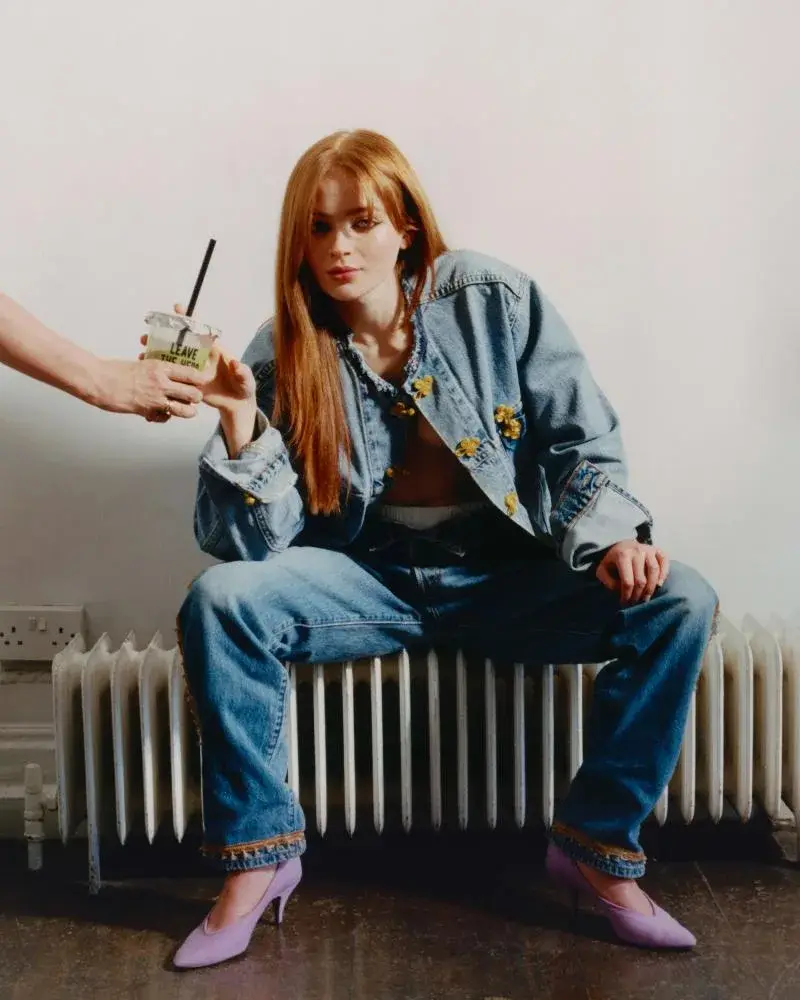
Elliot James Kennedy does not take a photograph expecting it to stay intact.
He frames with the next stage already in mind: print the image, paint over it, cut it apart, move a limb, add a block of colour, then assemble it again.1
That process became a commercial signature, but it grew during a period when commercial shooting had largely stopped.
Lockdown became a cutting table
Kennedy says he had wanted to mix painting and collage into photography for years. During lockdown, with fewer shoots, he printed older work and started physically reworking it.1
Posting those experiments led to commissions including Carhartt and Isabel Marant. His professional portfolio now includes clients such as Nike, Adidas, Kenzo, Apple and Gucci.2
The useful detail is that analogue work also changed the photography itself. Kennedy deliberately leaves room in the frame because he already expects a second composition after the shutter.1
The collage starts before the scissors.
No filter, two worlds
For a Speedo campaign, Kennedy returned to the prints after the shoot and rebuilt them by hand, with old Olympic posters in mind. When photographing Nigo at the Design Museum, the building's Brutalist and Bauhaus character fed directly into the cuts and colour blocks.1
That avoids a common problem with digital effects: applying the same recipe after the image is finished. Here the transformation changes framing, shooting and selection from the beginning.
Kennedy gives a simpler reason too. He did not want to spend his entire life looking at a screen.1
That is a perfectly good reason to design a workflow. Not because paper is morally superior to Photoshop, but because a physical tool can push an image somewhere an undoable layer never would.