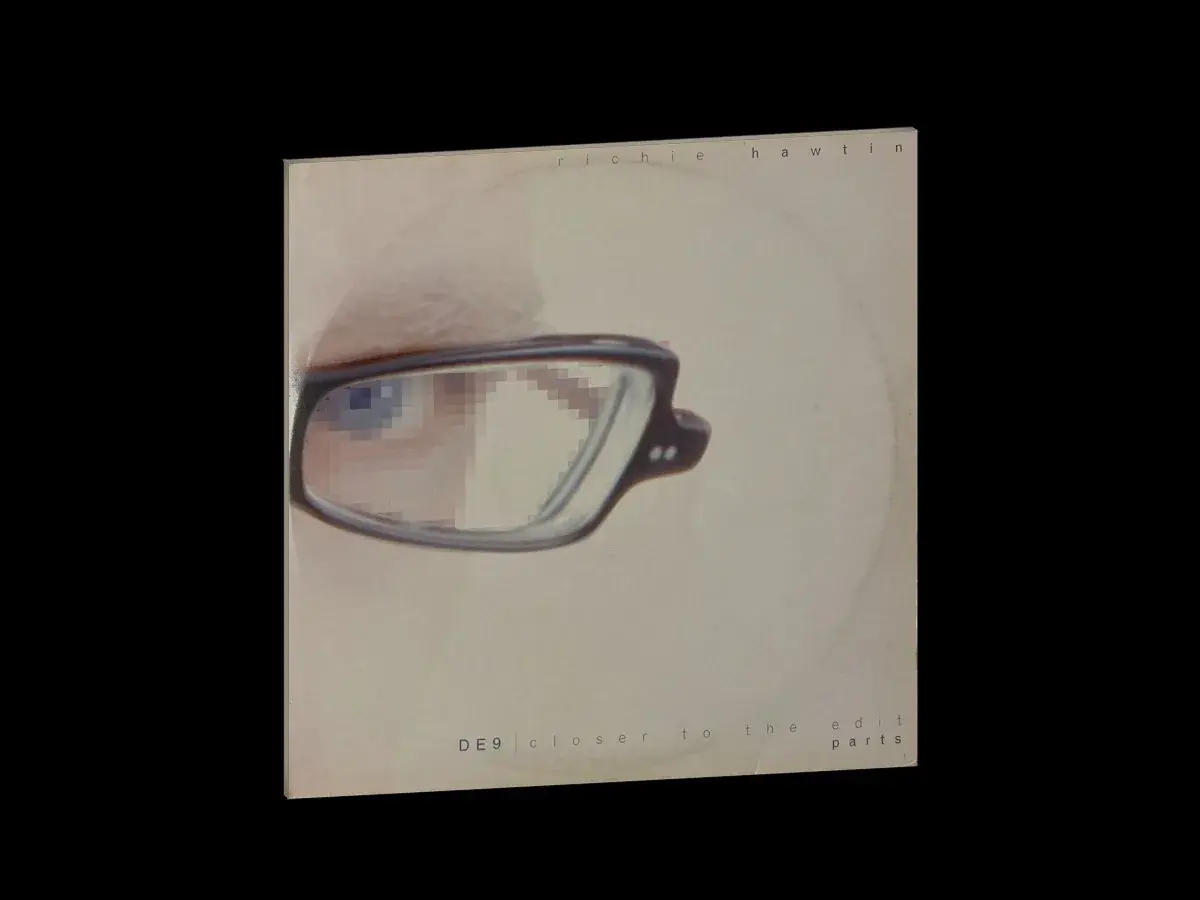
In 2001, Richie Hawtin had already found a remarkably literal way to show how DE9 | Closer to the Edit had been built. Alongside the finished mix came Parts, a double LP containing 120 locked grooves: closed vinyl grooves that repeat the same loop until a DJ physically moves the needle.24
Twenty-five years later, Dutch designer Merijn Straathof has picked up the same loose end. His anniversary project behaves less like a display case than a workbench. He recorded the 120 available loops into Ableton, cut and timed them, then placed them in a web interface where they can once again be launched, layered, sequenced, filtered and controlled through MIDI.12
Digitising the record is the easy description. Straathof is really preserving its instruction manual: what a listener was meant to do with the pieces.
The mix opened up
Closer to the Edit was already an unusual object in 2001. The DE9 Parts site says Hawtin worked from more than one hundred tracks, cut into more than 300 loops, before rebuilding the material into a continuous mix.1
AT-DJ describes the finished piece as roughly 53 minutes built from fragments ranging from one note to four bars, with more than 70 sources appearing in the final reconstruction.4
The finished mix hides the workshop. What reaches the listener is a flow of transitions, not three hundred labelled clips.
Parts did the opposite.
Rather than issue another linear version, the double LP isolated 120 fragments as locked grooves. The record stopped advancing by itself. A loop could spin indefinitely, be mixed with another record or become raw material for an entirely different construction.24
Dumping 120 files into a playlist would preserve the sounds and quietly throw away the joke: each fragment was meant to sit there until somebody intervened.
Recording the vinyl
Straathof did not receive a folder of stems or separated masters.
Resident Advisor reports that he recorded every loop from the Parts vinyl into Ableton, then cut and timed each one so the fragments would work together properly.2
So the source is unusually specific. This is not a folder called 'DE9 sounds'; it is a recording of the release that Hawtin had already designed as a tool.
The arithmetic matters here. Those 120 loops are only part of the 300-plus fragments behind the original mix.14 They are the subset Parts made public and physically playable.
Straathof leaves that missing material missing. There is no pretend 'complete archive' label pasted over the gap.

Once retimed, they can be layered without every click immediately turning the rhythm into an accident.
A web instrument
The site opens at 133 BPM and offers multiple launch modes, sequencing, randomisation, filtering and effects. It can also connect to a MIDI controller.1
Straathof tells Resident Advisor that MIDI is actually his preferred way to use the project.2
At that point the page stops feeling like commemorative web design and starts behaving like a small instrument.
The obvious anniversary site would have given us sleeve art, a timeline and a tasteful play button. Straathof gives the visitor knobs. Here, the important information lives in what you can do: trigger one loop, introduce another, change tempo, filter the result, build a sequence, then wreck it and start again.
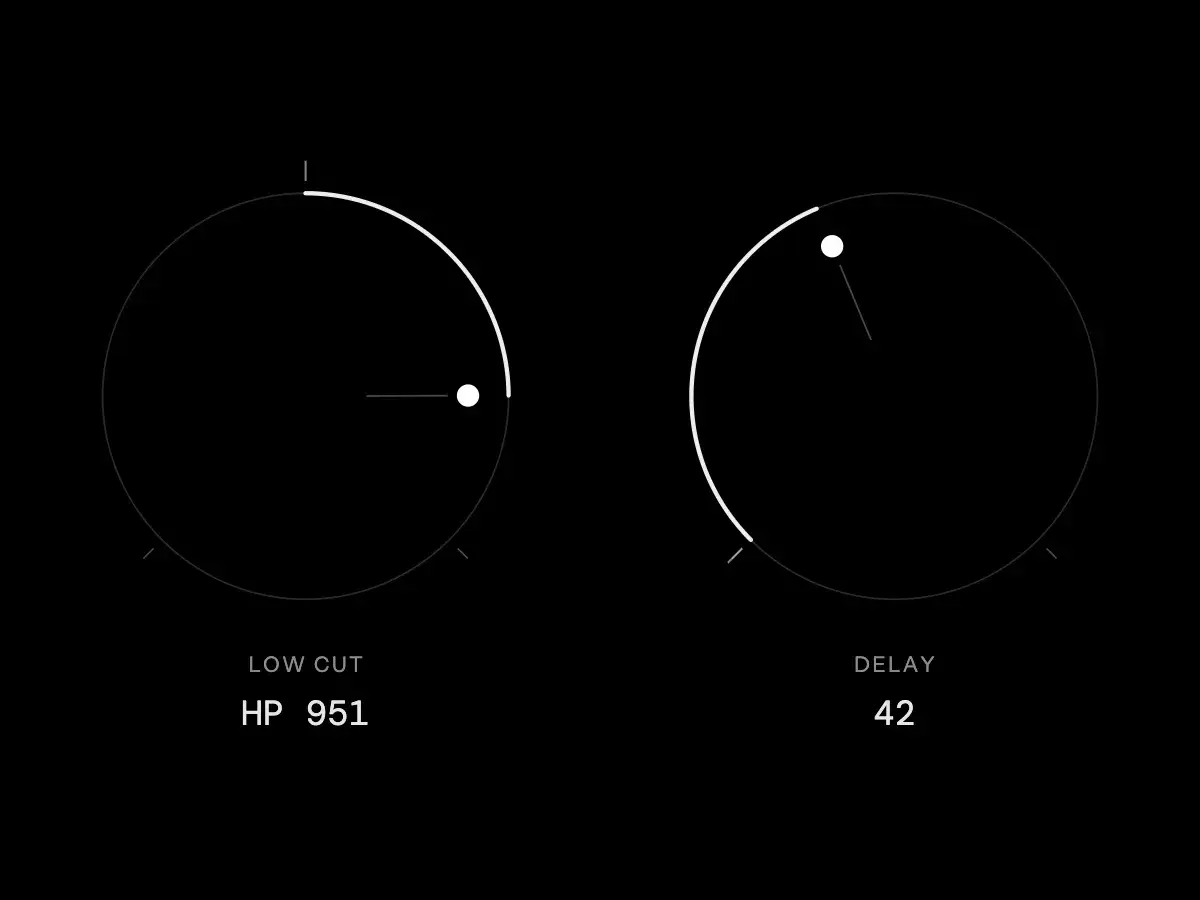
The browser adds powers the record never had, but the old bargain survives: the listener is allowed to interfere.
Same restraint
Straathof is not coy about the visual reference either.
Creative Boom points to the black background, fine grids, light typography and technical-looking controls that echo the minimal language associated with the Minus era. Interactive 3D renders of the CD case and vinyl also keep the new interface tied to its original object.3
A lesser anniversary page might have stopped at fake-Flash nostalgia. Straathof instead talks about recovering an era when, in his view, websites were more expressive and experimental, before Flash disappeared and increasing standardisation made many interfaces more predictable.2
There is a nice loop in that. Hawtin made the album by breaking tracks into smaller units; Straathof uses the anniversary to break a familiar website into something less passive.
Straathof avoids the costume drama. No fake 800 × 600 desktop, no comedy modem noises. It uses a current interface to recover an attitude: the browser as a place to play, not merely to retrieve.
Archive or instrument?
DE9 Parts describes itself unambiguously as an unofficial, non-commercial interactive tribute, created on Straathof's own initiative.1 The site credits the original artists and works and gives rights holders a contact address for removal requests.1
None of that establishes the project's detailed legal status, and it certainly does not document an authorisation from Richie Hawtin.
The disclaimer also points at a less tidy preservation problem.
An archive that wants to save behaviour runs into a strange requirement: it has to let people manipulate the material again. A screenshot of Parts could explain locked grooves without letting anyone hear them. A linear audio file could reproduce the sound while removing the ability to combine it. A video of DE9 Parts would show the website while, again, deleting the thing that makes it worthwhile: touching the edit.
Sometimes the file is the least interesting thing to save. What matters is the affordance: the action the object invited in the first place.
Replay the idea
Straathof was fourteen when he found Closer to the Edit. It was the first techno album he bought and one of the rare techno records his father could also enjoy.2 That makes the project personal without requiring a glass cabinet.
It puts the pieces back on the table.
The original album turned other artists' tracks into editing fragments. Parts then turned 120 of those fragments into physical DJ material. DE9 Parts now turns them into software objects addressable by click, sequencer or MIDI.
Vinyl, mix CD and browser all answer the same question differently: who gets to control time?
For a work built around editing, the useful anniversary move is to make its building blocks editable again. Playback alone would have been a much flatter tribute.