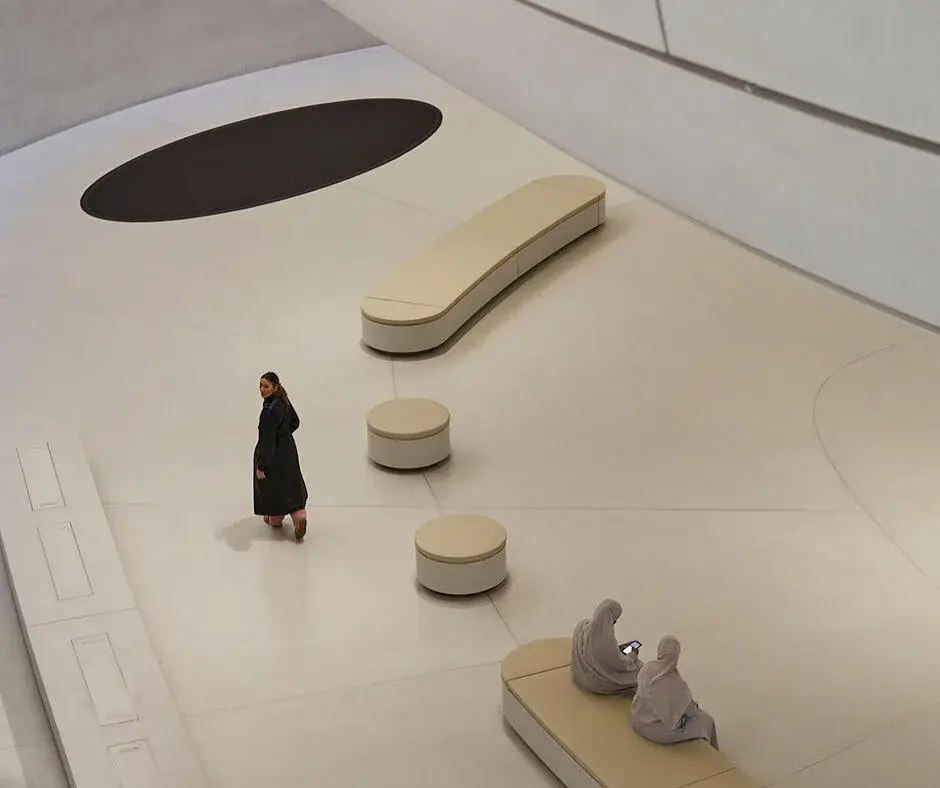
Designing 3,000 square metres of interiors for Abu Dhabi's Zayed National Museum could easily have meant applying heritage motifs to contemporary furniture. Agata Kurzela Studio describes something much more physical: prototypes, material trials and full-scale mock-ups.1
The Research Library works with raw wool, dark timber and metal. But the wool did not arrive as a settled swatch. The studio documents trials across different fleeces, washing, boiling and spinning, then testing colour, density and touch against the museum's wider material palette.1
The method extends to who gets to make the space. The studio says it collaborated with Emirati designers, local artists, makers and specialist fabricators.1 Its stated aim was not simply to display history but to connect contemporary culture and heritage through materials, scale and crafted detail.12
Even the furniture is treated less like a collection of objects than infrastructure. In Al Liwan, a modular seating system is calibrated to the scale of the public space, supporting pauses, gatherings and informal meetings.1
There is a method here that travels beyond a national museum. When a project has to represent a culture, history or place, starting with motifs is tempting. Here, meaning also comes from the way things are made: who handles the material, how many times it is tested, and what the finished object is allowed to reveal about that process. Heritage is not merely referenced. It is put back to work.