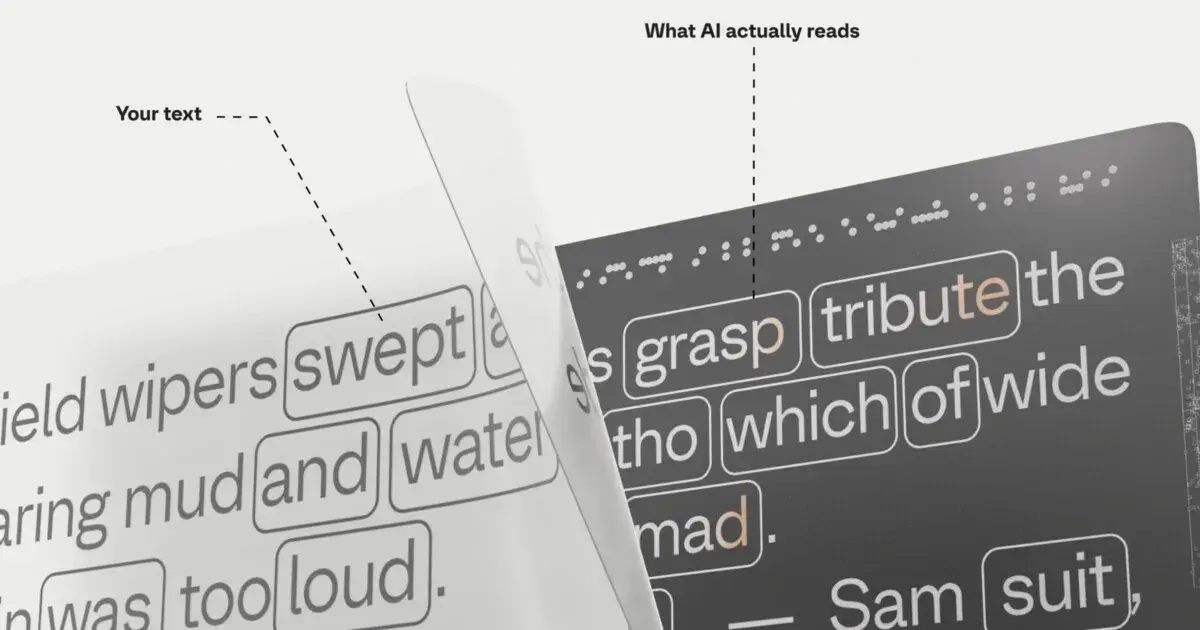
ShieldFont starts with an old property of digital type: stored text and displayed glyphs do not have to tell exactly the same story. The project by S&A and Playtype uses that gap to show a correct sentence to a person while handing a different one to a scraper.1
The mechanism swaps meaning-bearing words in the HTML for other words with the same grammatical role. OpenType substitutions visually restore the originals on screen. A collector that only pulls the HTML therefore gets fluent but false prose. In the project's tests across 1,500 passages, changing roughly a quarter of all words, close to half of the content words, made half of the passages lose their original factual claim.1
The useful part is the limitation. ShieldFont does not claim to be encryption. A targeted scraper can render the page and run OCR, or download the font and extract its substitution table. The authors say they recovered all 11,962 pairs from one mapping themselves.1 The defense is economic: make indiscriminate scraping more expensive, especially when sites mint independent mappings.
Publishers pay a price too. Search engines see the decoy words, so the project recommends shielding blocks that do not need search traffic. Accessibility needs JavaScript and a separate mechanism that reveals the real text to screen readers. ShieldFont currently works only in English.1
That is what makes it more interesting than another anti-bot trick. The typeface is no longer only appearance. It becomes a small piece of publishing policy embedded in rendering itself: imperfect, breakable, but operational. The code is released under AGPL-3.0.12