A camera can become practically unrepairable before any essential part has become impossible to manufacture.
A missing service manual may be enough, as may a parts list whose suppliers have disappeared, a flex cable hidden under a cover, or a 3 mm screw that looks far too much like its 3.5 mm neighbour; the machine remains intact while the knowledge required to move through it without creating new damage starts to fragment.
The Nikon F100 Notes repository documents that problem at an unusually concrete scale.1 Its author begins with a film F100 bought for parts and tries to return it to working order, with a repair manual and parts list available but still not enough: the documents are terse in places and often encountered online as low-quality scans.1
The rest of the repair knowledge has to be reconstructed along the way.
The hidden flex cable
A service manual can describe the general order of disassembly without capturing the physical experience of the gesture.
On the F100, the top cover remains connected to the camera by a flex cable on the side opposite the display. The repair notes emphasise the risk: treating that cover like a free plastic shell can damage the connection before the person opening the camera even realises it is there.1
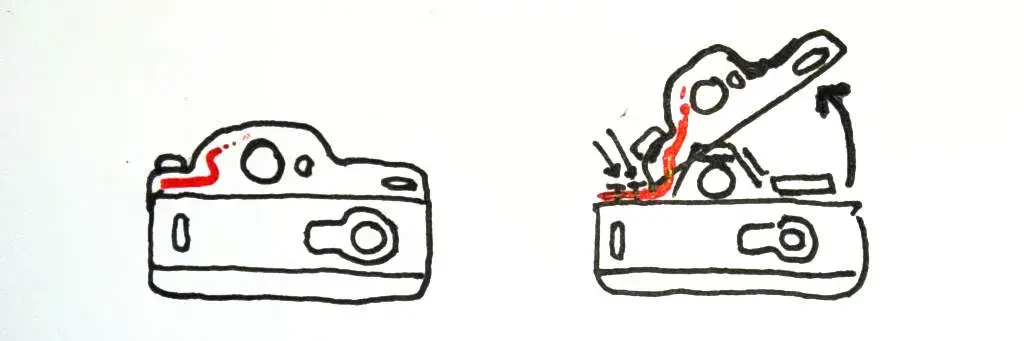
That difference between diagram and gesture appears throughout repair work.
An exploded view answers “which parts exist?” very well, while questions about how far something should move before resistance becomes suspicious, which cable remains hidden, which screw passes through several layers or which orientation lets a piece return without force belong to a different kind of knowledge.
Professionals accumulate those answers through experience, and once a product has been outside the official service network for long enough that memory can leave the workshop with them, making a properly captioned photograph as valuable as a page of the manual.
The false symptom
The F100 documented on GitHub arrived with severe battery-compartment corrosion and several inconsistent electrical symptoms: sometimes no startup, sometimes brief operation, sometimes a shutter release that appeared to remain held down.1
Diagnosis could not be reduced to substituting one obvious part.
Corrosion had moved into internal flex circuits and contacts. The author examined the shutter-release contacts and measured their electrical behaviour to understand why the camera could interpret a button press that no longer existed.1
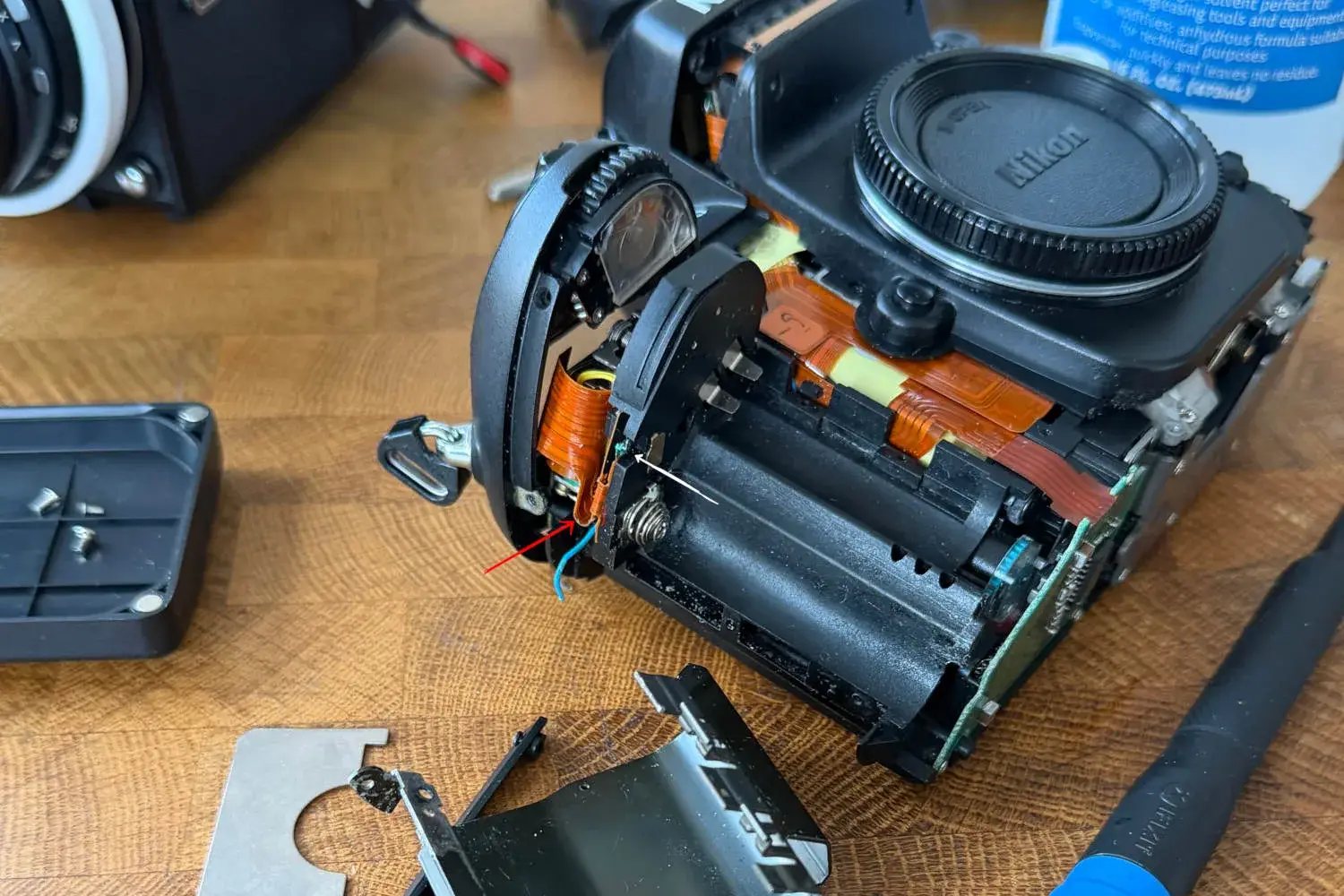
This is where personal documentation changes role.
At first personal documentation may simply prevent screws from being forgotten, but later it becomes a journal of hypotheses linking symptoms, measurements, suspect elements and results after cleaning or reassembly, gradually creating a working model of the camera itself.
That model may never have appeared in the service manual because a service manual often assumes that the technician already knows how to interpret its steps.
Screws need metadata too
The F100 repository contains an observation that could serve as a universal law of disassembly: tiny screws fall, mix together and often look almost identical even when they are not interchangeable.1
The difficulty sounds ridiculous until one goes missing.
The service manual and parts list sometimes provide a route back to an exact specification. In one example from the repository, a code on the exploded drawing can be cross-referenced against the parts list to identify an M1.4 screw of a particular length.1
When the information is incomplete, the author describes an indirect measurement: produce an impression of the screw on paper, photograph it beside a known scale and measure thread pitch, diameter and length from the image.1
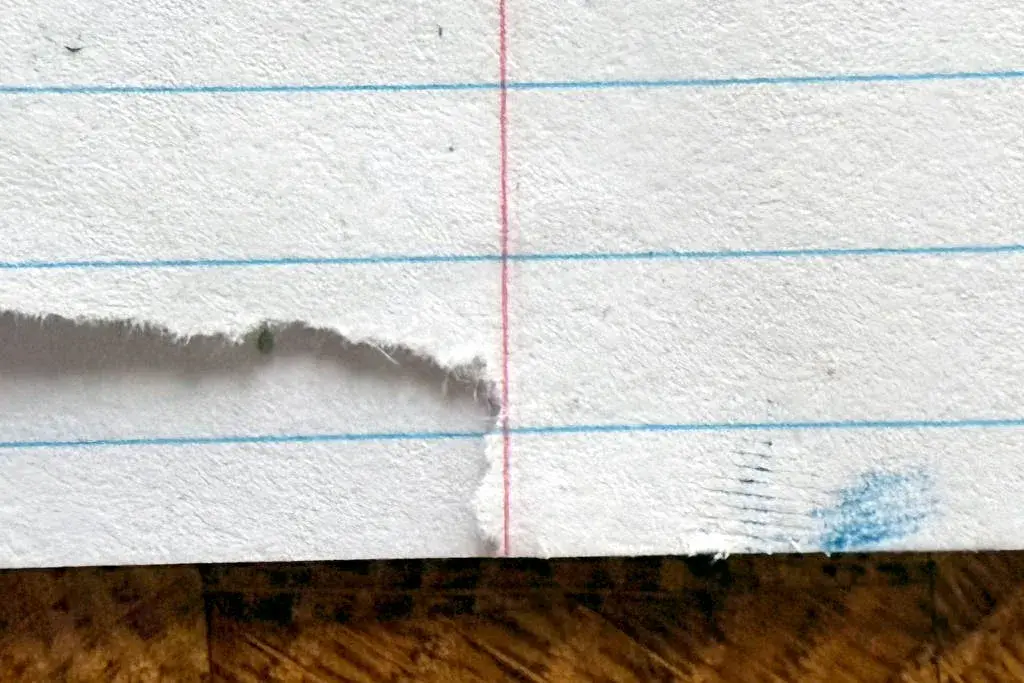
The measuring trick is secondary to the more interesting transformation: an ordinary object has become structured information.
A screw has diameter, pitch, length, function and location, fields that attract little attention while the manufacturer's parts system remains available but have to be reconstructed once the official chain disappears.
Buildable, but extinct
The repository also discusses pieces commonly missing from F100 bodies sold for parts: eyepieces, battery holders, backs and small latching components.1
Some have aftermarket substitutes. Others cost a surprising fraction of the whole camera's value. Certain geometries are simple enough to print, although the result depends on material and print orientation.1
This distinction matters: manufacturable does not mean economical.
A passive part may be straightforward to redraw. If only two people need one this year, nobody necessarily has an incentive to produce, package, stock and guarantee it.
3D printing lowers that threshold for some plastic parts, while small CNC shops and PCB services lower it elsewhere; every process still brings limits in strength, accuracy, finish and cost.
To be sure, repair can still be economically irrational even when the missing part is technically reproducible. The decision may still be to remake it, adapt something else, buy a donor body, or stop.
The scattered graph
Nikon now operates a Self Service Repair programme for selected newer digital products, making repair manuals and, for covered models, relevant parts or tools available.23
The download centre states an important limit plainly: products not listed are not supported.3
A late-1990s film F100 belongs to another support era. In the workshop today, the remaining support network is much less tidy: archived copies, parts sellers, private notes and technical communities all carry different pieces of the answer.
Knowledge becomes distributed between different places:
- the service manual describes official structure;
- the parts list provides identifiers;
- photographs show what disassembly really looks like;
- forums record recurring failure modes;
- repositories preserve measurements and corrections;
- 3D models may replace missing geometry;
- a multimeter or caliper produces information that has not survived anywhere else.
None of these elements is “the documentation” on its own.
Documentation becomes the network connecting them.
A second archaeology
The F100 is not purely mechanical and electrical. It also stores shooting information and exposes certain functions through Nikon's 10-pin connector.
Another project, nikonserial, documents the serial protocol used by several Nikon film bodies including the F100, partly so that shooting information can be recovered with contemporary equipment.4
The camera can still work after part of its environment has disappeared, and because Nikon once sold dedicated accessories for this workflow, preserving the function as those accessories become rare means reconstructing the protocol around it.
Repair therefore changes shape by layer: remake a mechanical piece, trace corrosion, rebuild a connector or understand a serial conversation.
In every case, the missing material may turn out to be information.
Transferable failure
The F100 repository is useful for more than the camera it rescued.
It records mistakes as well: damaged screws, a part forced too hard, broken plastic and hypotheses that did not survive measurement.1 That information is valuable precisely because official service literature rarely documents what happens when the reader gets something wrong.
Good community documentation does not need to imitate a poorer version of a factory manual.
It can contain what the factory manual could never predict: photographs of several ageing states, substitute parts, measurements from real specimens, incompatibilities discovered decades later and the limits of repairs attempted with tools available today.
Repair becomes cumulative: the first person pays much of the exploration cost, while the next no longer starts completely in the dark.
Knowledge is a wear item
Parts availability is often used as the measure of product repairability and matters enormously, although it captures only part of the problem.
A component may exist and remain useless without a calibration procedure, a bearing may be standard while access to it is undocumented, a flex circuit may be intact and still be torn because its hidden fastening was forgotten, and a mechanically healthy camera may lose a function because the surrounding software or accessory no longer exists on any current machine.
Knowledge wears out with websites, closed workshops, retiring technicians, file formats, accessories and supplier references.
Repairing an old camera can therefore mean maintaining two machines at once: the one sitting on the bench and the architecture of knowledge that explains how to move through it.
The Nikon F100 in this repository may have been the patient. The notes left behind are the real spare part.