In water, filtering microplastics is hard but conceivable. In soil it is a different problem: the particles lodge between grains, out of reach of any simple filter. Digging up all the earth to process it is not a realistic option.
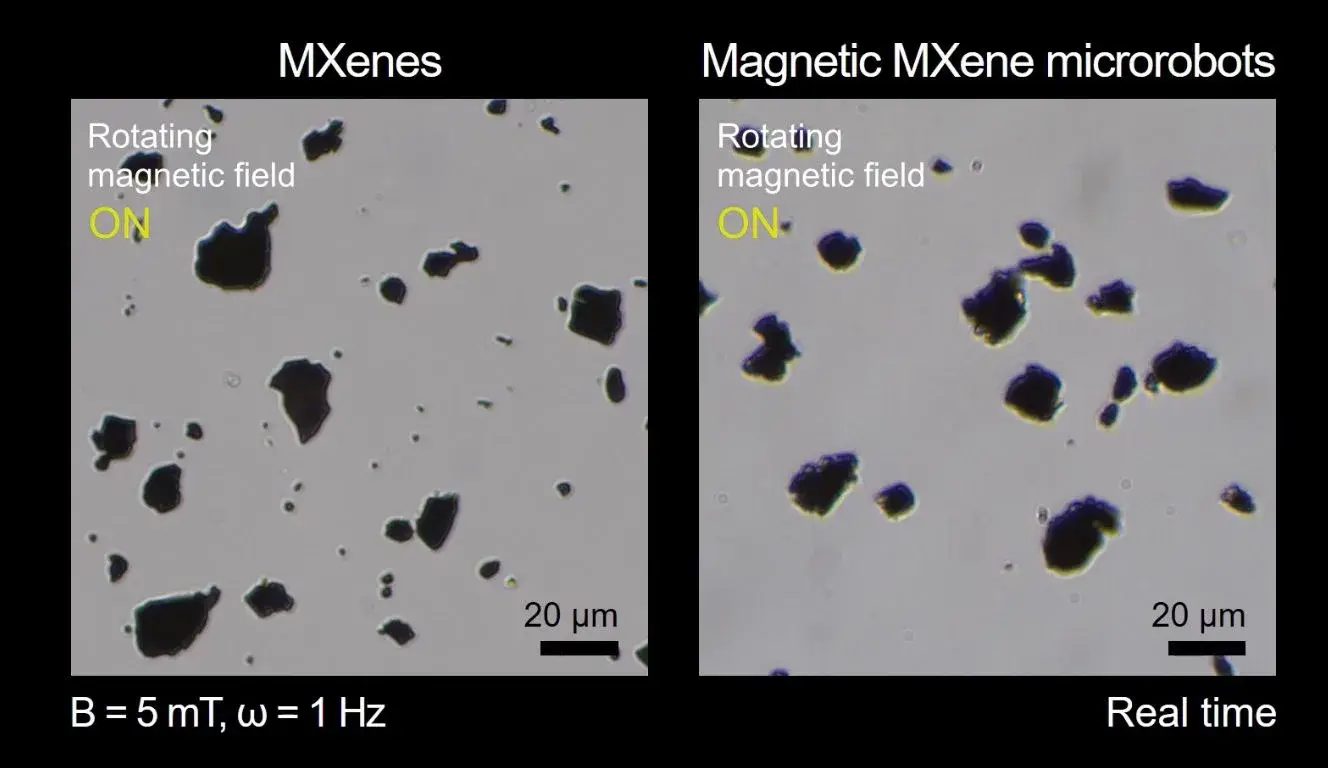
A team led by Jeonghyo Kim proposes a different route: Ti3C2Tx MXene microparticles, designed to attract the targeted microplastics, combined with ferromagnetic nickel nanoparticles.1 The result moves through soil under an external magnetic field, like microrobots, and is then recovered with a strong magnet.
In the lab, the researchers report removing about 81% of polystyrene and 72% of PET particles from soil, with higher rates in water.1 The paper appears in NPG Asia Materials.2
The interesting part is not the percentage; it is the gesture. Instead of hauling earth to a treatment plant, you send an agent into the soil and call it back. Remediation becomes an operation steered from outside rather than an excavation.
What remains unknown carries real weight: behaviour under real conditions, with the variety of soil types, moisture and organic matter.1 A lab result says nothing yet about a farm field. For now it is an open door, not a machine ready to ship.