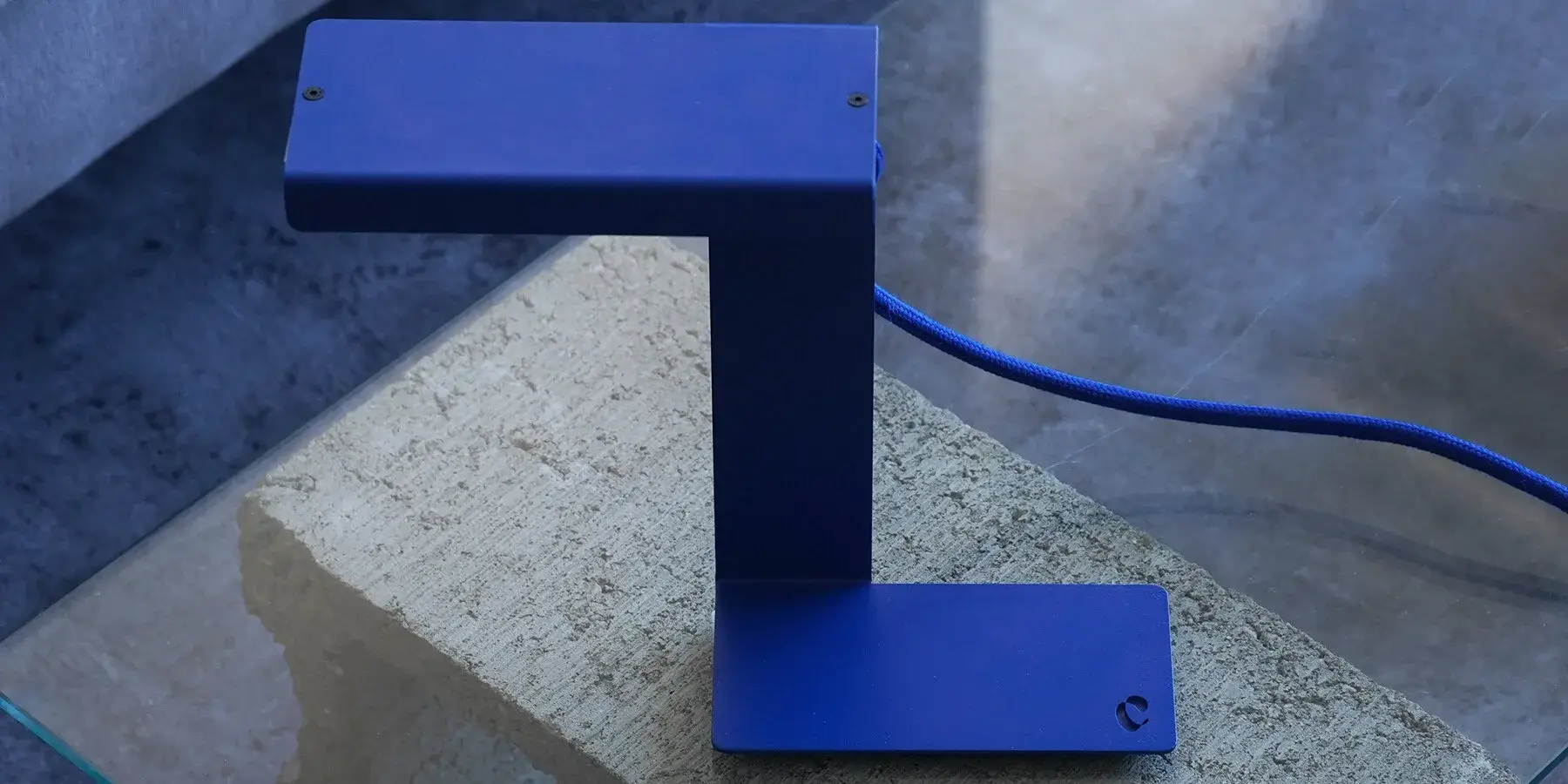
Cobre Estudio's TABLE LAMP Z begins with a constraint that almost fits into a bill of materials: one 2 mm steel sheet, laser cutting and folding.1
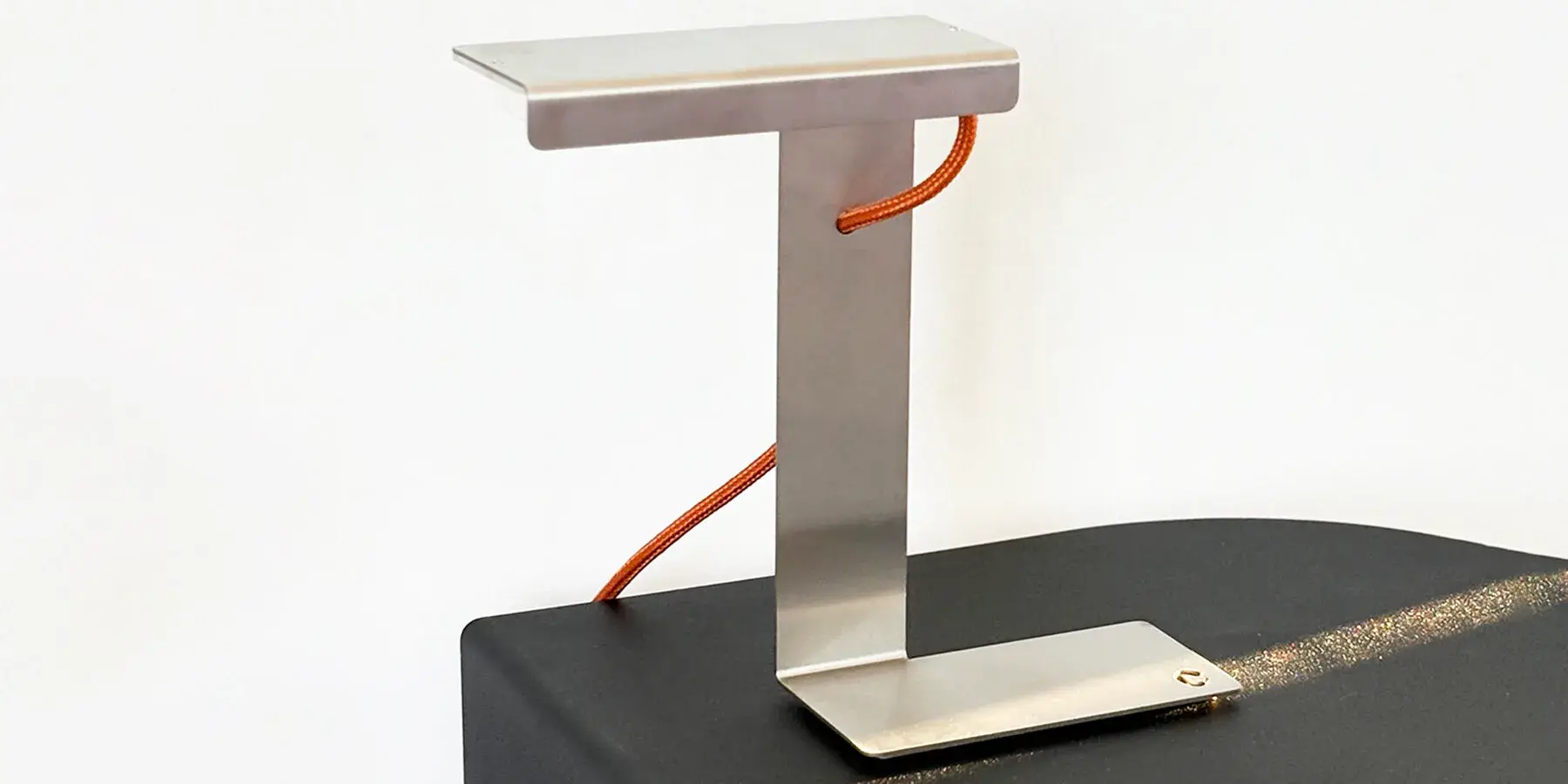
Designers Malena Vivanco and Miranda Gurny use one main continuous metal component. The folds do more than stiffen the sheet. They create the lamp's asymmetry, wrap around the light source and build the volume that becomes its visual signature.1
The fold’s vocabulary
Laser cutting prepares the outline before folding. The 2 mm thickness then gives the sheet enough rigidity to become structure rather than merely a skin. Warm light reflects across the steel faces, making those angles more visible when the lamp is on.1
Designboom identifies the story as a project submitted by the studio rather than an independent industrial test.1 Its production intentions should therefore be read as the designers' description. But the object still makes a concrete relationship between process and form visible.
Adding a separate shell, base and connectors would create more formal freedom. The studio goes the other way. Fewer operations force the geometry to solve stability, enclosure and light direction at the same time.
That principle is familiar in fabrication: a useful constraint can remove decisions instead of adding them. Once material and machine are known early, the designer stops drawing an ideal form that manufacturing must later negotiate. The design starts directly from what the process can do.
Geometry absorbs the work
One main component does not mean less design work. It means more decisions are concentrated before the first fold. Cut locations, fold sequence and angles have to produce an object that stands while leaving usable space around the light source.1 A mistake cannot easily be rescued with an extra bracket at the end without breaking the premise of the project.
This component economy also makes tradeoffs more legible. A thinner sheet would fold and stiffen differently. A thicker one would change tooling, weight and visual presence. The specified 2 mm is therefore not just a technical line in a product sheet. It directly participates in the behavior described by the studio.1
The colored fabric cable is almost the only element allowed to vary freely in color.1 That is a small but coherent choice: customization is placed on a part that does not also have to solve the structure.
The approach also makes finishing decisions unusually visible. There is little geometry available to distract from the steel itself, so edge quality, bend consistency and surface treatment become part of the perceived object. A reduced part count does not remove craftsmanship. It concentrates it in fewer operations, where variation is harder to hide.1
That concentration is the useful lesson: fewer pieces can make manufacturing decisions more visible rather than making manufacturing disappear.
TABLE LAMP Z does not reinvent sheet-metal folding. Its contribution is smaller and more useful: the object's visual language remains legible all the way back to its manufacturing sequence. The final shape still looks like the operations that made it.