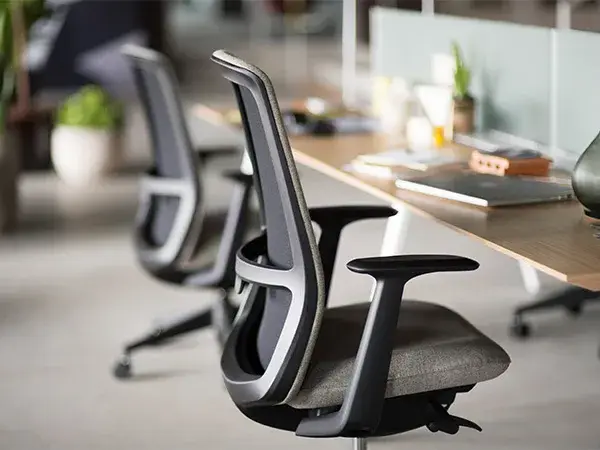
Putting recycled plastic into a chair is no longer unusual. Haworth is attempting something more restrictive with Fern: sending plastic from its own chairs and manufacturing scrap back into the parts of later chairs.1
The loop connects three companies. Old parts and scrap go to PADNOS, which processes them into black plastic pellets. Royal Technologies moulds new components, which return to Haworth for assembly. Plastic scrap created during that manufacturing cycle travels back to PADNOS again.2
The process began with black Fern components in North America. In June 2026, Haworth announced its expansion to Soji and said it intended to apply the process across its ergonomic seating portfolio by the end of 2026.1 That last part remains a stated target, not an accomplished result.
Core77 recognised the project in its Sustainability category. Its award entry attributes roughly 11 kg CO2e of footprint reduction to each Fern chair using the process.3 That project figure does not make the whole chair impact-free.
The useful part is logistical. A closed loop does not exist merely because a material carries a recycled label. Disassembly, sorting, pellet production, moulding and scrap return all have to remain compatible over time. The material needs a return address, not just a virtuous origin story.