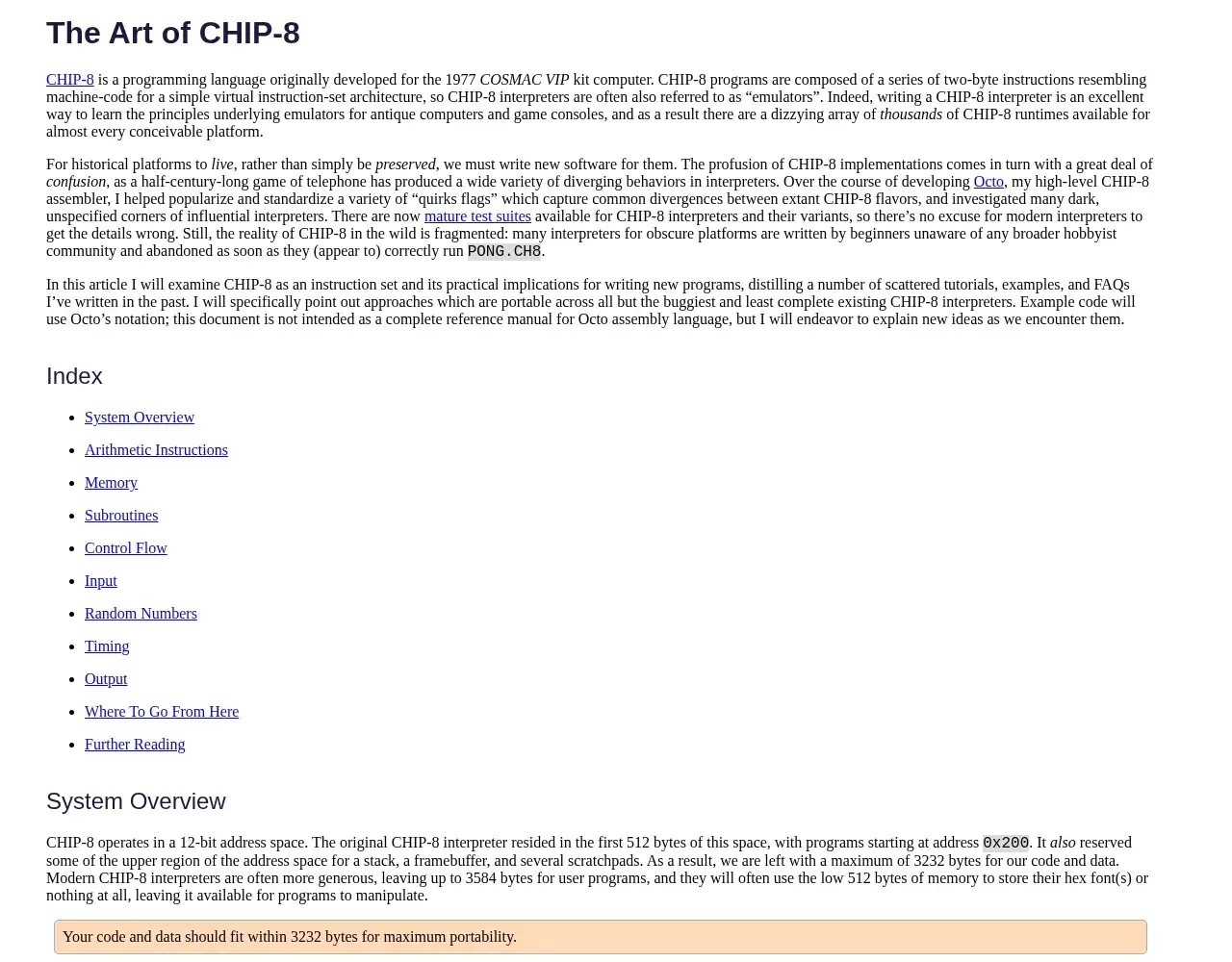
CHIP-8 gives you a 64 × 32 monochrome display, sixteen 8-bit registers and, if you want broad historical compatibility, about 3,232 bytes for program and data.1 That is barely enough space for one small modern image. Yet people are still writing new software for the virtual machine almost half a century after it appeared.
The long Art of CHIP-8 guide begins with a better idea than nostalgia: preserving an old platform is not enough to keep it alive. Somebody still has to make new things for it.1
The hidden constraint
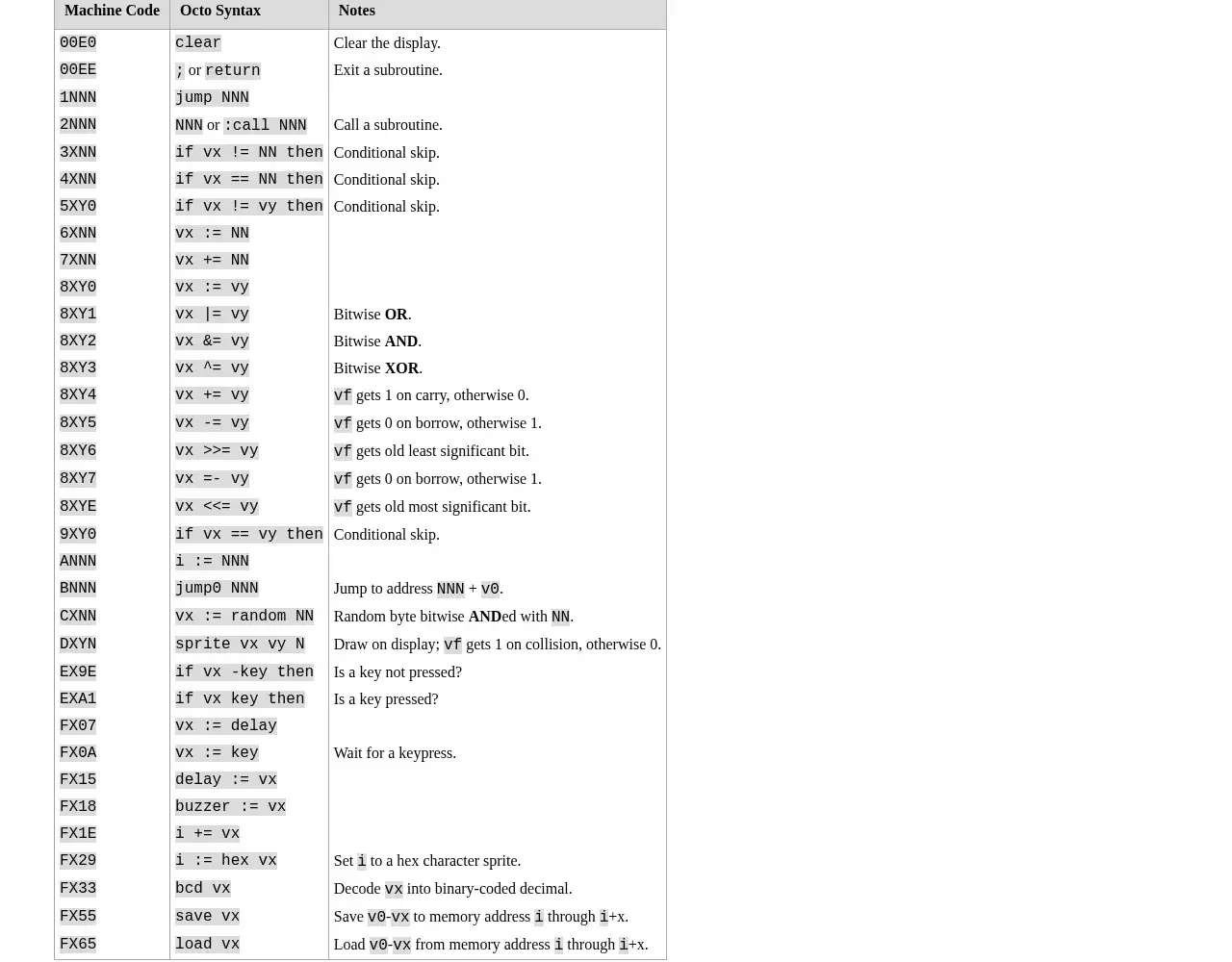
The guide describes only 34 elementary CHIP-8 instructions.1 That minimal surface should make the platform simple. History made it stranger.
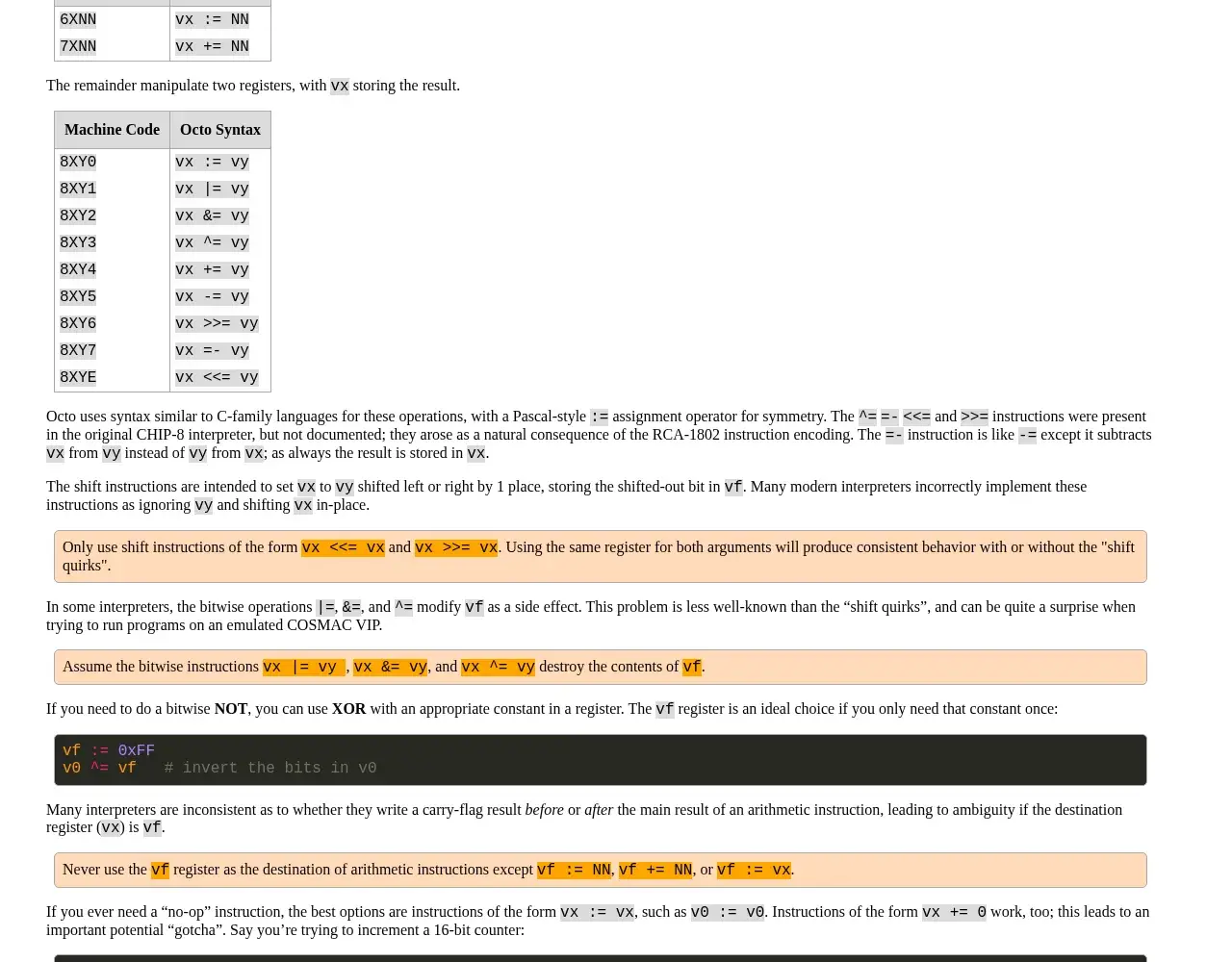
Many interpreters reproduced CHIP-8 with small behavioral differences. Shift instructions may not use registers the same way. Some bitwise operations change the carry register as a side effect. Sprites that cross a screen edge can be clipped or handled differently depending on the runtime.1 The CHIP-8 Research Facility documents this family of extensions and historical divergences.2
A programmer therefore chooses between exploiting a particular behavior and staying inside a conservative subset that travels well. The limit is no longer only 3,232 bytes. It is also the collection of machines that all call themselves CHIP-8.
Drawing means XOR
The most productive limitation lives in the display. CHIP-8 does not provide a large graphics API. One instruction draws a sprite by combining its bits with the framebuffer using XOR.1
Draw a white pixel over a white pixel and it turns black. Draw over black and it turns white. The same operation can set a flag when a lit pixel gets erased, giving simple collision information.1 Drawing, erasing and some collision detection therefore share one primitive.
That changes animation design. The guide shows that successive frames can be prepared as pre-XORed differences. One sprite operation can then erase the old state while drawing the new one, reducing flicker, at the cost of using the ordinary collision flag in the expected way.1
This is not simply “make the same animation with fewer pixels.” The animation is built around the exact operation the machine can perform on its framebuffer.
Tools grow around it
Then comes the paradox. A tiny target can create extra tooling around itself. The Octo author notes that sophisticated animation may lead people to write converters or small preparation tools that transform data before it enters the few kilobytes available to the program.1
That pattern is familiar in physical making. When the final machine has few degrees of freedom, intelligence moves into the jig, the preparation file or the method. A loom, plotter or CNC also imposes a grammar. Creativity does not disappear under constraint. It changes location.
CHIP-8 is therefore useful as more than retrocomputing. Its technical surface is small enough to understand, which makes decisions modern tools often hide unusually visible: what a sprite costs, what drawing actually erases, why a frame flickers and which behavior remains portable.
64 × 32 pixels do not give you much room. They also give bad decisions very few places to hide.