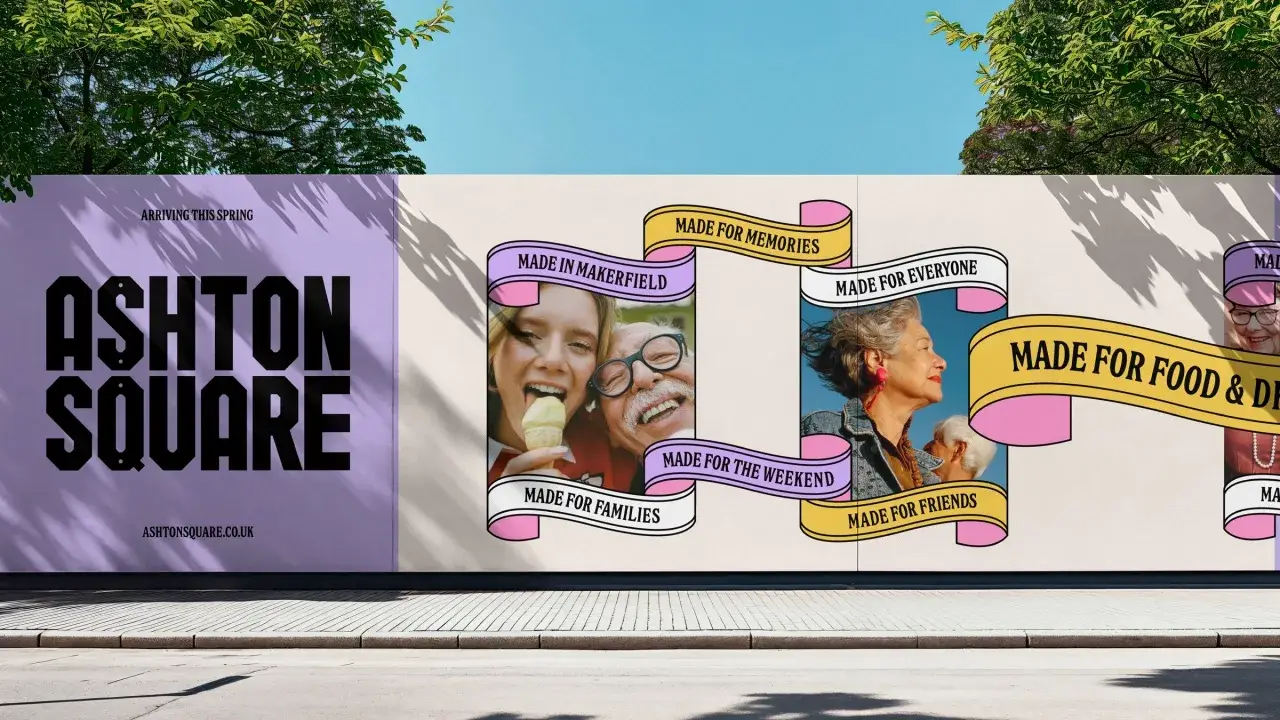
In June 2026, Ashton-in-Makerfield, a market town in Greater Manchester, got more TV cameras than it had probably ever seen. The constituency's MP had resigned on purpose so that Andy Burnham, Greater Manchester's mayor, could attempt a return to Westminster that everyone read as a first step toward Downing Street. News crews from around the world camped on the high street.5 Some of the reports, as Creative Boom founder Katy Cowan sums it up, arrived with the angle pre-assembled: post-industrial decline, vape shops, the abandoned North.1
The theme didn't come from nowhere. During the campaign, Burnham literally made vape shops a plank of his local platform, demanding a change in the law to give councils the power to block them.7 But while the studios were broadcasting, in the middle of town a car park was turning back into what it had been for seven centuries: the ground where Ashton makes things. And the way that ground is being remade deserves more attention than the way it was being filmed.
The ground comes first
The site says the essential thing before any design mockup. Ashton's market has existed since a charter officially created it in 1284.2 The outdoor market on Garswood Street traded for over a century before closing during the pandemic.2 In between, the town took its name from what it produced: hinges, locks and files during the Industrial Revolution, then coal from the Lancashire coalfield, weaving and ironwork.1 The Crompton's hinge factory closed and was demolished, replaced by a shopping centre.6 One pub remains, the Hingemaker's Arms, which Wikipedia describes as the only pub in the world known to carry that name.6
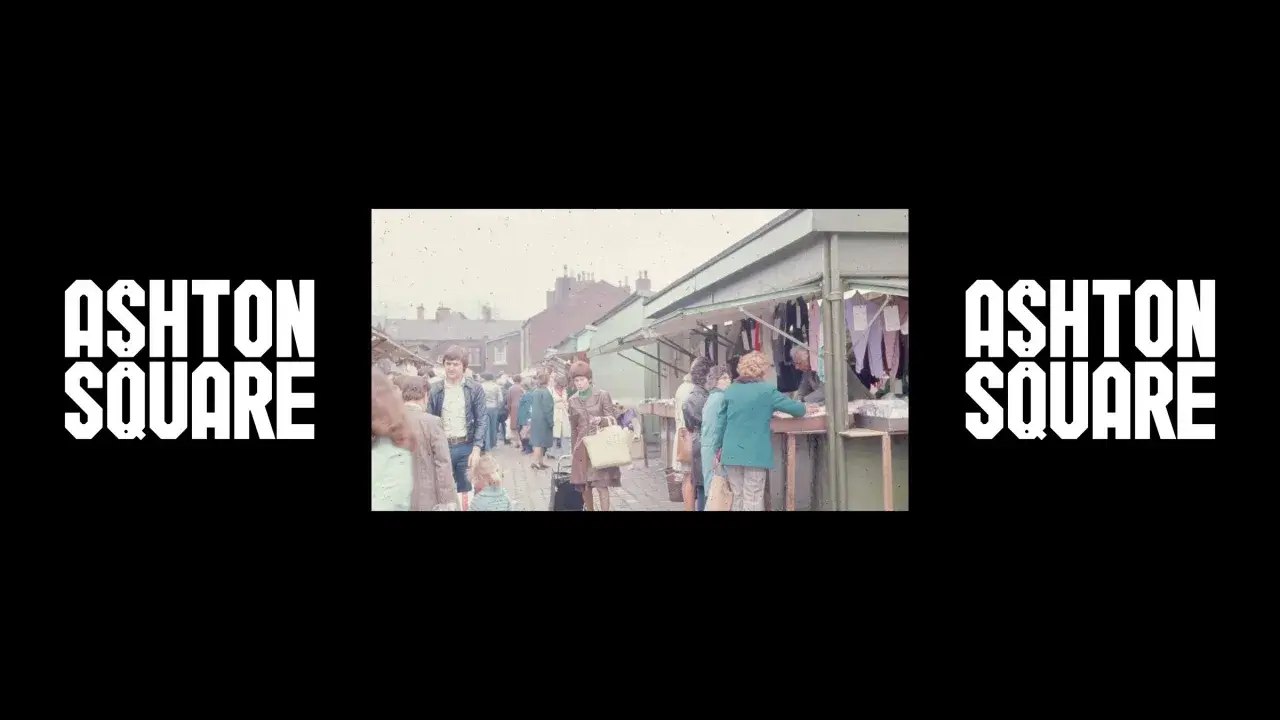
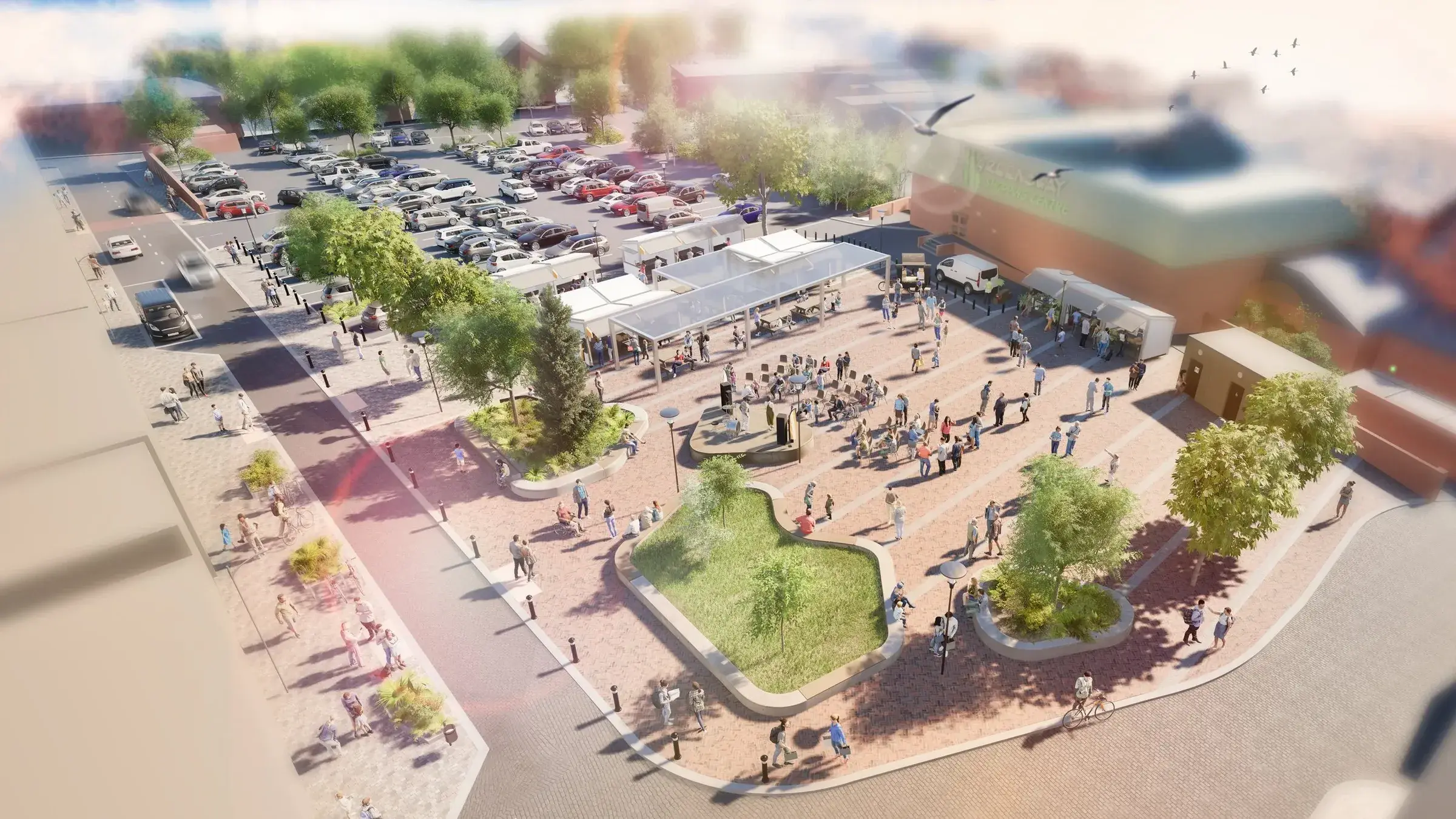
That is the ground Wigan Council decided to reopen. The #OurFutureAshton project runs on £6.6 million of government funding, and its centrepiece gives the historic market site back its original purpose: a public square for events, small businesses and the community.3
Numbers before mockups
What stands out in the file isn't the amount, it's the administrative patience attached to it. The council spent three years consulting residents, businesses and young people before submitting its funding bid in the summer of 2022.3 The figures from those consultations, published on the project page, describe a town that wasn't doing well: in early 2024, 30% of young people surveyed did not feel safe at all in the town centre at night, 64% of businesses and staff were unhappy with footfall, 52% felt the centre had declined over the previous six months, and 66% were dissatisfied with how it looks.3
Work started on February 16, 2026, after the main contract was awarded to contractor Bethell, approved by the council's Cabinet on January 26.34 The council's page scheduled the whole programme through November 2026; Creative Boom wrote in late August that the square itself is due the following year. Between those two lines sits the truth of any building site: nobody knows yet.13 Meanwhile, twelve properties were awarded places in the first round of shopfront grants and the first refurbished facades are already visible, while the first public artworks are up, including a mural by Scott of Snow Graffiti near Gerard Street.38
Into this setting, the council brought in David Sedgwick, founder of the Manchester studio StudioDBD, to give the whole thing an identity.1
Refusing to finish
The project's most interesting design decision fits in one sentence from Sedgwick: "It creates a brand that isn't finished on launch day. It's designed to be made by the people who use the square."1
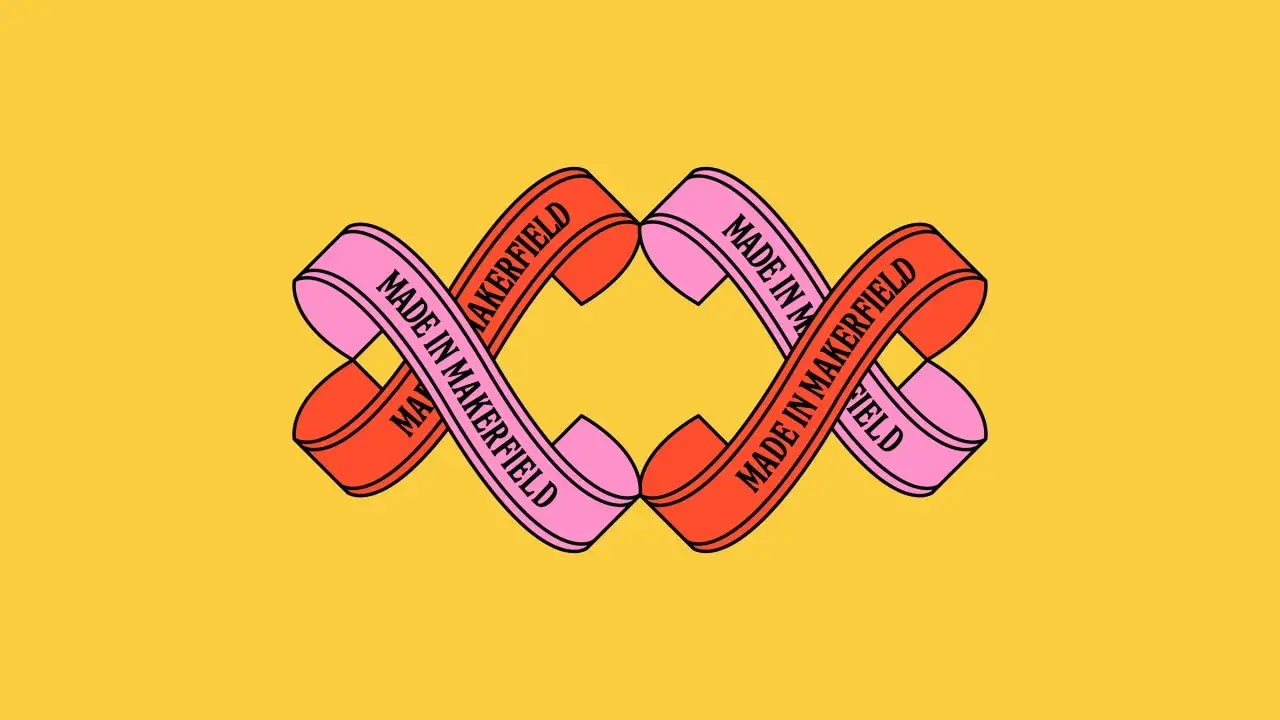
The foundation is called "Made in Makerfield". Behind the wordplay sits an open storytelling platform: local businesses, community groups and events can use it to tell what they make. The brand grows every time somebody new uses the square, instead of being locked in a brand book on day one.1 On the square's official site, built by StudioDBD, the promise is already operational: permanent kiosk units for independents and flexible market pitches are recruiting their future occupants, pitched as a low-risk way to test products and build an audience.2
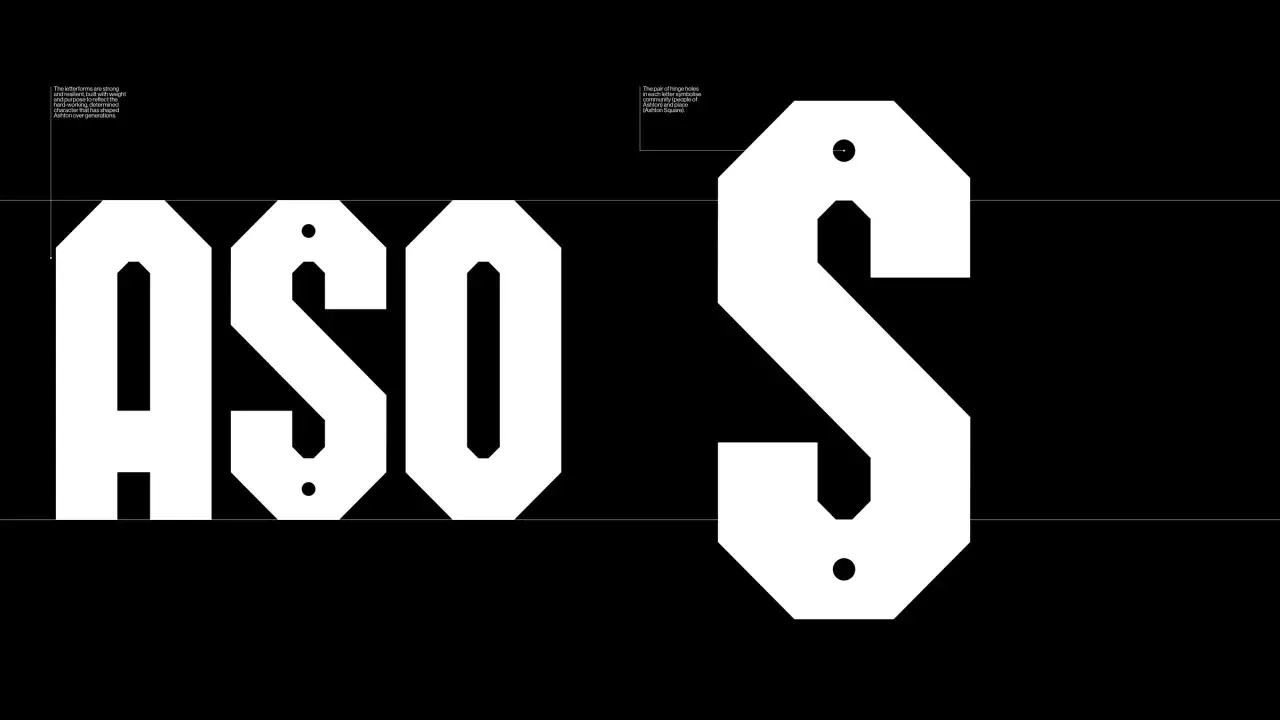
The visual system tells the same story. The bespoke typography borrows from mechanical forms, tools and manufactured components; annotations on StudioDBD's specimen point out hinge holes drawn into the letterforms, a direct nod to the town's industrial past.1 The ribbons running through the identity come from Walking Day, the local civic tradition where churches and schools filled the streets with banners and brass, and whose decorations families made from ribbons bought at the market stalls on that very site. The ground of the future square was, literally, where the celebration got made.1
Sedgwick sums up the intent: "confident without being corporate, crafted without feeling precious and proudly northern without resorting to cliché."1 During construction, a space called Art Corner, run with Outhouse and Everyday Wigan, hosts residents for workshops and conversations, with its own set of illustrated icons for everything you can make there.1
Brand as process
What StudioDBD is doing here goes beyond one market square in Greater Manchester. Most identities, civic ones included, are designed as objects: a logo, a palette, a tone of voice, a rules PDF, then life makes do. This one is designed as a process: you define materials (a typeface, ribbons, a platform), assembly rules, and you let users produce pieces the studio never drew. Saturday's stall, the school banner, the charity poster all become layers of the brand.1
Anyone who has maintained an open source project or built in public will recognize the mechanics. A closed brand book is proprietary software: every unplanned use is a violation. An identity designed like Ashton Square is a repo with contribution rules: the typeface and ribbons are the core, uses are the pull requests, and the studio's role stops where the residents' begins. Delegation like this is an architecture decision. A brand that can't grow with its users is doomed to be grudgingly maintained by its agency, then abandoned.
It is also, more quietly, an answer to the problem the initial consultation exposed. To a town that said it was seen as dated and tired, the identity doesn't respond with cosmetic rebranding; it hands residents back a maker's role. "The square has always been somewhere things are made," says Sedgwick. "Now it can be a place where new stories are made too."1 The message isn't "we'll make you pretty," it's "we're handing you the tools."
Nothing is proven yet
Honesty requires naming what still belongs to the realm of promises. The square isn't delivered, and a storytelling platform only lives if someone feeds it: nothing proves today that local businesses will pick it up beyond the first months of enthusiasm. The classic failure mode of participatory brands even has a name: decorative participation, where the user is invited to colour inside the gaps of a system that stays locked. The difference will show in two or three years, when we learn whether uses StudioDBD never planned have survived and spread, or whether everything fell back in line.
The timeline itself stays blurry: the council scheduled works through November 2026, Creative Boom reports the square due in 2027.13 And the political backdrop is a reminder that £6.6 million of public funding is also a local electoral stake, in a constituency the whole country watched during the by-election.5
But one thing is already real: applications for kiosks and market pitches are open, and the project is explicitly looking for the makers, bakers, musicians and founders who "make this town".2 The test won't be how good the logo looks. It will be the name of the first independent business that opens a kiosk, tests a product on a Saturday, then comes back the next one. Exactly the kind of story the world's press hadn't come looking for.