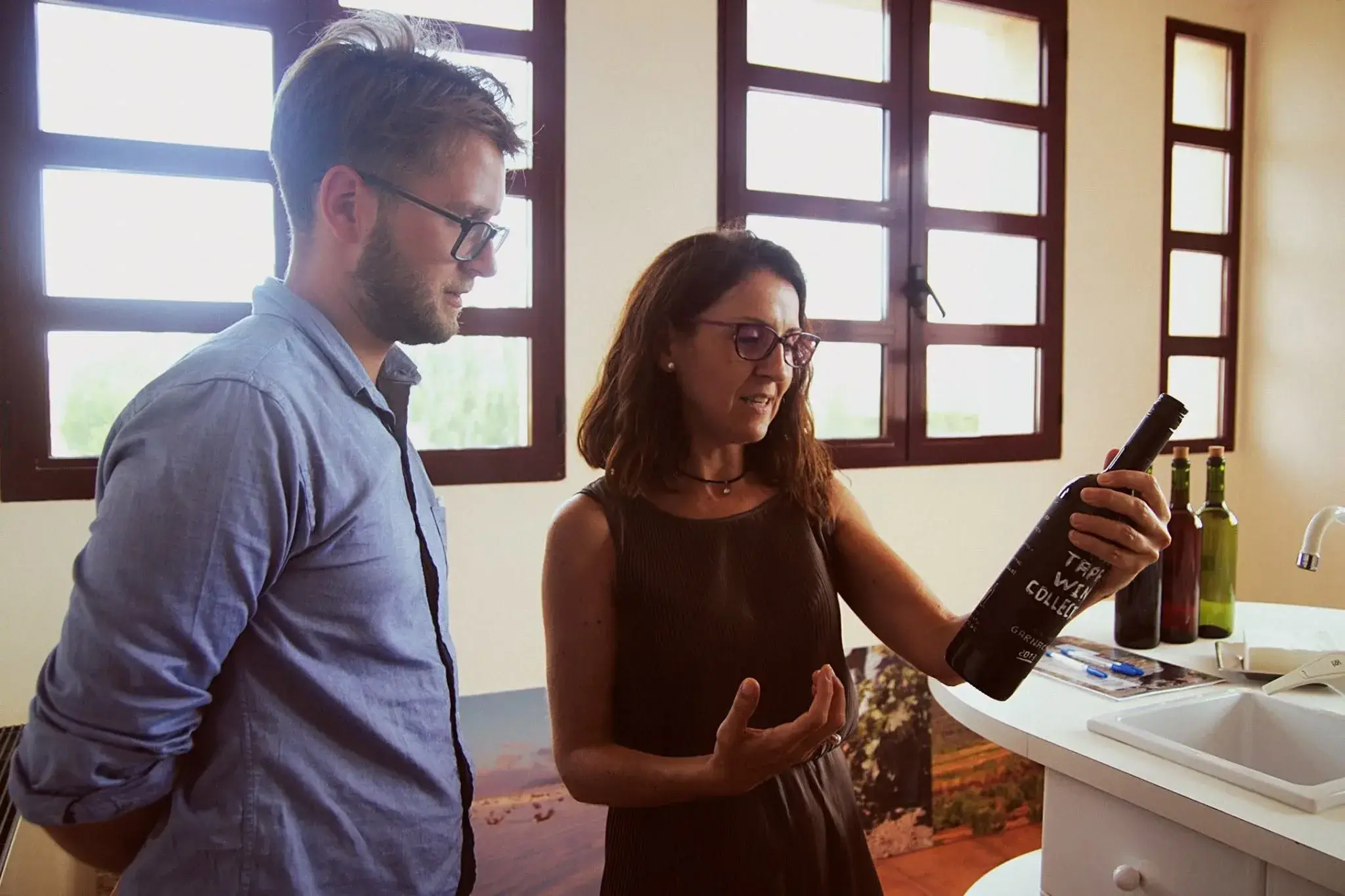
The pitch sounds like an excellent way to turn agency fees into a hangover: a winery pays for travel, accommodation and meals for a small Lithuanian design team, while andstudio rebuilds its brand and waives the usual agency fee.13
The more interesting detail comes immediately afterwards: in place of a thirty-page PDF, andstudio wants to live at the winery for a week, work alongside winemakers, see production, taste the wine, share meals and understand the ordinary course of work on site. Only after that week do the designers go home for a four-to-six-month process covering strategy, positioning, visual identity, labels, packaging and an implementation roadmap.13
Wine Design Exchange only launched in August 2026, with applications currently open, so no completed case currently proves a harvest produces better branding. The useful questions for now are narrower: what does a week of immersion replace, and who absorbs the cost of the experiment?23
Before Illustrator
A conventional brief arrives pre-filtered because the client has already selected the problems it thinks matter, found words to describe them and often decided what is not worth mentioning.
Andstudio proposes moving that selection upstream. During the week the team wants to observe the winery before defining the brand, paying attention to production, region, gestures, commercial problems, ambitions and the people behind the bottles.3
To be sure, usefulness here needs no mystical theory of creativity: fieldwork can simply produce information that rarely surfaces in the course of a video call.
A winemaker may write “family” in a brief, as thousands of other businesses do. Spending days on site can, in principle, show what the word means here: the working relationships, tasks left manual, habits passed down, objects that never leave the cellar, moments of decision and things visitors routinely misunderstand.
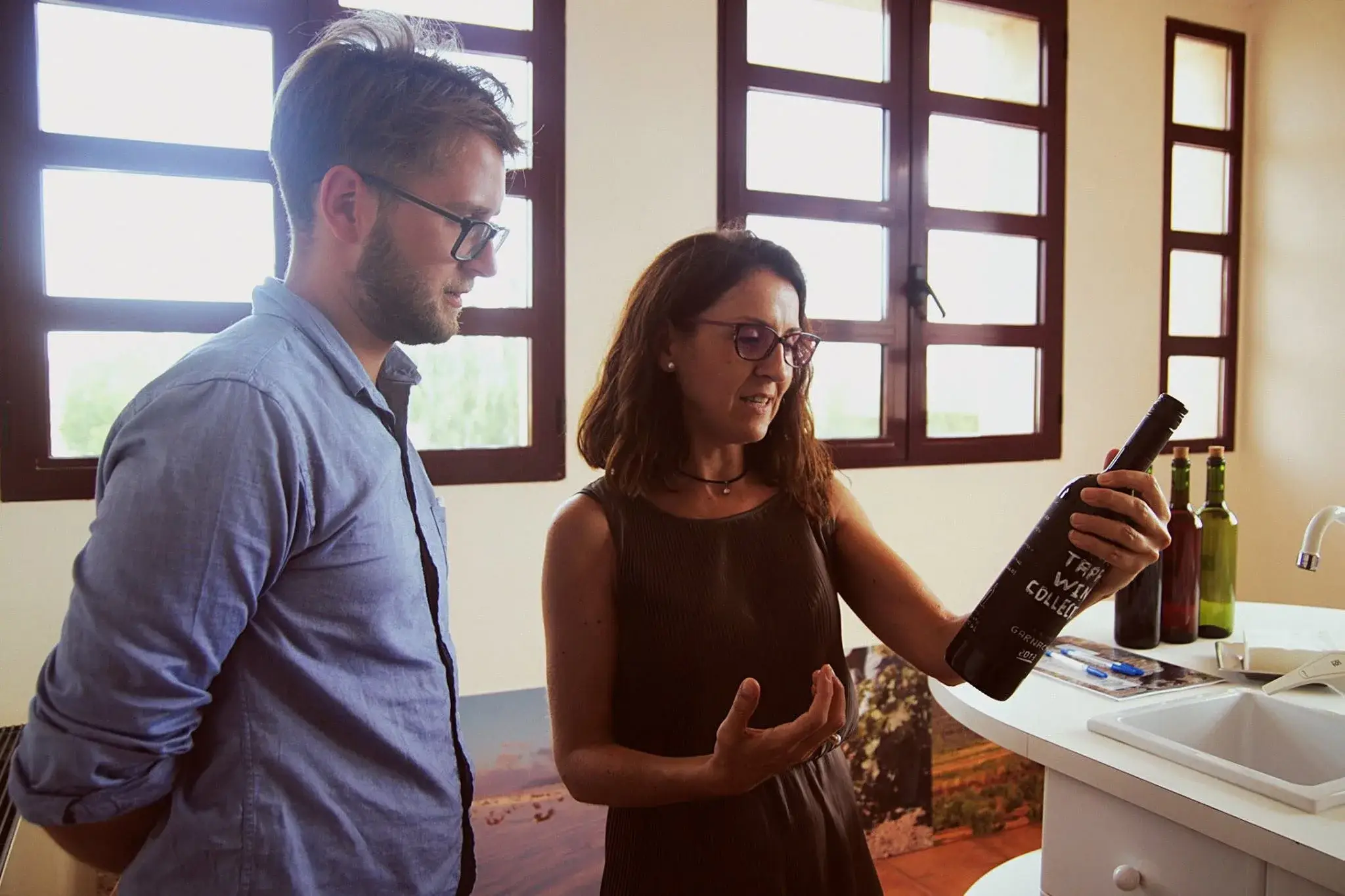
None of that field material automatically dictates a graphic form. Its value lies in giving the designer more concrete material to choose from, or deliberately reject.
The precedent
Wine Design Exchange looks eccentric, although andstudio has tested the underlying logic before: in 2019, the Vilnius studio and Florence-based Muttnik exchanged working environments for several weeks, with Fast Company documenting the teams working in one another's country and office while accommodation and local logistics were arranged between them.4
Studio Exchange had an explicit purpose: learn an unfamiliar market, its constraints and its working culture by operating inside it rather than visiting as a tourist.45
The experiment offers no proof of a mechanically better logo, but it establishes something more modest and useful for judging the new initiative: andstudio was already willing to spend time and money changing its working context as a research tool, years before wine supplied a particularly attractive press angle.
Who pays
The economics deserve more attention than the bottles offered in return, because the selected winery covers travel, accommodation and meals while andstudio waives its agency fee, although the one-week residency only begins a process that can run for six months.13
The largest cost is therefore absorbed by the studio as unbilled strategy, design and production time, an expenditure that makes sense only if andstudio receives something else of value.
Creative Boom describes the logic unusually clearly: access itself becomes part of the return. Entry into the wine sector gives a Lithuanian agency an international case study, a longer relationship and a story of the sort design media tends to cover.1
This article, rather obviously, belongs to that final return, and the acquisition mechanism is already working before the first redesigned bottle exists.
The arrangement sits somewhere outside ordinary pro bono work and simple “logo for wine” barter. The cleaner description is a client-acquisition budget paid in studio time.
How many
Even the intended cadence shows an initiative whose operating model remains unsettled: Creative Boom describes one winery being selected each year, while the European Design Awards blog reports both a deliberately small model, with one to three residencies a year described as realistic, and an annual selection in its explanation of applications.13
The public descriptions disagree on this detail, so the common point is more useful: the programme is meant to stay small, with every residency followed by months of work.
The selection criteria point in the same direction: according to andstudio, location, size and current brand maturity are secondary to the quality of the story, the business challenge, the winery’s ambitions and its willingness to collaborate closely, meaning the studio is also choosing the client it wants to turn into its own case study.13
What to watch
Over the next year, the method can be judged properly only when the first residency and rebrand are complete enough to compare promise with outcome, including which facts from the vineyard changed positioning, which insights were missing from interviews, which local details were deliberately discarded as poor branding, and whether the strategy and identity system remain in use months after the designers leave.
Absent that traceability, “immersion” can become a premium word for a team trip. Proper traceability would let Wine Design Exchange provide a clean test of a more general idea: before asking a client to write a better brief, remove the brief and go look at the work that needs explaining. The difference sounds small, but it moves the first design decision toward watching the company at work before accepting its own description as the starting point.