Walking with Animators begins with a numbers problem: more than 70 people were interviewed between 2018 and 2026, including Phil Tippett, Peter Lord, Floyd Norman, Glen Keane, Joanna Quinn, Regina Pessoa, Henry Selick, Bill Plympton and Doug Chiang.14 Across roughly one hour and forty minutes, the finished film also refers to more than 130 animated works.4
The edit therefore discards a great deal of material while trying to preserve the awkward part of the interviews: people in animation describe the work very differently.
No narrator
Alexandre Poncet told 3DVF that an early version had become too much like a history course as sections accumulated and the historical scaffolding grew heavy enough for the film to resemble a chain of lectures.5
In the Annecy version, the narrator disappears and the interviews answer each other in the edit: one person describes a gesture and another approaches the subject through a different technique, leaving room for answers that do not quite agree.4 This is useful material for an archive rather than a defect to tidy away.
Annecy describes artists whose voices differ in their creative philosophy and in their personal relationship to animation.2 The vocabulary matters for an archive of craft, as part of the work is passed on through the words used for correcting a pose, watching movement and deciding whether it feels right.
Same word, other hands
“Animation” covers hand drawing, stop motion, cut-outs, CG and motion capture in this film.13 Poncet says they even ask where puppetry belongs and whether Jim Henson should be considered part of the same continuum.5
The complication is useful because a drawn walk follows different constraints from a puppet moved frame by frame: in stop motion the animator touches the character and cannot perfectly recover an earlier state after a bad move. By contrast, in 3D the model accepts impossible poses and leaves the animator responsible for inventing the limits. One professional label hides very different physical relationships to the material.
Across those techniques, much of the transferable knowledge sits in less visible decisions about weight, rhythm, anticipation, pose, silhouette and the small delays that make an action believable, much of which cannot be recovered from a list of credits.
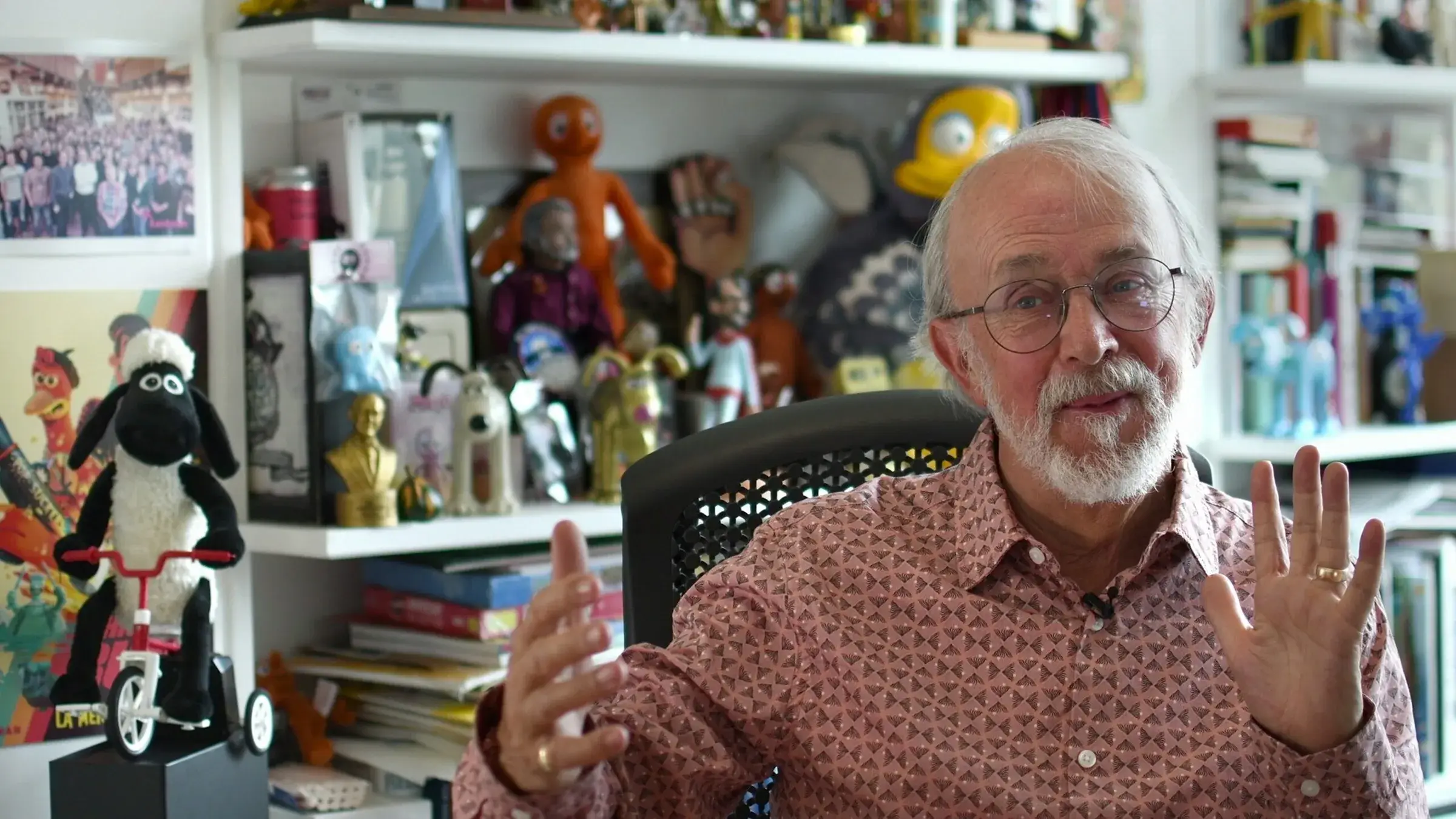
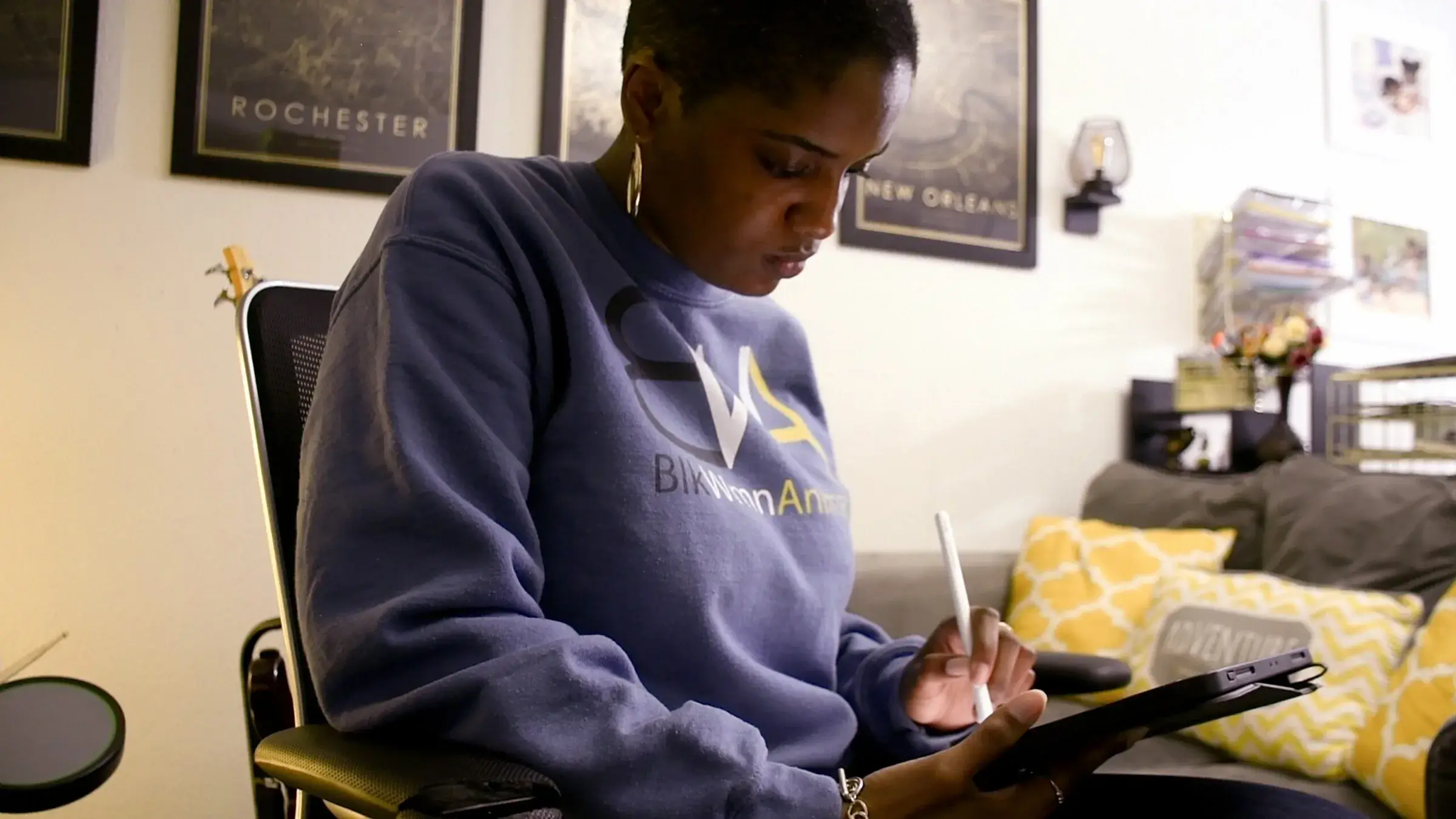
The interview list makes the contrast unusually broad: Floyd Norman brings the history of studio drawing, Peter Lord has decades at Aardman, and Phil Tippett worked on physical creatures before the industry's digital transition, while Joanna Quinn and Regina Pessoa bring other ways of drawing and timing movement.1
Eight years pass
Over the last eight years, the context around the film changed sharply: production began in 2018, Covid interrupted the work, and the rise of generative systems later became a major industrial argument in animation.45 Poncet says those changes altered the meaning of the documentary during production.
Poncet takes a severe position on generative AI, arguing that the chain of human decisions leading to an image is part of animation itself and that reducing the process to an end result changes the craft, although the available sources do not justify assigning that opinion to every interviewee.5
The calendar alone adds documentary value to the older interviews, because a conversation recorded before Covid may describe studio organization, training or relationships to machines in terms that land differently eight years later. We are watching an archive that began aging before the film reached its audience.
Images need clearance
Speech solves only half of the problem in a documentary about animation, and the audience also needs images from the films being discussed.
Poncet describes the unglamorous work involved in finding each clip, locating its owner, preparing documentation for legal review and then negotiating studio permissions across territories.5 Cartoon Brew lists Aardman, Pixar, Walt Disney Animation Studios, Netflix, Warner Bros., CalArts, Gobelins and Tippett Studio among the organizations supporting the film.4
Those agreements can unlock rare material, but they also draw a practical border around the archive, since a filmmaker can only show material that has been found and cleared for use. In practice, the memory of the craft depends on contracts, catalogues and contact details as well as artistic importance (a less romantic, more accurate picture of preservation).
What survives
Carlotta Films is distributing the documentary in France, while Le Pacte handles international sales.34
Many of the films discussed by those seventy-plus people are likely to outlive the working methods behind them, because a print can be restored, a Blu-ray reissued or a feature returned to streaming. A particular method for correcting a pose or preparing a puppet is harder to recover after the practitioner stops working beside somebody who can learn it.
This documentary works best on a smaller, more practical scale than a definitive history of animation: a large bundle of spoken craft knowledge recorded in the middle of changes in technique, studios and generations.