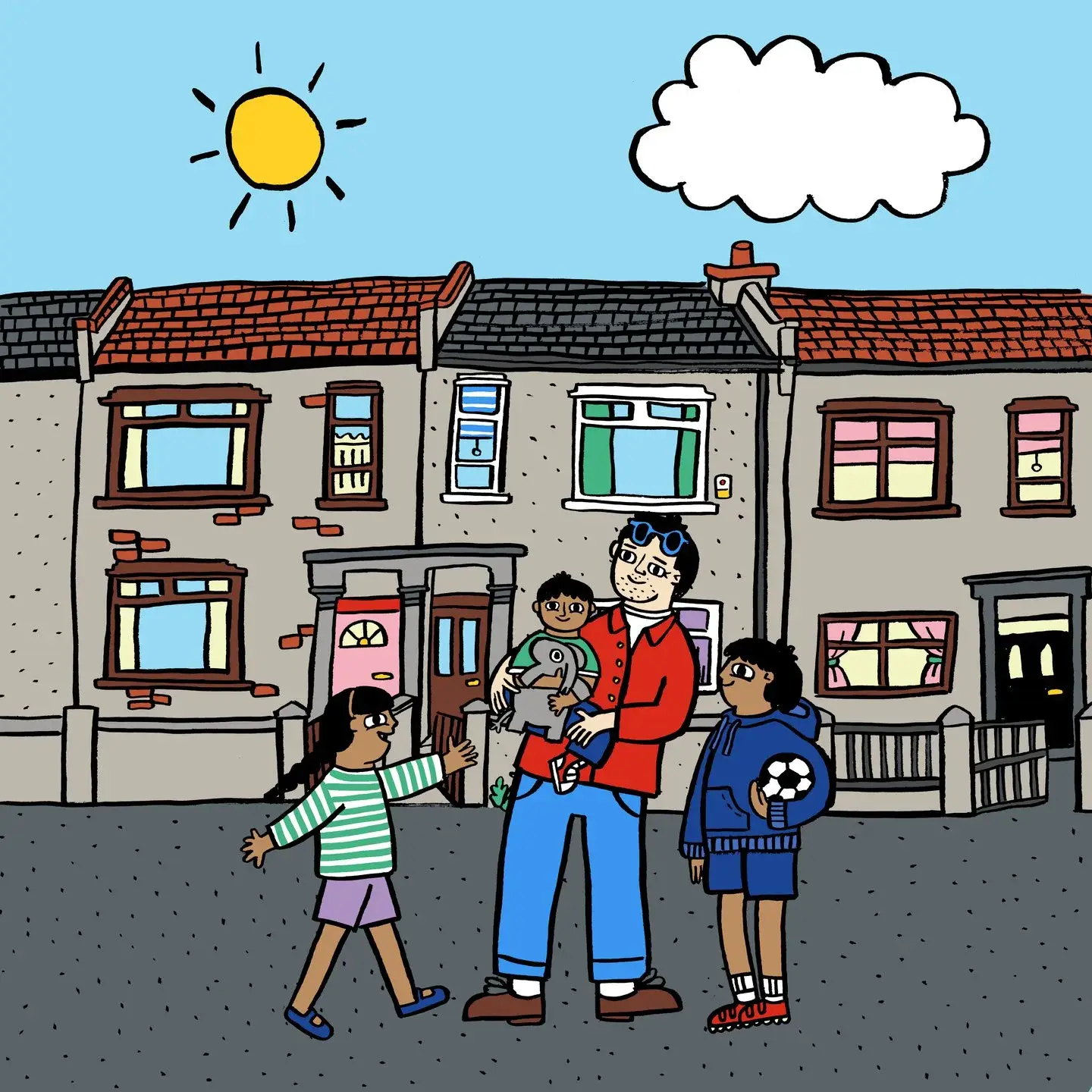
The central character in The Elephant in the Room is an elephant that keeps taking up more space inside very ordinary family scenes.
The metaphor is literal, but the film is not chasing sophistication. To talk about financial pressure during school holidays, Alice Bowsher and animation studio Plastic Horse deliberately borrow a visual language children already know.1
After-school lines
Bowsher names Sesame Street, Arthur and Hey Arnold! among the campaign's references.1
That choice matters. The film approaches poverty from a child's perspective, with narration by Himesh Patel, rather than putting a polished advertising language on top of that viewpoint.1
Save the Children connects the campaign to its 2026 UK summer survey. Among 2,000 parents surveyed, 88 per cent reported financial and emotional pressure during the school holidays, while three in five called summer the hardest time of year financially.2
Those are figures from the charity's own survey, not a universal measurement of every UK family.
From brush to After Effects
The production starts physically.
Bowsher begins with rough digital sketches, then makes the final drawings with brush and ink. Each image is scanned before it reaches Plastic Horse.1
The studio cuts those illustrations apart in Photoshop, then manipulates the pieces in After Effects to create movement.1
That chain preserves something useful: animation does not erase the marks of drawing. It moves them around.
The elephant can grow, cross the frame and become impossible to ignore without the image losing its picture-book texture.
A child’s viewpoint
A campaign about poverty can easily use emotion as a hammer. The more interesting decision here is narrower: the problem is described with forms a child might already recognise.
Save the Children also publishes practical material around the film, covering holiday costs, free activities and conversations about money with children.2
The short does not have to explain everything. It makes one pressure visible, using an elephant that simply becomes too large to keep at the edge of the frame.