To tell a story for Pasqua Wines' centenary, Gaia Alari did not build one charcoal asset and move it cleanly from pose to pose. Her Three Movements installation consists of 650 drawings made and coloured by hand, using oil pastel and charcoal on paper.1
That number could describe a very expensive route to an artisanal look, but it says something more specific about her motion because the mark starts again in every frame. Pressure changes, grain catches differently and a hatch never lands in precisely the same place. Variation that many workflows are built to control becomes part of the animation system.
Alari has said that she loves the grainy effect of traditional animation,2 and elsewhere describes paper as an anchor that still leaves a mysterious corner where images can almost slip from her control.3 The wobble is not simply a defect forgotten during cleanup; the production method keeps generating it.
650 times
Her commercial portfolio puts useful numbers on the choice: Three Movements uses 650 drawings, Aritzia's The Ladybug and Anthropologie's Cyber Week use 120 coloured-pencil drawings each, Marei 1998's 2026/2027 launch uses 100 drawings made as straight-ahead animation, and Beats by Dre's Never Beaten uses around 200 rotoscoped drawings in a flip-book style.1
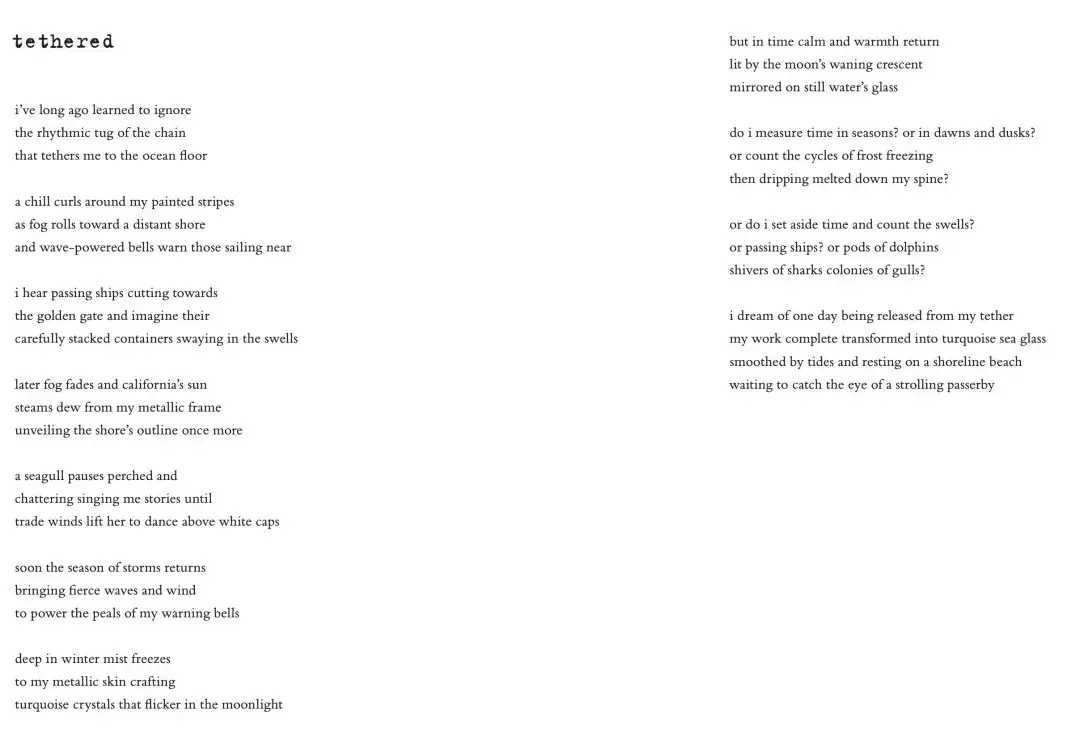
Then there is tethered, the 2021 short made around a James Morehead poem, which used 750 drawings for roughly 90 seconds of traditional animation.2
The counts cannot be turned into a trustworthy frame rate because editing, repeated images, held poses and timing differ between films, but they establish something simpler: even under commercial constraints, where visual consistency matters, Alari repeatedly remakes images physically rather than reducing the drawing to a handful of perfectly reusable digital shapes.
Living grain
On tethered, Alari specifically talks about enjoying the grain of traditional animation,2 which puts the material earlier in the process than a texture added after motion is designed: pencil, charcoal or pastel is present at the point where each frame comes into existence.
By contrast with an irregular digital line whose texture can remain perfectly attached to the same form, shape and surface are remade together here; a turning cheek does not simply carry “its” charcoal into the next pose, because the following mark is a new deposit on another drawing.
None of this makes the result random: Alari can work from rotoscoping, character design and tightly directed movement depending on the commission,1 while instability remains at a smaller scale, in the edge, fill, hatching, material density and slight proportional differences, so continuity of gesture survives even as continuity of the pixel disappears.
Paper anchors
This might be merely a material preference if Alari did not describe paper as part of her thinking. In Communication Arts, she calls paper an anchor for exploration while saying that even commissioned work retains a mysterious corner where imagery can almost escape her control.3
That description is more useful than an analogue-versus-digital argument because the medium provides a stable constraint, a finite surface and real material with gestures that cost something to undo, while enough uncertainty remains inside those limits for consecutive drawings never to become exact copies.
Her background also resists the cliché that expressive looseness requires rejecting discipline: Alari studied medicine before becoming a self-taught illustrator and animator, and credits that training with analytical focus and the stubbornness required to polish her style, which makes the looseness look less like absence of method than a result reached after a great deal of it.34
AIT has described her practice since 2021 as frame-by-frame, hand-drawn, one-layer animation in charcoal and oil pastel on paper, often made as a one-woman crew.4 One layer also means less separation between character, texture and medium: the complete drawing carries the change directly.
Client work
The commercial portfolio matters because the method survives outside personal shorts. Coloured pencil goes into Aritzia and Anthropologie campaigns; charcoal and oil pastel become a Pasqua installation; HOKA x UNNA receives hand-drawn and hand-coloured animation on paper.1
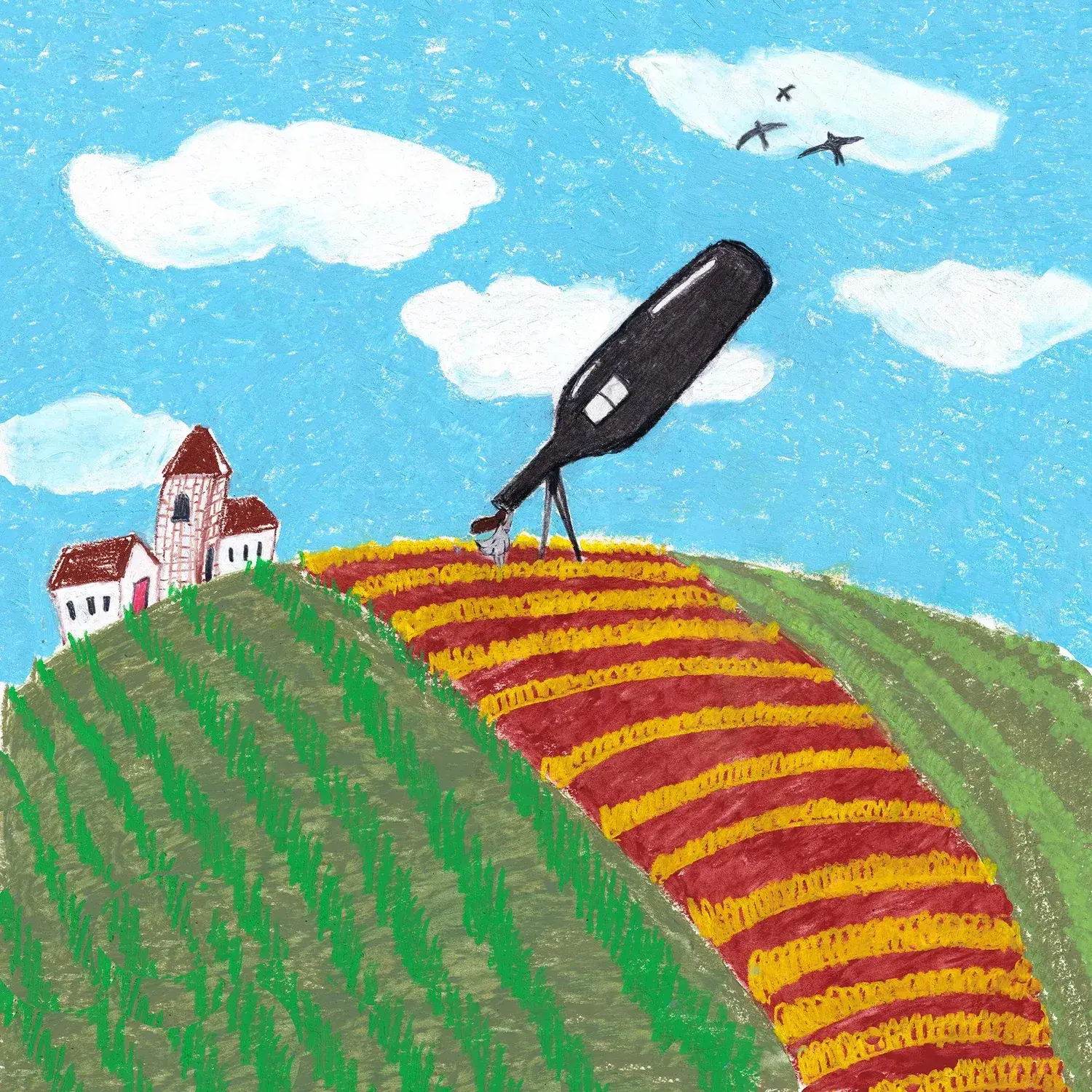
Clients are therefore buying more than a final image that a more efficient pipeline might approximate; they are also buying behaviour in the movement, and a campaign can demand a deadline, social format, recognizable brand and precise direction while tiny drawing-to-drawing differences remain visible because they belong to the expected signature.
To be sure, traditional animation still requires selection, timing, editing, correction and continuity decisions, so every imperfection is hardly sacred; the narrower point is that cleanup does not aim to make the frames materially identical, because doing so would remove part of the reason for drawing them separately in the first place.
Stretchy motion
The instability connects to another recurring feature of Alari's work: shapes that morph, stretch and slide between states. In the AIT interview, she describes imagined animation as constant fluid morphing and shapeshifting, used to explore mystery rather than resolve it.4
Physical drawing fits that logic because no geometry has to remain legally the same object between frames. An arm may lengthen, a body may become something else, a patch of charcoal may acquire a new role; the next drawing does not need to preserve a hidden vector rig or 3D skeleton unless the movement calls for one.
The cost of this freedom is extremely ordinary: time, and in the 2021 interview Alari describes the phase after her ideas become clear as drawing, then more drawing, then drawing again; the hundreds of frames listed in her portfolio put a scale on that repetition.2
Not nostalgia
Nothing in the sources turns this into a defence of paper against computers. Her films naturally end up inside digital editing and distribution workflows, while commercial commissions live on websites, social campaigns and screens.
What stays physical happens earlier: the moment one image becomes the next.
Paper places a small tax on perfection because a new pose requires the mark to be made again, and making it again means accepting a slight difference; grain, pressure and wobble then become visible evidence that motion passed through separate drawings rather than defects to remove automatically or effects to paste on afterwards.
Over the last few decades, creative software has made operations progressively more repeatable, editable and consistent, generally an excellent bargain; Alari's work is a useful reminder that when variation itself carries expression, further cleanup can remove information rather than improve it.
The 650 drawings in Three Movements are therefore not merely a slow way to make what one reusable asset could have done. They are the temporal material of the film: 650 opportunities for motion to remain recognizable without becoming perfectly identical to itself.