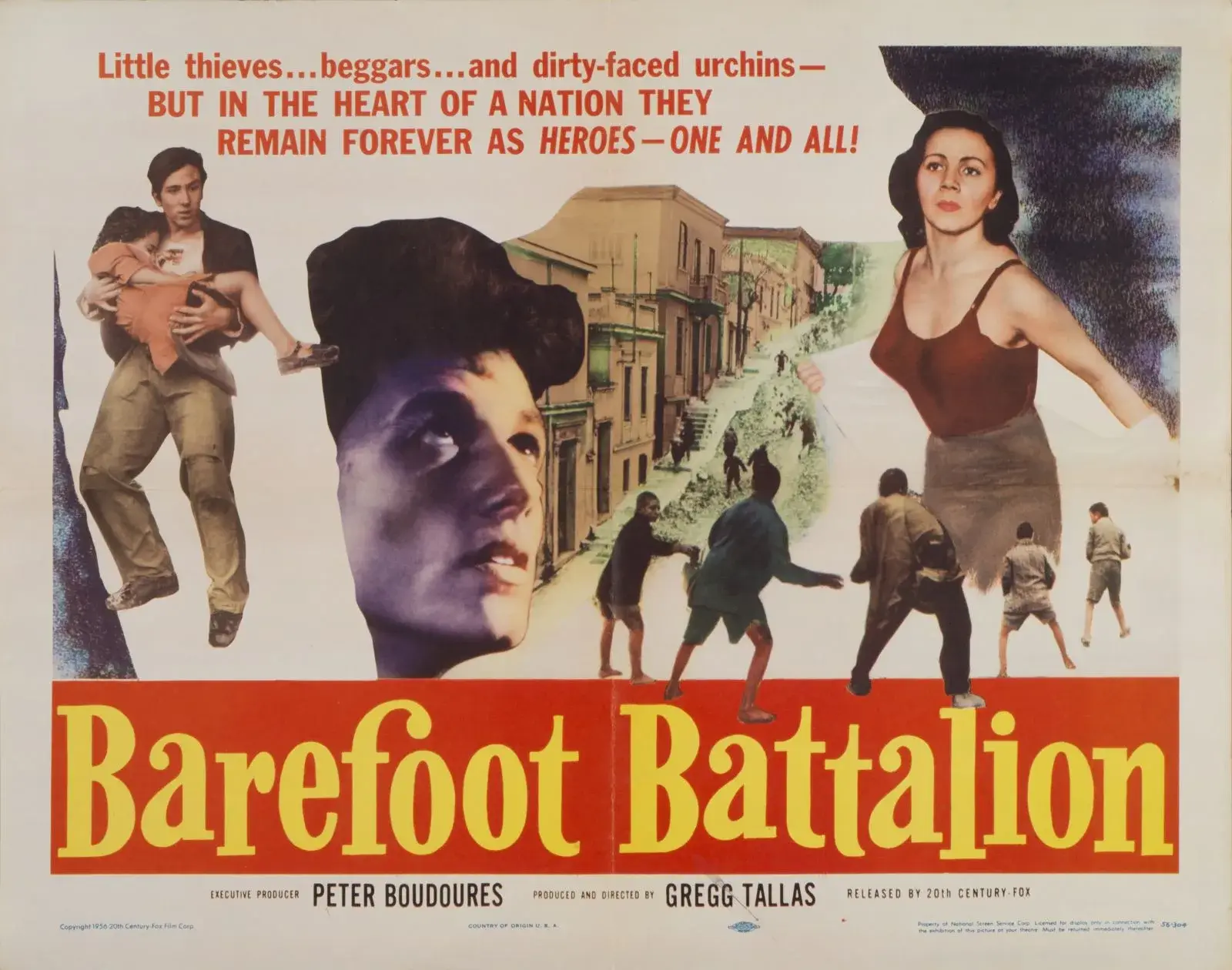
The number is irresistible: 5,000 digitized movie posters, available to browse and download online.1
Open the Harry Ransom Center collection and the obvious thing to do is search for a film, find a poster, then keep browsing. Useful as that is, the collection becomes much stranger once the gallery is treated as data rather than as a wall of images.
IRZ pulled the 5,000 records currently exposed through the Center's CONTENTdm API and counted dates, titles, provenance and rights statements.25 Seen that way, the collection has a very particular shape: almost every record comes from a Texas theater chain, so treating it as a neutral sample of movie-poster history would hide the most useful thing about it.
Its narrowness is precisely what makes the dataset worth examining.
Five thousand
The physical collection is larger, with the Harry Ransom Center estimating roughly 10,000 posters spanning silent film through the present.2 When the Center described the digitization work in 2018, 4,000 posters had been cataloged and photographed.3
Today the digital collection stops at exactly 5,000 records.
Those 5,000 records cover 3,566 unique titles, which immediately kills the tempting shortcut of calling this a collection of 5,000 films. More than a thousand titles recur, sometimes through several surviving posters or records around the same movie: Count Your Blessings appears six times, while Marty, A Face in the Crowd and The Night Walker each appear five times.
For a designer, those repetitions are useful rather than disposable because they expose variants across campaigns, sizes and surviving objects instead of flattening every film to a single representative image.
Mostly Texas
Provenance changes the reading even more.
Of the 5,000 records, 4,996 explicitly identify an Interstate Theater source; only four leave that field empty in the export. The current digital corpus can therefore be read, with that four-record caveat, as an Interstate Theatre Circuit corpus.
The chain grew from Karl Hoblitzelle's entertainment business and had more than 150 theaters in Texas by the mid-1940s.3 The Center says this material forms the largest part of its movie-poster holdings, alongside other physical groups including B-movie posters donated by dealer Philip Sills and posters donated by former Performing Arts curator W. H. “Deacon” Crain.2
In the 5,000 records available through the API today, however, those other provenances barely register.
A general archive invites broad claims about “movie posters”; this one asks a narrower and more answerable question: what did a major Texas theater network actually receive, preserve and use to sell films over several decades? Its bias limits the claims we can make, but it also gives the comparison a real context.
Two decades
The dates make that context even tighter.
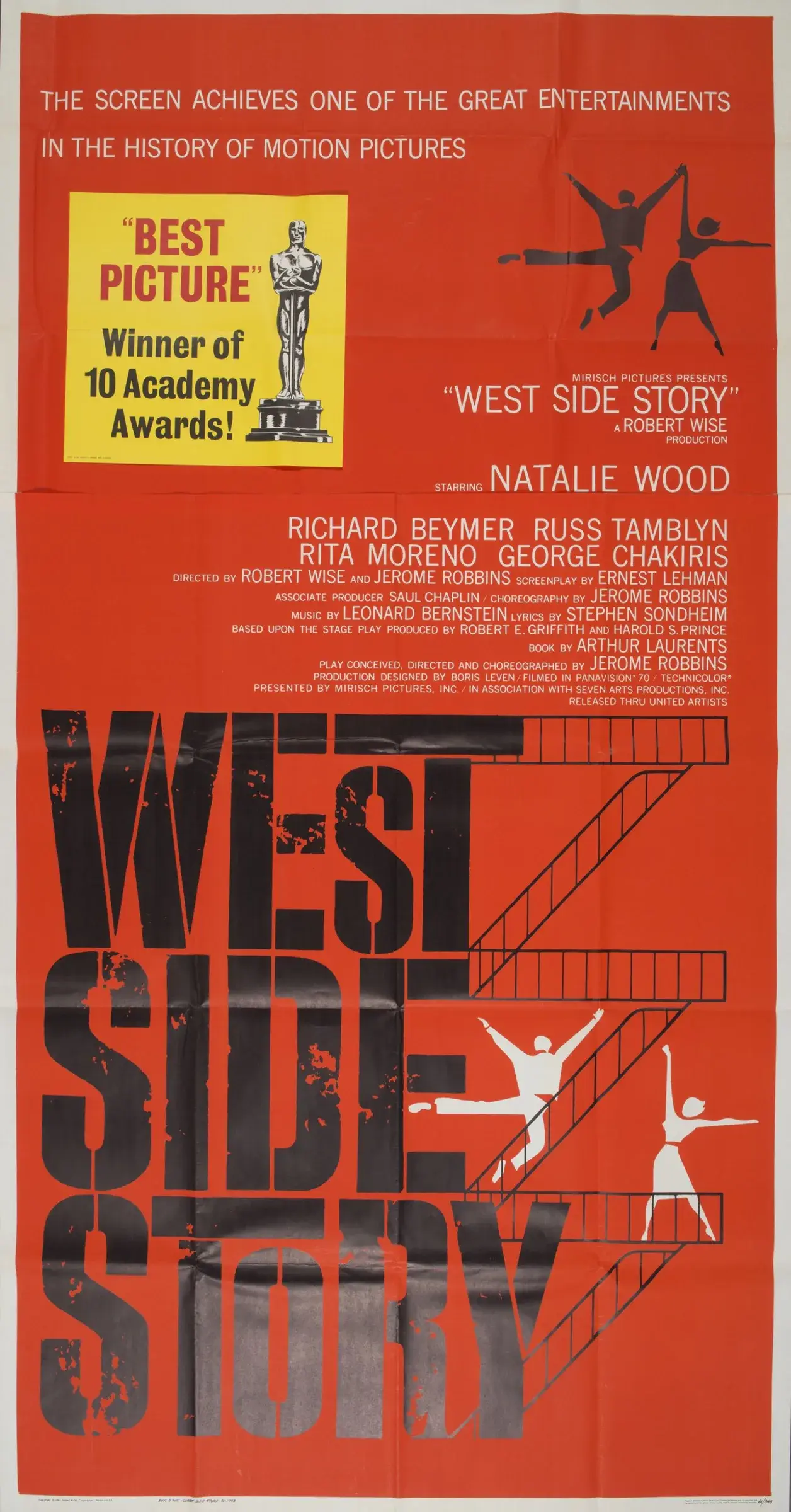
Of 5,000 records, 4,744 contain a date and 4,700 yield a clean four-digit year. Among those, 82.9% belong to the 1950s or 1960s: 1,823 from the 1950s and 2,076 from the 1960s.
Across the current export, which runs from 1940 to 1979, the 1940s account for only 68 dated records and the 1970s for 733.
The result is a huge zoom into the 1950s and 1960s rather than a balanced chronology of twentieth-century poster design, catching American cinema, drive-ins, genre filmmaking and printed advertising inside the same unusually dense slice of time.
That concentration makes comparisons more useful than a chronological scroll: recurring western imagery, the staging of bodies, title sizing and advertising formulas can all be examined inside roughly the same distribution context, along with the more basic question of what one theater network considered worth keeping.
Not a license
The word “download” needs one important qualification.
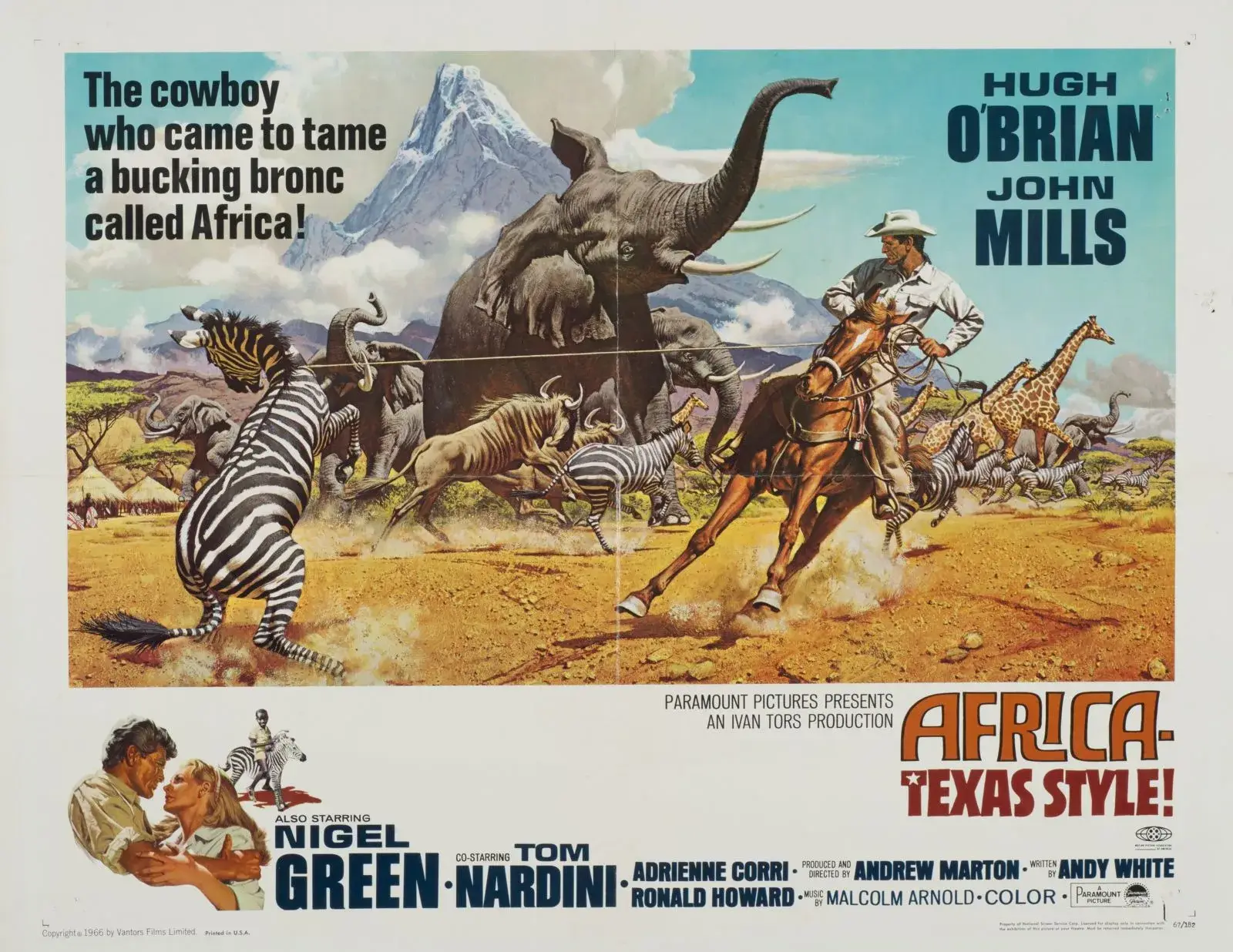
The interface gives access to image files, while the rights metadata makes clear that access and an open license are two different things.
In our extraction, 3,000 records are marked In Copyright — Educational Use Permitted and 2,000 are marked In Copyright. RightsStatements.org says the first category allows educational uses without additional permission, while other uses can still require permission; the second simply indicates that the item remains protected by copyright.6
The Harry Ransom Center made the same distinction in its 2017-2018 reporting, describing online access to the movie-poster collection as access provided as appropriate under fair-use principles for copyrighted material in order to encourage research.8
The Library of Congress faces a similar problem with its own collection of roughly 5,000 movie posters. Rights have not been evaluated for individual images, and the Library explicitly says that users remain responsible for assessing what they can publish or distribute.7
“Downloadable” is therefore a statement about access, not another spelling of public domain; web interfaces often blur that distinction, while the rights records here keep it stubbornly visible.
An API underneath
The infrastructure is where the collection becomes more than a browsing exercise.
The Harry Ransom Center adopted IIIF, a standard for sharing images and metadata across cultural institutions and loading them into compatible viewers such as Mirador.4 The collection also runs on CONTENTdm, which exposes a documented read-only API.5
Each poster comes with queryable fields such as title, date, format, physical collection, identifier and rights status, rather than existing as a JPEG stranded in a grid. IIIF adds another layer by making the images addressable, zoomable and comparable with compatible material held elsewhere.4
Once those two layers are available together, the archive can be used as working material rather than merely browsed as a gallery.
A designer can compare ten variants around one film; a researcher can measure the actual weight of two decades before making claims about “cinema history”; a teacher can build an assignment around one genre without downloading five thousand files by hand. A developer, mercifully, can build a comparison tool without first scraping HTML as if it were still 2007.
Useful bias
Every digitized archive reflects a chain of decisions about what was collected, preserved, described, funded and eventually put online, so its boundaries are part of the evidence rather than an inconvenience to hide.
Here the bias is unusually visible: the 5,000 digital posters available today mostly describe commercial cinema passing through a major Texas theater circuit, with a heavy concentration in the 1950s and 1960s.
Erasing that context in favor of the cleaner phrase “5,000 free posters” would throw away the feature that makes the collection analytically useful.
A corpus becomes genuinely manipulable only when you know what it contains, and what it leaves out.