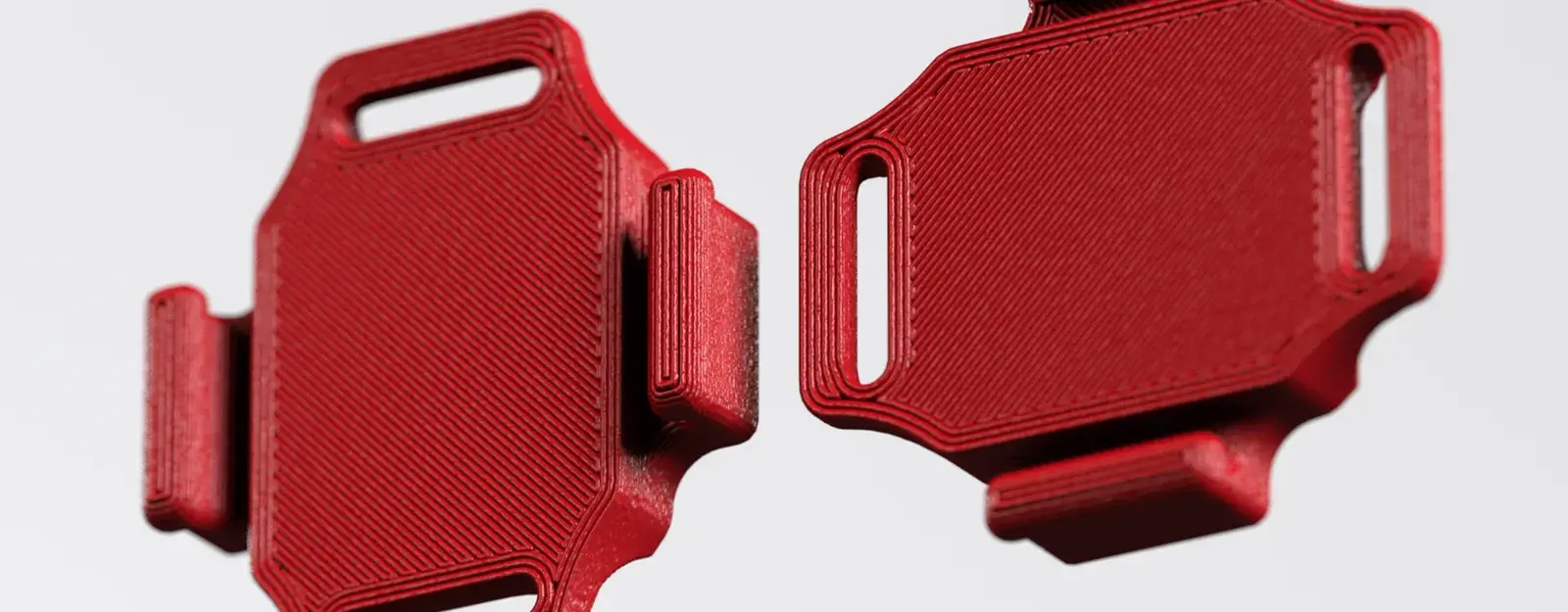
MIKU starts with two constraints that interfere with each other. Alexander Savelyev and Théo François wanted an accessory made from one thermoplastic family to simplify repair and end-of-life separation. They chose 3D printing, then met its most ordinary limitation: a bag is larger than the build plate of many accessible printers.1
Instead of finding a larger machine, their NABA thesis project moves the problem. They designed a flexible brick that mechanically interlocks with its neighbours, without glue or additional hardware.1
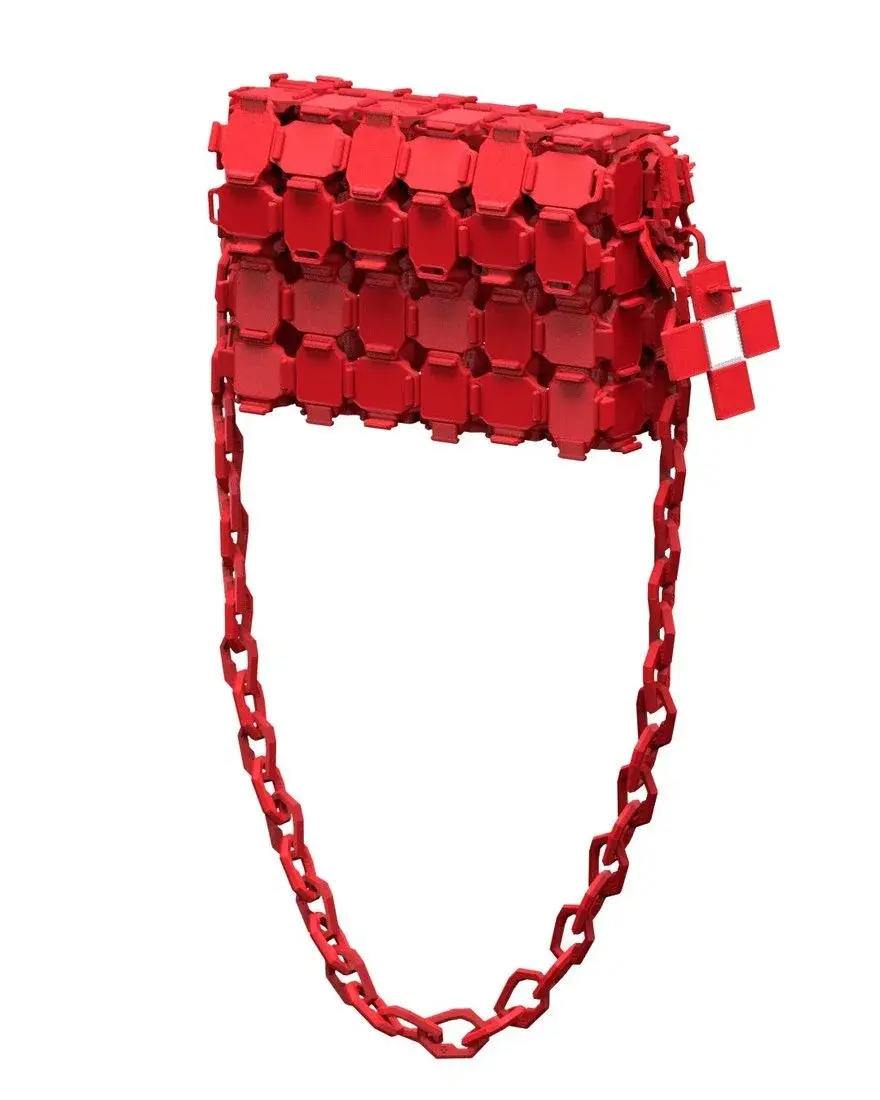
The result is no longer really a bag. It is an assembly rule capable of producing bags, straps and other components. A damaged area can in principle be replaced unit by unit, while the object can be expanded or reconfigured rather than discarded as one fixed assembly.1
The Core77 submission says early research explored printed surfaces inspired by textile, mesh and chainmail. The build-volume constraint eventually made assembly useful instead of treating it as a defect.1
One limit matters. Mono-material construction does not automatically create a circular product: collection, sorting and an actual recycling route still have to exist. The designers themselves present MIKU as an exploration rather than a complete answer.1
That makes it more useful than a merely printed object. The machine imposes a small scale, and that restriction ends up writing the product architecture. The print bed stops being an obstacle to hide. It becomes the grid of the system.