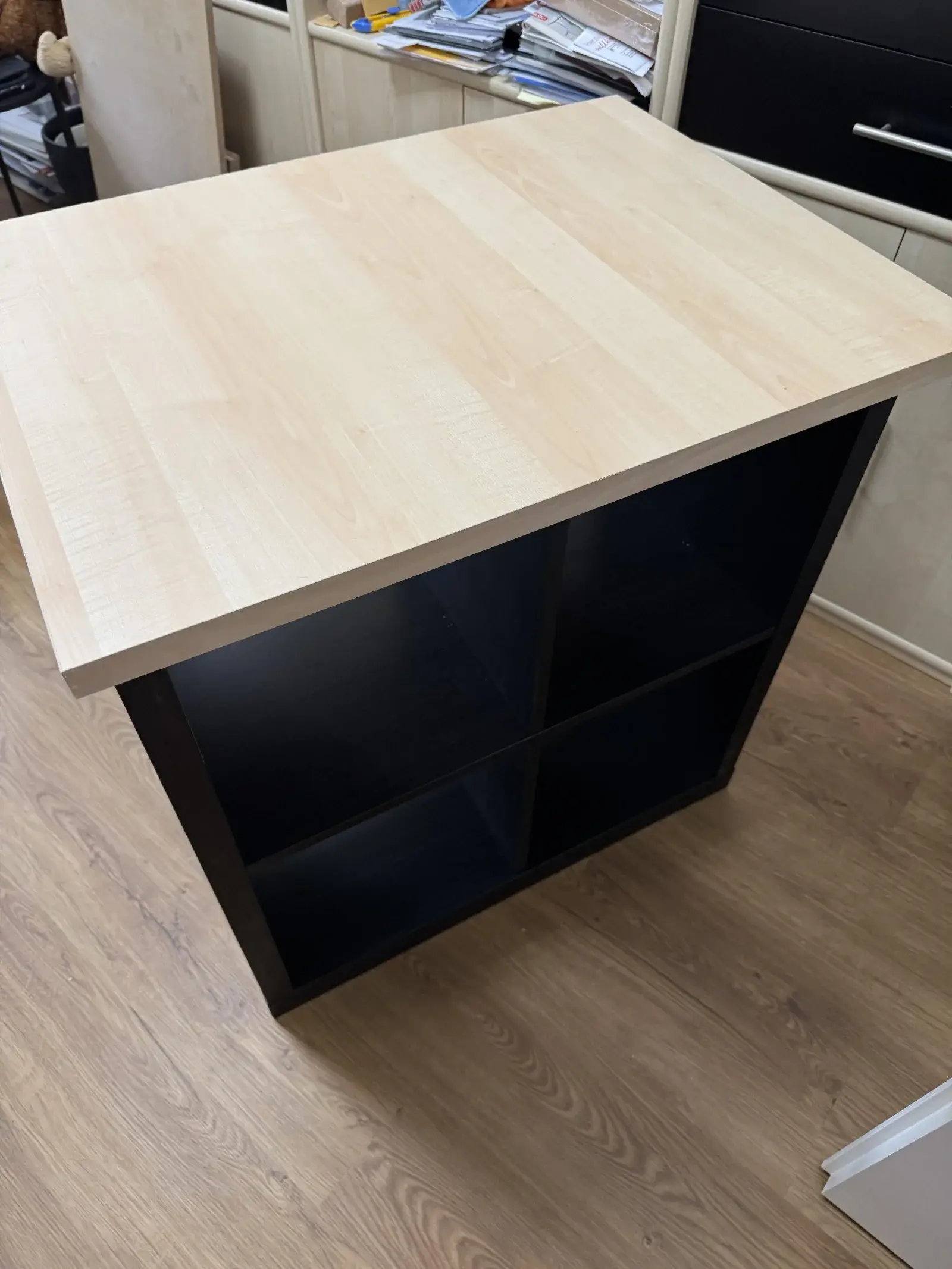
A KALLAX unit, the top of an old desk, some MDF boards, rubber and screws. With this unglamorous mix, Michael Green, who runs the Green Lightning blog, built two workbenches for roughly €130 each, where a custom piece would have cost him close to €1,000 per unit.1 This deserves more than a frugal-living tip, because it says something useful about how to make objects cheaply.
Furniture that matched nothing
After moving, Green wanted a workbench that mixed the practicality of a work surface with the look of living-room furniture. Industrial benches and shelving looked too much like a garage to win girlfriend approval, regular cabinets topped out at a 40 cm depth, and custom pieces came in "slightly outside his budget" at about €1,000 per unit when he only wanted two.1
The answer was already sitting in his place: a 2×2 KALLAX, the 160 × 80 cm desk top he had tried and failed to sell on eBay, and a trick he remembered from an earlier apartment. The assembly mattered most. Instead of just resting a board on the unit, he screwed the top to the cabinet through layers of MDF and rubber, and the difference in stability was immediate.1
Learn the rules first, then break something
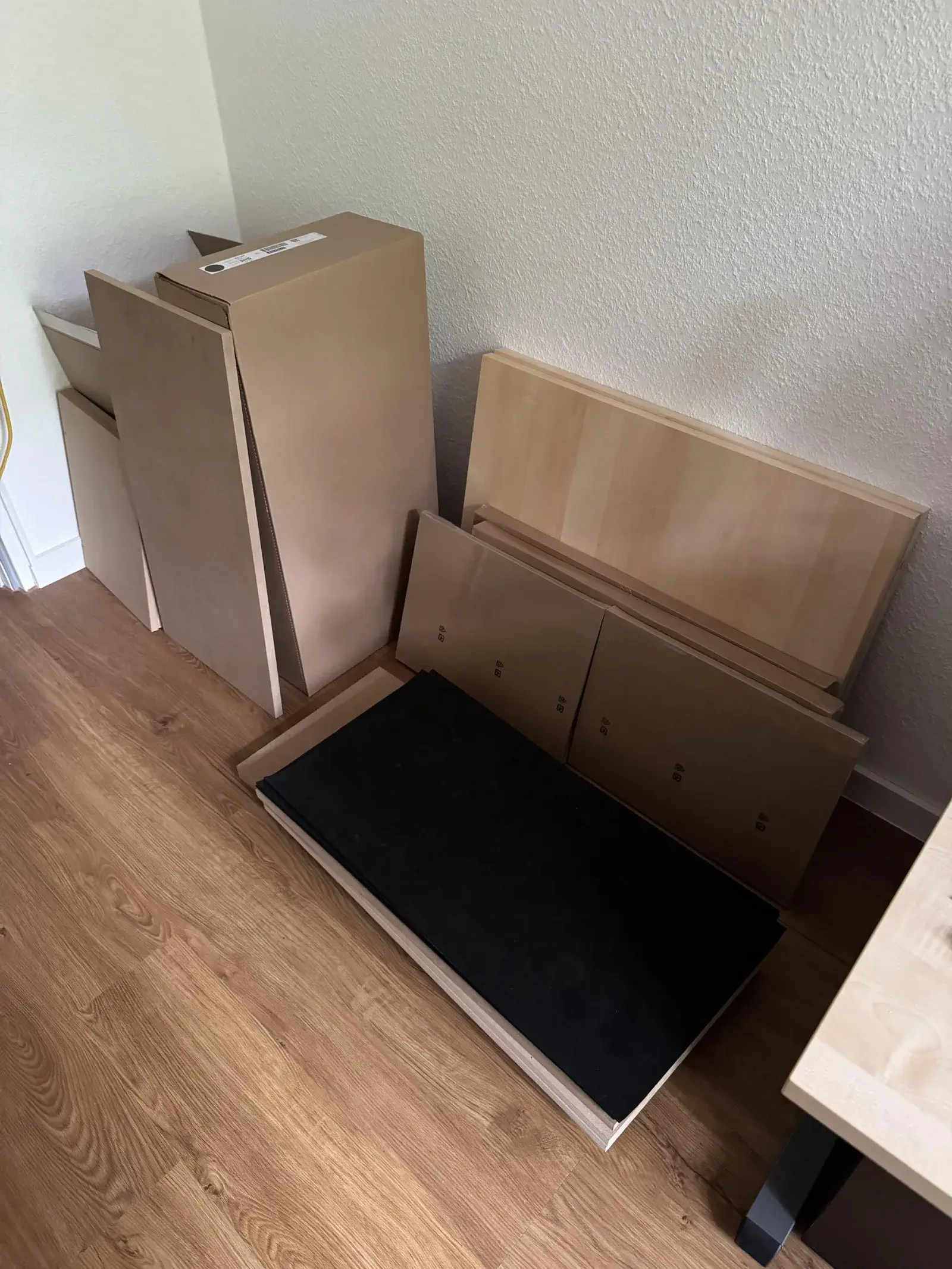
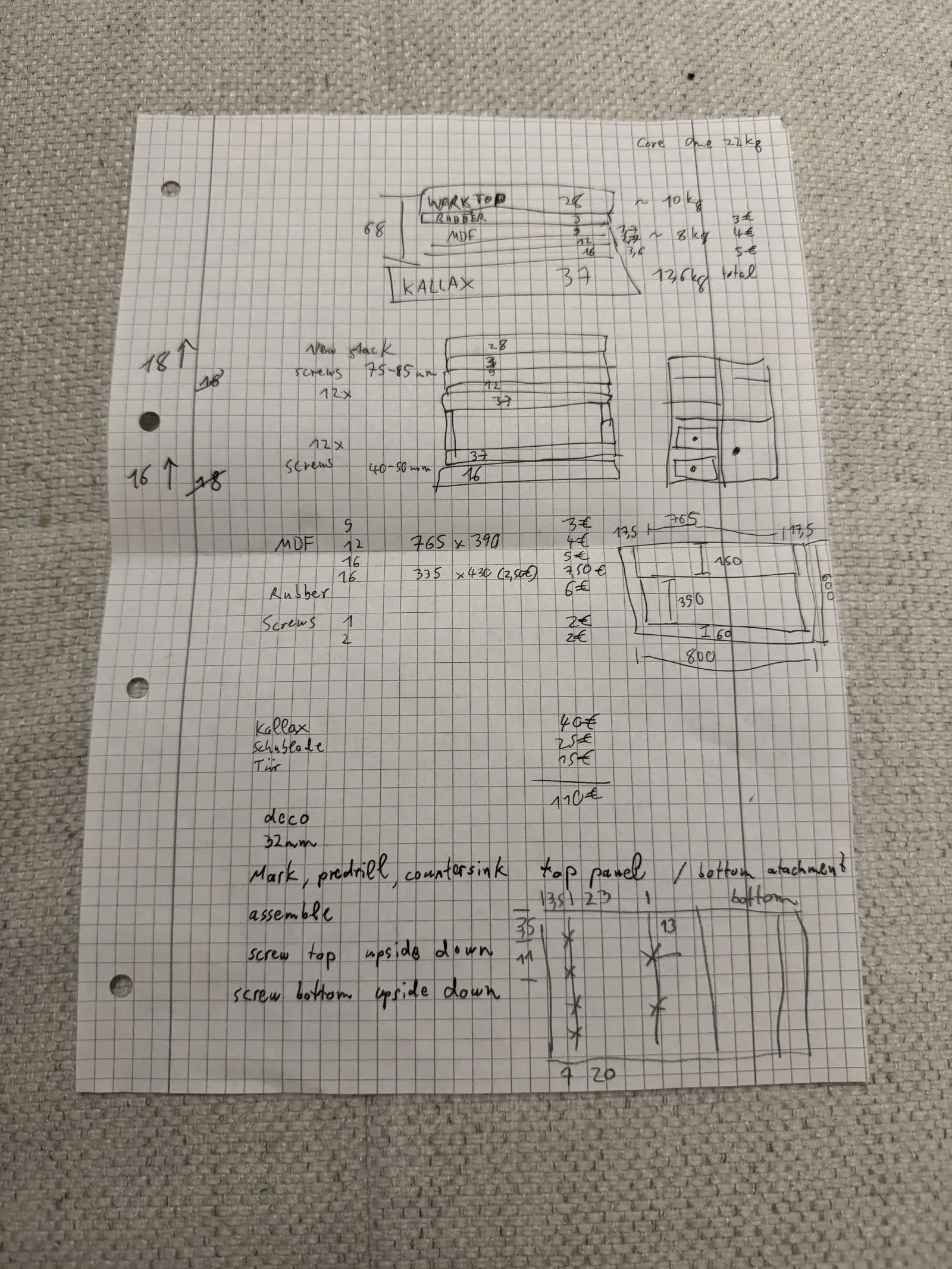
The build grows more interesting once you notice that Green treats the KALLAX not as finished furniture but as a platform with rules of its own. IKEA panels are not solid, and a screw tightened too far can punch through one side.1 So he drilled test holes in his old unit before starting the real build, pre-drilling everything with paper templates so the holes would line up perfectly.1
The low price is what makes this safe to attempt. At €40 in black (€30 in white), a botched hole costs almost nothing, and that slack invites experimenting rather than fear.1 A sheet of rubber between the layers soaks up vibration, ready for the 3D printer and pen plotter he plans to set on top, and the result is a surface that can take real machinery.1
The trade-offs get acknowledged plainly. The unit is only 39 cm deep against the desk's 60 cm, some storage goes missing, and pushed around without support the bench wobbles slightly sideways until it is nudged against a wall.1 His most flattering test, the KALLAX holding his full body weight when he sits on it even though IKEA rates no such thing, appears as a measured remark rather than a boast.1
A habit, not an invention
The post is also refreshingly honest about its own novelty. People had turned a KALLAX into a workbench before: CatWithCode describes, in January 2025, screwing a tool wall and brackets onto a KALLAX left over from his student days, working around the same non-solid panels with carefully chosen screws.2
That it keeps happening is the real story. Once a unit is cheap, standard and easy to buy, it starts behaving like a platform: you learn its limits, you trade tricks, and a wrong cut barely matters. The discussion that followed the post, more than 350 points on Hacker News, kept circling the tension between mass-produced furniture and individual making, which says a lot about what the subject touches in people.3
What a €130 workbench teaches
Nobody needs to copy this exact piece with a KALLAX and a used desk top. But the post is a useful reminder that making something can begin from an off-the-shelf standard instead of a blank sheet. The desk top had become waste nobody would buy, the units were already in the basement, and the rest, MDF, rubber and screws, came to a few dozen euros.1
Green did not design furniture from zero. He took a set of constraints, cheap and non-solid by IKEA design, and built a platform around them. Start with whatever exists, find where it bends, then add as little as possible. The habit is the point, and it makes the starting cost of small-scale making look a lot smaller than €1,000.