Architecture photography is excellent at showing a façade. It is much worse at explaining where air moves, how water crosses a site or what vegetation actually does to a building. At Jia CURATED in Bali, Architecture in Scale reverses the problem: it shrinks 25 projects into models to make their systems easier to read.13
This is not a cabinet of cute tiny houses. The selection foregrounds Southeast Asian architecture and its relationships with climate, landscape, materials and local practices.3 The model becomes less an image of the building than an instrument for isolating its decisions.
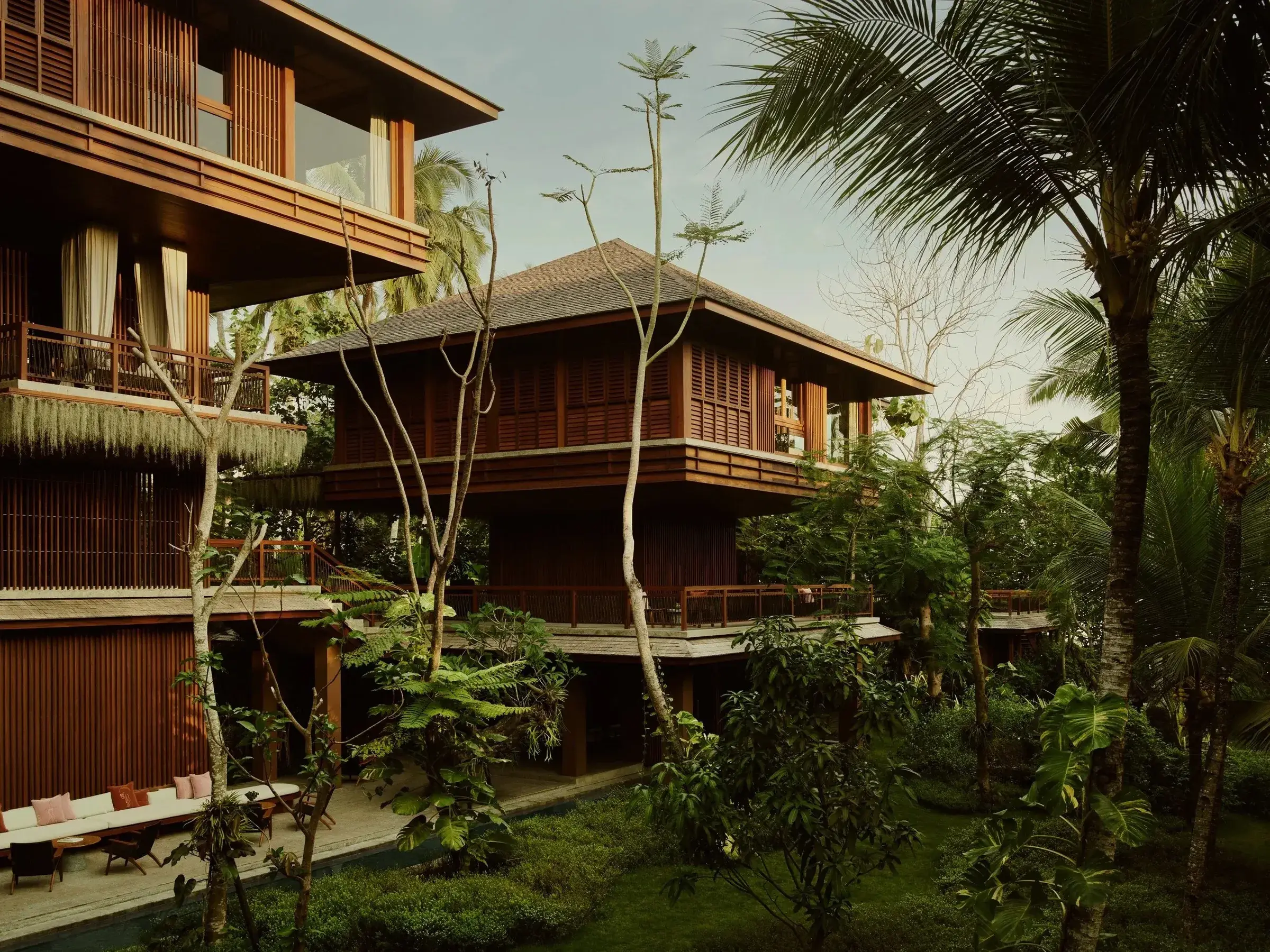
Miniatures reveal more
At 1:1 scale, a building mixes everything together: structure, use, furniture, weather, sound and vegetation. A model can choose what remains visible. A roof can become a section through ventilation. A basin can reveal the path of water. A gap between volumes stops being a handsome void and becomes a climatic device.
That shift is what makes Architecture in Scale interesting for IRZ. The model is not merely a step toward a building. It becomes an interface for reading the building. Visitors do not need to decode a complete technical drawing to see that one project negotiates with sunlight or another organises porosity around a courtyard.
Jia CURATED describes itself more broadly as a platform connecting design, craft, architecture and culture in Indonesia.1 Its 2026 Bali programme combines exhibitions, installations and encounters.12 In that setting, the 25 models also solve a practical problem: they bring distant buildings into one room, at a scale where comparison becomes physically possible.
Models after construction
We often call a model a draft. That is too narrow. Some models test geometry before construction. Others persuade a client. These have a third function: explaining after the fact.
That changes what fidelity means. A miniature does not need every door handle. It needs to preserve the relationships that matter. If ventilation is the subject, openings and volumes matter more than the exact wall colour. If water is the subject, topography becomes the primary information.
This is almost editorial work. Reduce the object, remove detail, decide what remains. A good model does not contain less information by accident. It removes information deliberately so an idea becomes visible.
That may be the best reason to look at these 25 buildings in miniature. Architecture has become extraordinarily good at producing photorealistic images that already resemble the final result. Jia offers a useful reminder: a representation can be more informative when it does not look exactly like reality, but explains how reality works.13