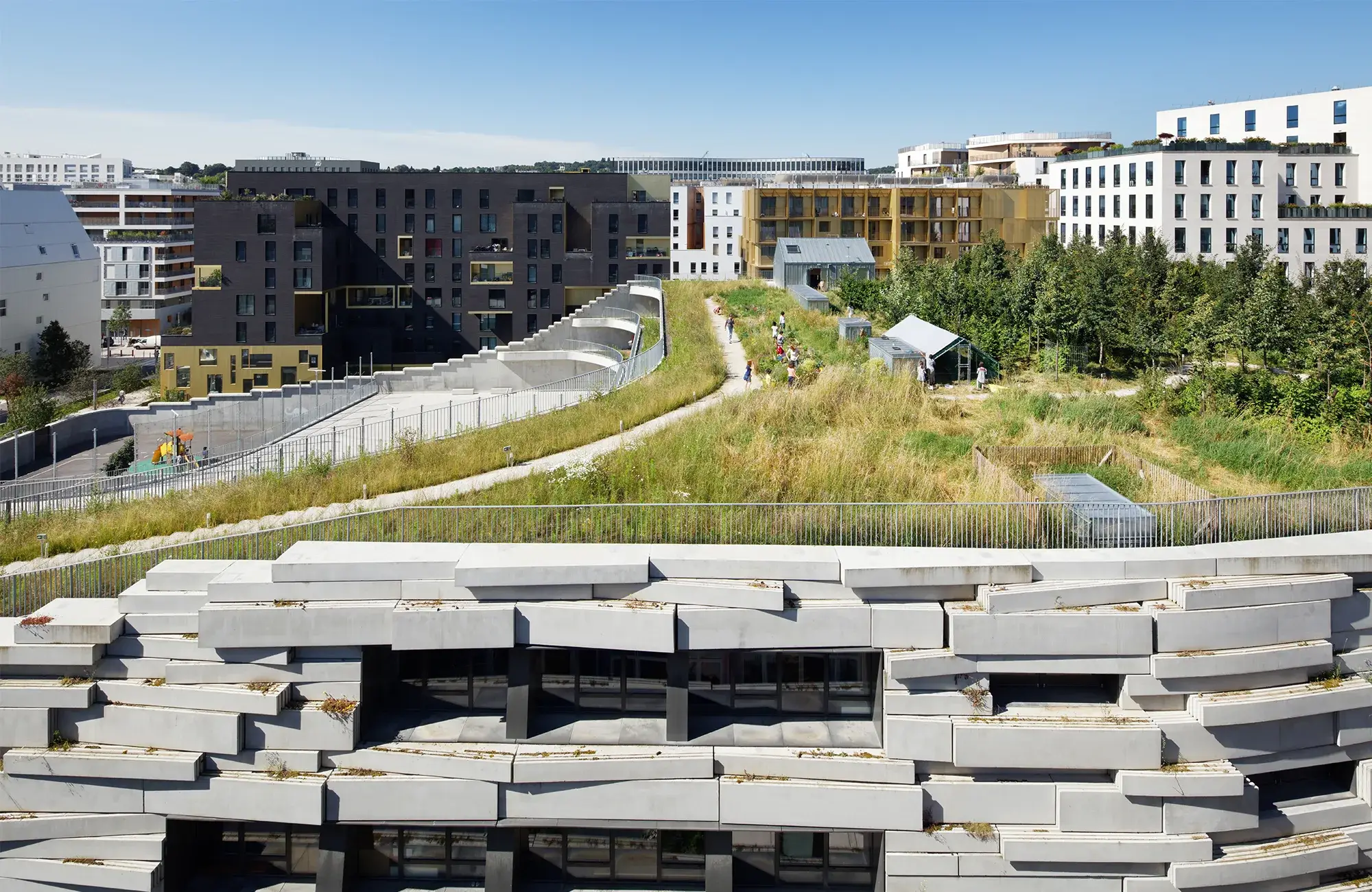
When ChartierDalix delivered the School of Sciences and Biodiversity in Boulogne-Billancourt in 2014, the building proposed an unusually literal idea: the façade and roof should also work as habitat. Ten years of monitoring now let that proposition be judged as more than an opening-day photograph.12
The 2026 study records 345 species observed on the site: 207 plants, 100 invertebrates, 20 birds, plus a small number of reptiles and bats. The authors describe that diversity as comparable with nearby parks.1
The more useful result is not the species count. The review shows that ecological persistence also depends on human practices, maintenance and the ability to reorganise space when access and conservation come into conflict.1
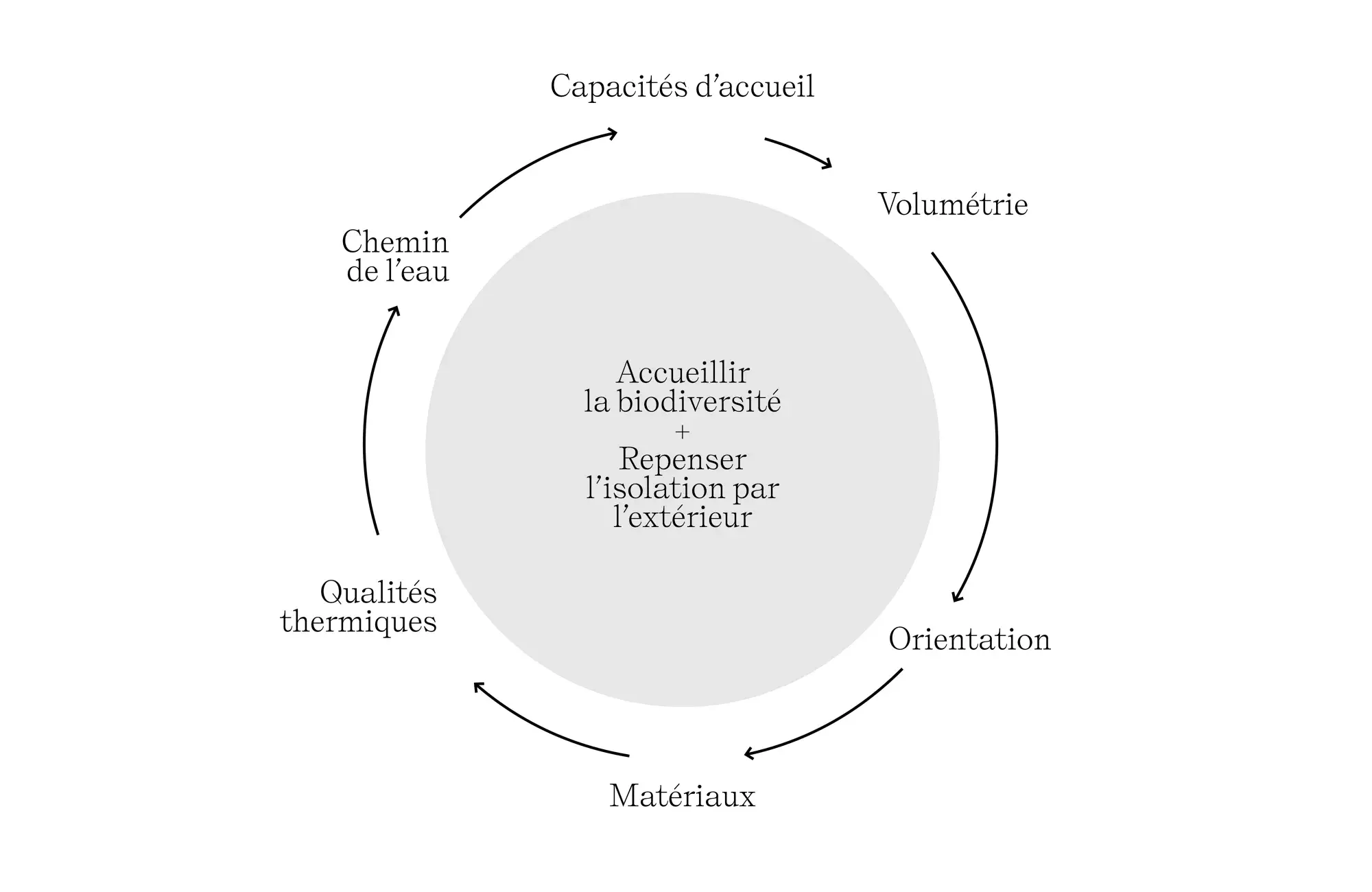
That finding directly extends the studio’s research into “welcoming walls”. Since 2017, ChartierDalix and its partners have tested concretes containing cavities, substrate pockets and continuous networks intended to retain water and matter. The prototypes are observed over time rather than merely drawn.2
Recent work elsewhere, including Animal-Aided Design research in the Galápagos, begins from a similar shift: select target species and integrate their lifecycle requirements during planning rather than adding a bird box at the end.3
Boulogne adds something valuable to that idea. Architecture for living systems is not finished when construction is. If habitat changes over time, maintenance, use and monitoring become design materials too.