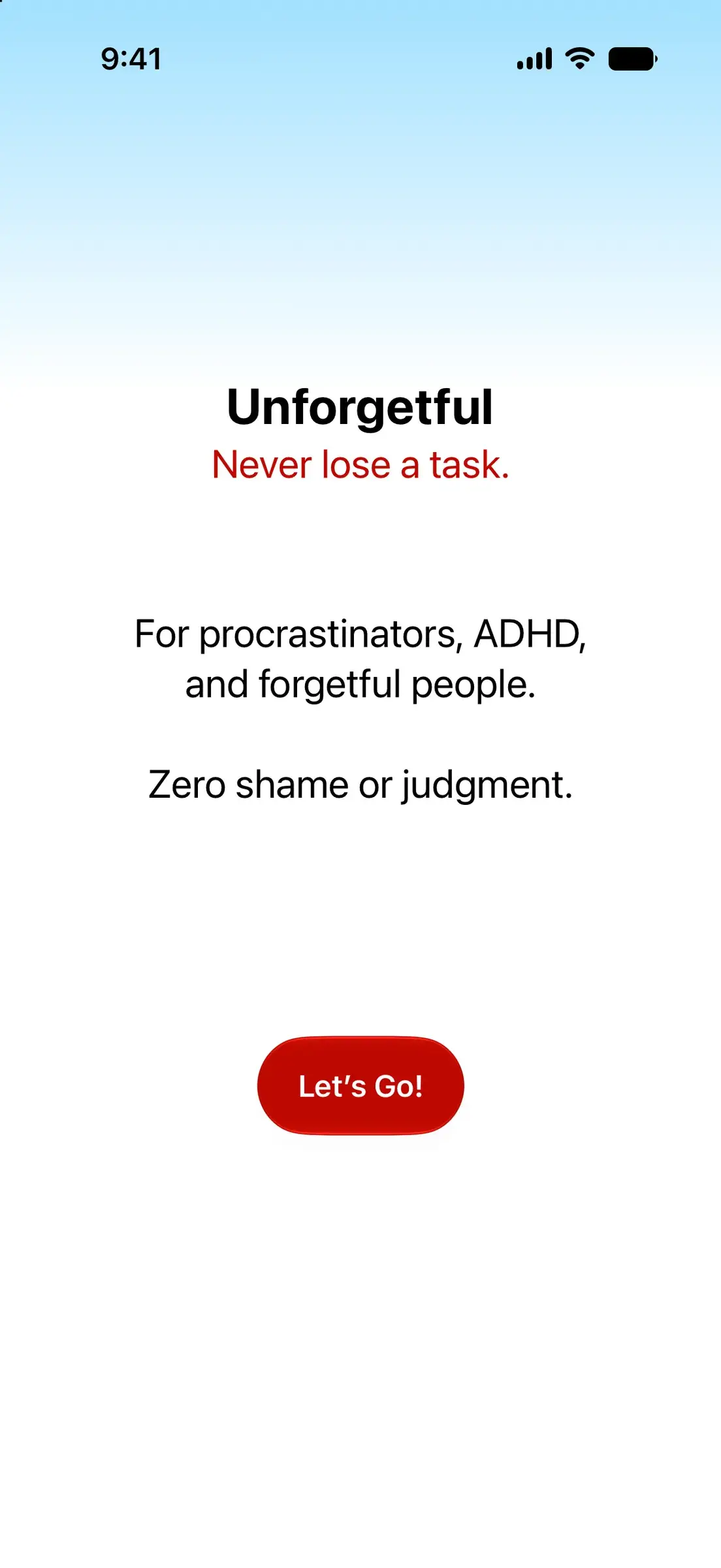
Most task apps assume better organization will eventually win. Marco Arment built Unforgetful from the opposite assumption: the reminder will be dismissed, snoozed, forgotten and eventually buried somewhere inside a beautifully organized system.1
So the app is not mainly trying to classify tasks better. It is trying to stop them from vanishing.
Arment says he made the tool in the spring and used it for months before releasing it on August 14.1 He starts from three personal failure modes: a reminder without a time can produce no useful notification, a notification dismissed by accident can be lost, and the available snooze options do not match how he actually postpones work.1
Unforgetful answers with choices that are almost aggressively simple. Notifications repeat until the task is completed or deleted. Snoozing becomes a first-class interaction. There are no folders, tags or overdue state.1
The app also uses Apple's existing Reminders database. That preserves Siri capture and avoids migrating into yet another productivity “system.”12
The interesting question is not whether this method works for everybody. Arment explicitly frames the product through his own experience and describes it for procrastinators, forgetful people and people who recognize themselves in his relationship with ADHD.1 That is not clinical evidence that the app treats ADHD.
It is a neat example of defensive product design instead: rather than demanding ideal user behavior, the interface starts from the behavior that keeps breaking the workflow.
Sometimes removing a folder is more useful than adding a seven-step method with a suspiciously invented Japanese name.