
A high-end mouse can somehow end up with software more complicated than the mouse.
OpenLogi is trying the opposite move: talk directly to Logitech hardware over HID++, keep settings in a local TOML file, then build only enough around that to remap buttons, change DPI, control SmartShift and switch profiles by application.
The project is written in Rust. Its code is open source, it requires no account and says it collects no telemetry. It runs on macOS and Linux. The project's Windows messaging is not fully aligned yet: the README says the port has been validated end to end on Windows 11 hardware, while the website still presents it as a recent preview.
The whole project is young, too.
The GitHub repository was created on May 24. As I write this on August 10, it has more than 8,300 stars and has just published version 0.6.24. Those are signals of interest, not a reliability certificate. OpenLogi explicitly says it remains under active development and is not yet stable.
That is exactly why it is interesting without needing to call it an "Options+ killer."
The accountless file
The detail that best explains OpenLogi is a path: ~/.config/openlogi/config.toml.
Bindings, presets and profiles live in a readable text file that can be diffed, copied and version-controlled. The graphical interface writes to it, but the file does not disappear behind the interface.
Technically, that is a small decision. For somebody configuring several machines, or simply trying to understand why a side button does one thing in Blender and another in a browser, it changes quite a lot.
A setting becomes data you own.
You can back it up with the rest of your dotfiles, compare it after a change, move it to another machine or edit it by hand. The GUI remains convenient without becoming the only place where truth exists.
This is local-first in its least dramatic form. No forty-page sovereignty manifesto required. The file is there. You can open it.
Below the interface
OpenLogi talks HID++ directly to Logitech peripherals through Bolt or Unifying receivers, direct Bluetooth or USB.
Its architecture separates three pieces: a graphical application, a background agent that owns the input hooks and device I/O, and a CLI for inventory and diagnostics.
That matters. Rebuilding the Options+ settings screen would create a nicer facade over the same dependency. OpenLogi is trying to own the small chain between a physical button press and the configured action.
That enables fairly ordinary but useful things: remapping buttons, moving the gesture role to a different physical button, changing DPI and SmartShift, creating per-app profiles, then keeping all of it in text.
On Linux, the project also goes somewhere Logitech does not officially go with Options+. It ships packages, udev rules and a user systemd service. Logitech's own support pages continue to distribute Options+ for Windows and macOS.
This is not a revolution. Somebody simply decided an expensive mouse should also be configurable on Linux. The internet occasionally works as intended.
The no-cloud asterisk
OpenLogi presents itself as local-first, with no account and no telemetry. That is broadly consistent with the behavior it documents, but saying that nothing ever leaves the machine would be too strong.
The project downloads device images. It also has an update check, although the documentation says that check is optional and off by default.
That qualification makes the local-first claim more useful, not less. Local-first does not have to mean mystical absence of networking. It can mean the primary function does not require a remote server to remain alive.
If OpenLogi.org disappears tomorrow, your TOML file does not turn into a pumpkin.
Open boundaries
There is another detail I like: the project explicitly separates the code license from its brand.
The code is available under MIT or Apache 2.0. The OpenLogi logo and app icon are specifically excluded from those licenses and remain protected by their author.
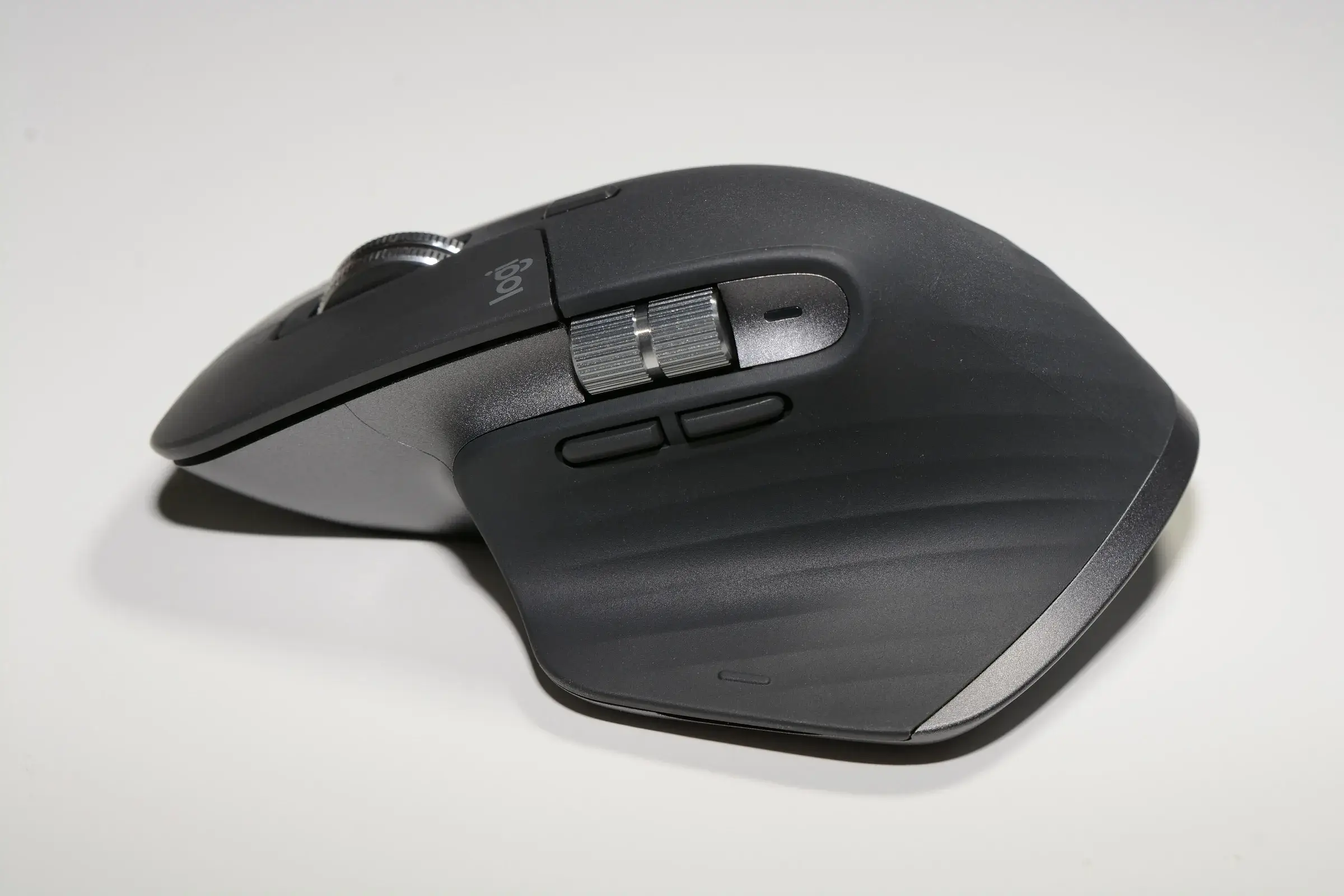
That is also why this article does not use the project logo as its image. I used a Creative Commons photograph of an MX Master 3S instead, one of the models OpenLogi lists as supported.
Open source does not mean "everything in this repository belongs to me now." It is a very ordinary licensing detail, so naturally it gets ignored with impressive consistency.
Still a young bet
8,300 GitHub stars in under three months can leave the conversation just as quickly as they entered it.
HID++ devices do not all expose the same controls, Windows is still the recent port, and the documentation warns that configuration and features may change.
I would not replace a critical studio workflow while assuming OpenLogi already has a decade of compatibility behind it.
But it has crossed an interesting threshold since it first landed on our watchlist. This is no longer only a good README and a promise. It ships builds, supports several platforms, documents its limitations and is releasing quickly.
For a small open-source project, that is real material.
More importantly, it is a reminder that peripheral software does not have to become an account, an update assistant and a black box just because the mouse has two scroll wheels.