Today, changing a tattoo needle can take a few seconds.
Remove one cartridge, open another and insert it into a compatible grip. The setup moves from liner to magnum without dismantling a tube, needle bar and needle group prepared for that particular configuration.
The gesture feels so ordinary that it hides the work that disappeared around it.
For a large part of modern electric tattooing, making the needle was part of the job. Needles were grouped, soldered onto a bar, cleaned and prepared before use. A history published in Dermatology notes that many tattooers were still making their own needles at least into the 1970s.2 France's national tattoo artists' union describes the same evolution from steel wire grouped and soldered in the studio towards sterile premade needles that had largely replaced artisanal needle making by the beginning of the twenty-first century.3
CAM Supply, founded in 1993, sits directly inside that transition.
The company credits itself with introducing medium and extra-long tapers and creating the first disposable tubes.1 Those are manufacturer claims and should be treated as such. Its current catalogue nevertheless makes the broader transformation easy to see, with traditional premade needles on bars sold alongside sterile cartridges.
The most consequential hardware innovation may therefore be less a new needle shape than the gradual movement of invisible preparation work out of the tattoo station.
Solder it yourself
A tattoo needle is not simply one point.
A liner, shader or magnum arranges several needles in a precise geometry. Before industrial premade groups became common, producing that consumable meant selecting needles, building the group, keeping it aligned and soldering it to a bar.23
That work offers considerable control.
An artist can adjust a configuration, choose spacing and understand intimately the geometry entering skin. SNAT notes that some tattooers still solder their own groups for particular configurations.3
The control costs time before the client ever arrives.
It also adds a second skill beside tattooing: repeatedly manufacturing a small precision tool.
A poor solder, irregular group or damaged point is not an abstract production defect. It appears directly in the hand and result.
Premade needles move that part of control to a manufacturer.
The factory enters
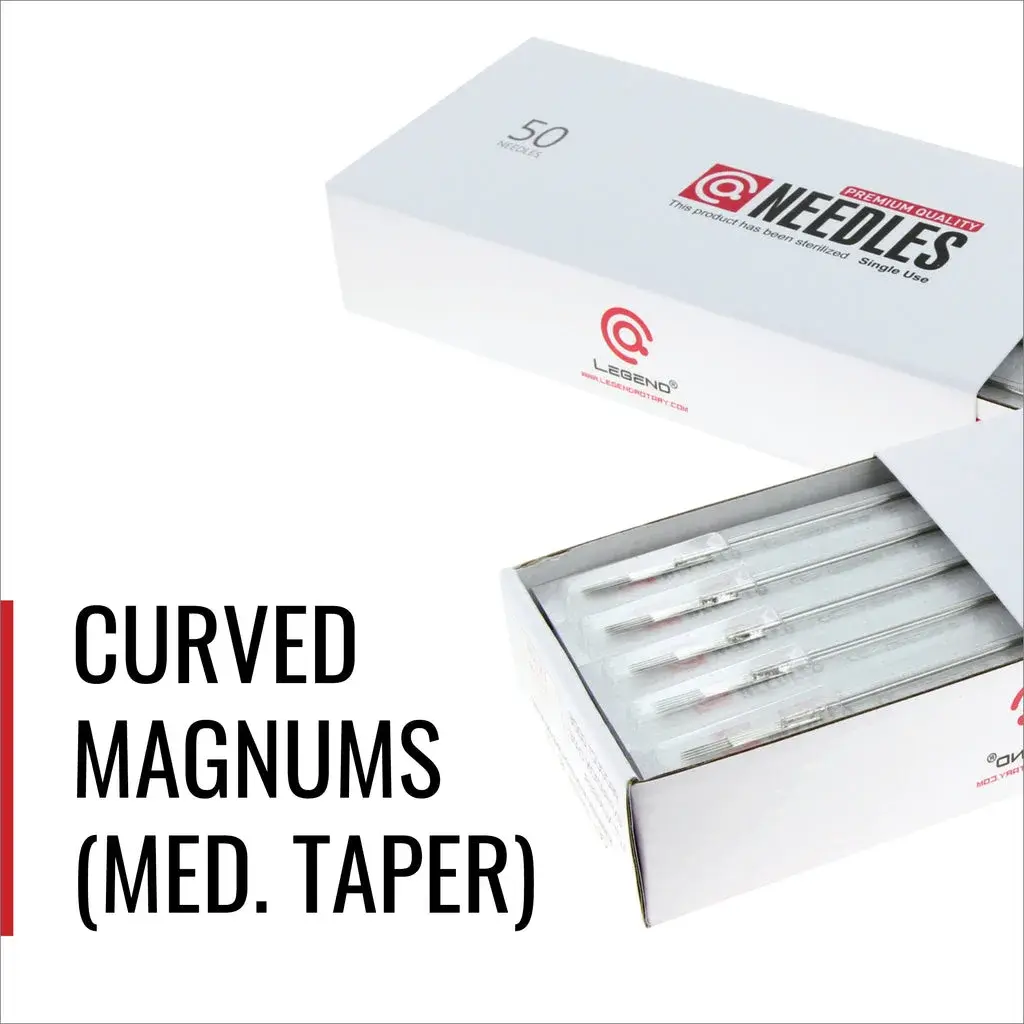
CAM currently describes its Legend premade needles as produced through automated manufacturing with checks on point, sharpness and grouping.1
The transfer is straightforward: repeatability becomes a property of an industrial process instead of a task repeated inside the studio for every group, while tattooer judgement remains but shifts from “did I manufacture this needle correctly?” towards “does this industrial reference suit my hand, this skin and the effect I need?”.
Skill moves partly away from making the consumable and towards selecting it, a familiar pattern of industrialisation.
Photographers no longer manufacture film, surgeons do not forge their needles, and cooks do not necessarily make their knives; skill remains, but it specialises around using tools manufactured elsewhere.
In tattooing, that specialisation is relatively recent on the scale of the trade's history.
Disposable changes
The other transfer concerns infection control, because a reusable tool requires a complete cleaning, packaging and sterilisation chain whereas a sterile single-use consumable moves part of that chain to the manufacturer and reduces the number of components that must return through reprocessing inside the studio.
To be sure, a single-use needle does not make the whole workstation clean: surfaces, hands, ink, containers and other exposed items still require appropriate controls. For the needle itself, however, the operating model changes substantially.
In its 2012 investigation of tattoo-associated nontuberculous mycobacterial skin infections, the CDC lists sterile single-use needles and aseptic practice among recommended precautions.4
The benefit is therefore more than logistical: needle sterility becomes a produced, packaged and verifiable state before opening, rather than the result of a procedure each studio has to repeat on that component.
The disposable tubes CAM credits itself with introducing belong to the same movement.1
Once again, a studio operation disappears because an industrial supplier performs work upstream.
The cartridge shift
Premade needles on bars remove soldering from the studio while retaining the older architecture: a needle bar travels through a tube and connects to the machine.
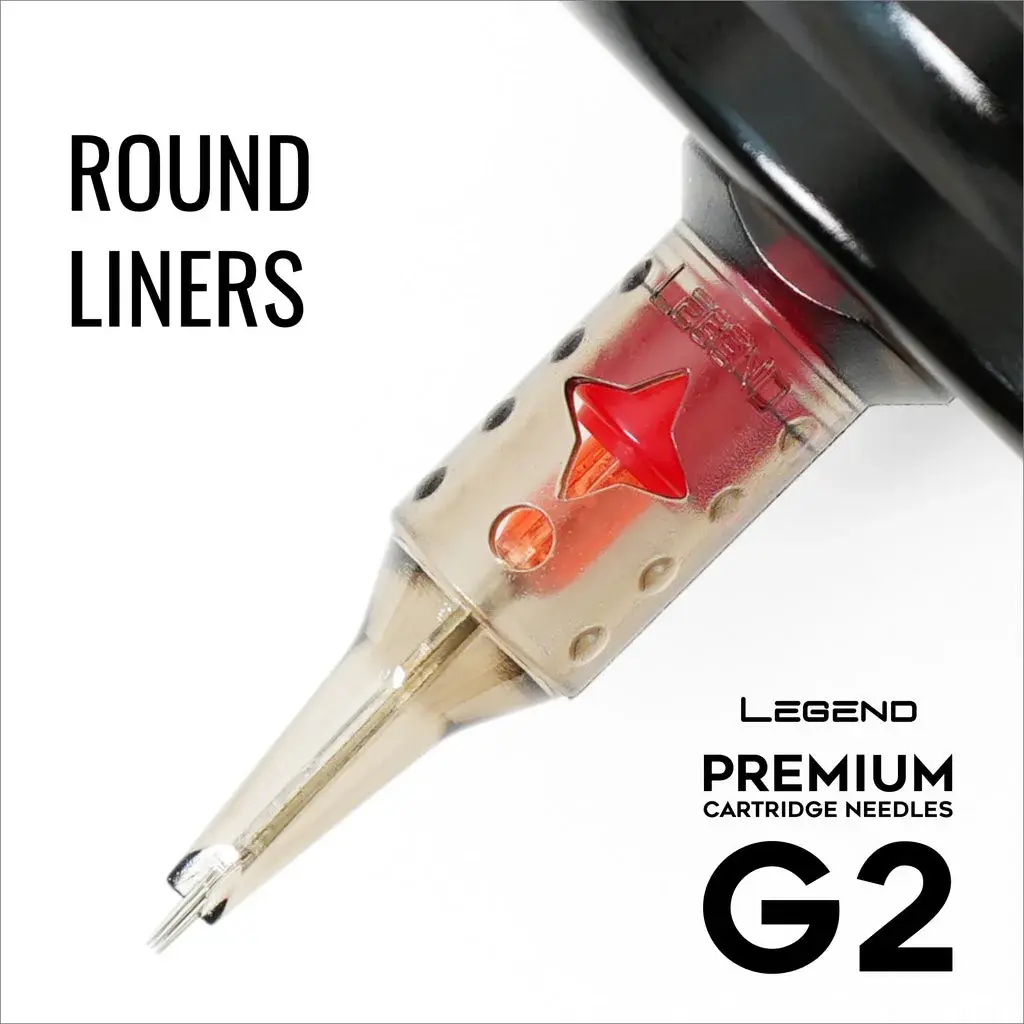
A cartridge compresses more of the system into one module by placing the needle group, guide and return mechanism inside a small replaceable housing. A compatible machine drives the cartridge through an internal bar or related mechanism and the needle retracts into the module.
Cheyenne says it introduced its cartridge system with the HAWK in 2007, combining rapid needle changes with a safety membrane.5
US Patent 10,912,924 describes a tattoo needle cartridge with a flexible membrane coupling the movable element to the housing and helping separate the two sides of the module.6
That membrane matters because the cartridge serves both as a convenient holder and as a physical boundary in the contamination chain.
Manufacturers now use different membrane, spring and guide architectures, but the user-facing principle has become familiar: the module involved in the procedure is separated from the machine mechanism and can be replaced between configurations or clients.
Change it faster
The ergonomic gain is easy to underestimate because it is measured in small repeated gestures.
With traditional assemblies, changing configuration means replacing the needle-and-tube assembly or preparing several machines or grips in advance, which is why many workstations keep multiple ready machines available simply to avoid interruption during the session.
The cartridge turns that change into an interface action: remove, insert, adjust needle hang, continue. The time saved in one transition is modest, but across a day and then a career it becomes substantial.
It changes station preparation too.
Instead of requiring a full mechanical assembly ready for every group, several needle configurations can share one compatible machine, provided the artist actually wants the same machine characteristics and settings.
That qualifier matters.
Cartridges make the swap possible; they do not require a one-machine workflow. A tattooer can still prefer separate machines tuned for lining, shading or colour.
The innovation expands workflow options rather than dictating one workflow.
Standardise the interface
A cartridge also creates another form of mechanical standardisation.
When manufacturers respect a compatible interface geometry, the same machine can accept a broad variety of needle groups and brands, allowing the tattooer to change a consumable without rebuilding the full station architecture around every needle configuration.
That compatibility supports an enormous consumables market.
CAM now sells several generations of Legend cartridges alongside the traditional premade-on-bar needles that preceded them.1 Its catalogue reads almost like a cross-section through the trade, with several technical generations continuing to coexist because they still suit different preferences.
The history should not be told as an inevitable march towards “better”: a needle on a bar can produce excellent tattooing, while a cartridge does not make a hand precise by itself. What it standardises is an interface and part of the manufacturing chain.
The cost of control
Every movement of work creates a dependency.
Making needles takes time and skill but allows an artist to produce a specific geometry from basic material. Buying premade needles or cartridges makes the studio dependent on a catalogue, manufacturer tolerances and a supply chain.
By contrast with studio-made groups, industrialisation replaces one form of artisanal variability with industrial variability.
The manufacturer promises consistency. The artist has to decide whether to trust it, test references and notice product or batch changes.
Unit cost changes as well.
A cartridge contains more components than a needle soldered to a bar. Its price pays for the needle metal along with a plastic housing, mechanism, membrane, assembly, sterilisation, packaging and quality control.
The studio is purchasing time already embedded in the consumable, a useful way to read the price of modern hardware because the artist is paying for operations that no longer happen locally as well as for the needle itself.
CAM as witness
This is where CAM Supply becomes interesting beyond its company history.
Founded in 1993, it sits early enough in the transition to have sold several states of the trade: loose needles, premade needles, disposable tubes and later cartridges plus an increasingly broad set of single-use workstation supplies.1
Its claims to particular industry “firsts” would require stronger archival evidence before being repeated as independent historical certainty. They still reveal where supplier competition was happening: taper, consistency, tubes, disposability, then change speed and cartridge format.
Modern tattoo innovation did not happen only inside the machine; much of it happened around the hand and before the session began.
A tattooer today is likely to spend far less time manufacturing the small tool that enters skin because an industry manufactures, inspects, sterilises, packages and ships that tool upstream.
The change has made parts of the trade easier to enter while making studios more dependent on industrial supply chains, and most of all it changed what “preparing your equipment” means. A few decades ago, that phrase could include physically making the needle; today it often means selecting the correct box, opening a sterile package and setting up a tool whose precision manufacturing happened somewhere else. The tattooer's hand remains a craft, even as the manufacturing chain that enables that hand has become largely industrial.