
In August 2026, developer Sunil Pai compressed his daily life with coding agents into one line: he can now build three wrong things before lunch.1
Pai loves that speed. Tens of thousands of lines shipped in a week, ideas tried in an afternoon that would once have required days of commitment, tests and docs actually written instead of solemnly promised. But his roadmap didn't get ten times shorter, and what he notices most is reaching difficult decisions faster: all the implementation that used to sit between those decisions has been squashed.1
Out of that comes a question his essay frames better than most reports on the future of work: are we mixing up the task with the job?1
This piece treats that sentence as a working hypothesis, not a slogan. If it holds, it should survive contact with past cases where the cost of executing a task collapsed: we should find the profession, transformed, still living around the automated task. We should also find the boundary cases, where the task really was the whole job.
Hire a machine
To see where the distinction comes from, you need a marketing theory that has aged without going stale. Jobs to Be Done, formalized around Clayton Christensen, starts from a simple observation: nobody wakes up wanting to buy a product. People "hire" a product or service to make progress toward something, in particular circumstances, and functional, social and emotional forces all weigh on that decision at once.2
Bob Moesta's most famous documented case involves condominiums in the Detroit area. The builder targeted retirees and divorced single parents, cut prices, added high-end finishes. Nothing moved sales. Interviewing actual buyers, Moesta kept hearing about the dining room table: until they figured out what to do with it, they couldn't move. The object stood for family, and the anxiety of giving it up blocked the purchase. "I went in thinking they were in the business of new-home construction," Moesta recalls. "But I realized they were in the business of moving lives." The offering was rebuilt around that job — larger dining rooms, moving services, two years of storage, an on-site sorting room — and prices rose by $3,500, profitably. In 2007, while industry sales fell 49 percent, this developer grew by 25 percent.2
Pai applies exactly this lens to AI tools. Need thirty seconds of background music for a presentation? A machine that disappears for twenty seconds and returns with something usable has done a perfect job: you never wanted to become a musician. You sat down because you wanted to make music? Then handing you the finished song is a spectacular misunderstanding — you wanted to move chords around, hear what happened, change your mind, stumble onto something you weren't even looking for.1
The corollary matters less to philosophers than to people building products. About many things, Pai wants zero collaboration: argue with the insurance company, chase the refund, reschedule a meeting across six calendars. Make it go away, and do not invite him into a delightful collaborative experience with the god computer. Elsewhere, participation is the point. Agent autonomy is a capability, not a product direction: the job decides how you use it.1
Tasks, not jobs
Economists have a less colorful version of the same intuition, refined over twenty years. In their framework, a job is a bundle of tasks, and a wave of automation doesn't automate the bundle: it removes specific tasks from it.3
David Autor articulated this for the computer wave: machines substitute for workers on routine, codifiable tasks while amplifying the comparative advantage of humans in problem-solving, adaptability and creativity. Complementarity matters as much as substitution: when the cost of producing something falls, demand can rise enough to employ more people overall.3 Acemoglu and Restrepo sharpened the model with two named effects, displacement and reinstatement: automation takes tasks away from labor, while new tasks appear where labor regains an advantage. Their empirical reading of the last thirty years in the US shows an accelerating displacement effect, especially in manufacturing, paired with a weaker reinstatement effect than before. In other words: the framework holds, and it offers no automatic comfort.4
This framework is precisely what most automation announcements lack, in both directions. A demo that nails the task proves nothing about the profession. A report projecting millions of eliminated jobs proves nothing either, as long as it confuses the cost of a task with the value of the whole bundle.
Twenty to thirteen
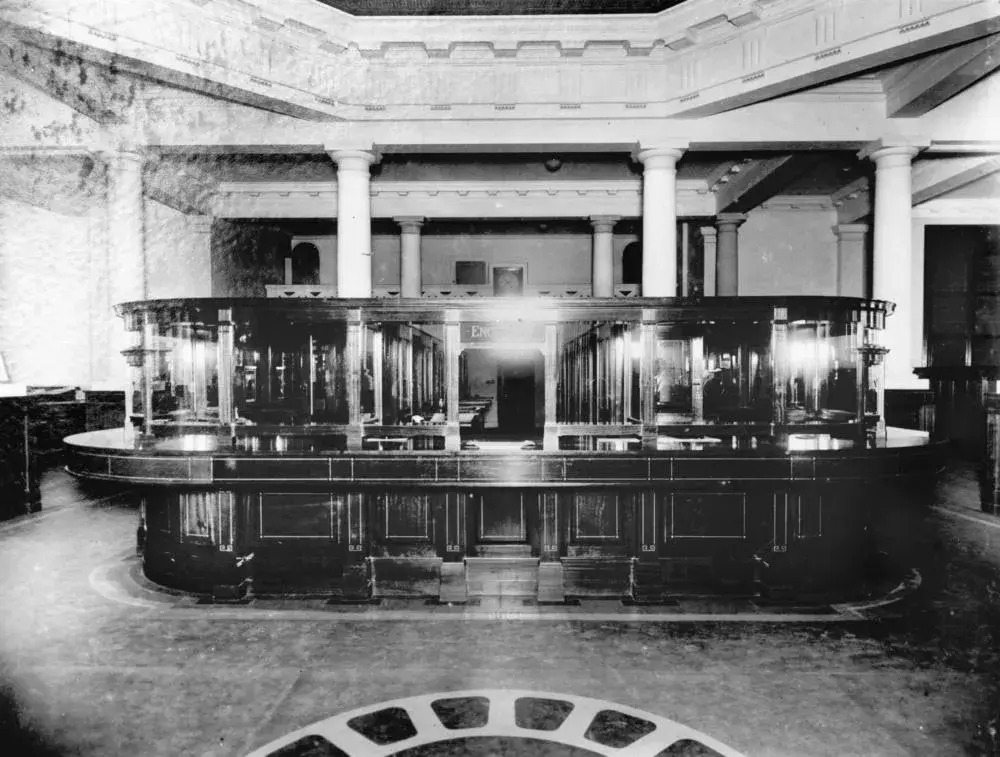
Here is the reference case, because it comes with numbers and defies intuition. From the mid-1990s, ATMs spread across the United States, eventually more than 400,000 installed. Everyone, including some bank executives, assumed this meant the end of the teller.5
What actually happened fits in three figures collected by economist James Bessen. Between 1988 and 2004, the average number of tellers needed to run an urban branch fell from about twenty to about thirteen. Branches got cheaper to operate, so banks opened more of them: urban branch counts rose 43 percent. And full-time-equivalent teller employment grew about 2 percent per year after 2000, faster than the labor force as a whole.56
The content of the job shifted under the feet of the people doing it. Handling cash mattered less; selling, advising and maintaining customer relationships became the real value, to the point where banks started talking about customer relationship teams. Bessen found the same pattern elsewhere: after barcode scanners arrived at checkout registers, cashier numbers went up; after e-discovery software reached law offices, paralegal numbers went up too.57
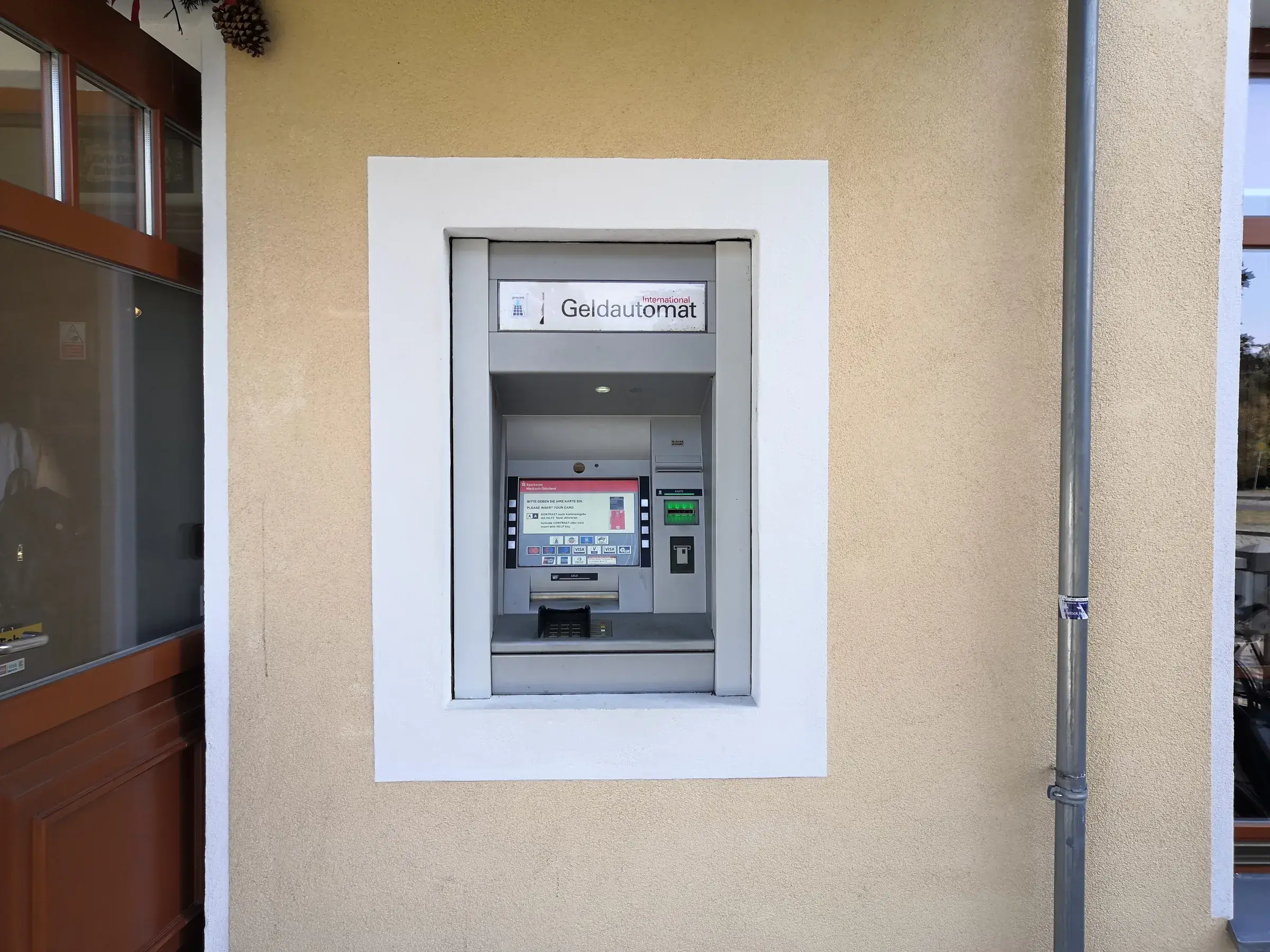

The epilogue deserves as much honesty as the boom. Bessen himself was not selling eternity: by 2016, the US Labor Department already projected teller employment to fall about 8 percent over the following decade.7 The wave that eventually emptied branches wasn't the ATM but mobile banking, which moved customers out of the building entirely — something the cash machine had never done. The mechanism Autor and Bessen describe — automate the task, transform the job, wait for the next wave — remains accurate. It just implies the transformation lasts only until the next wave arrives.
Stop training them
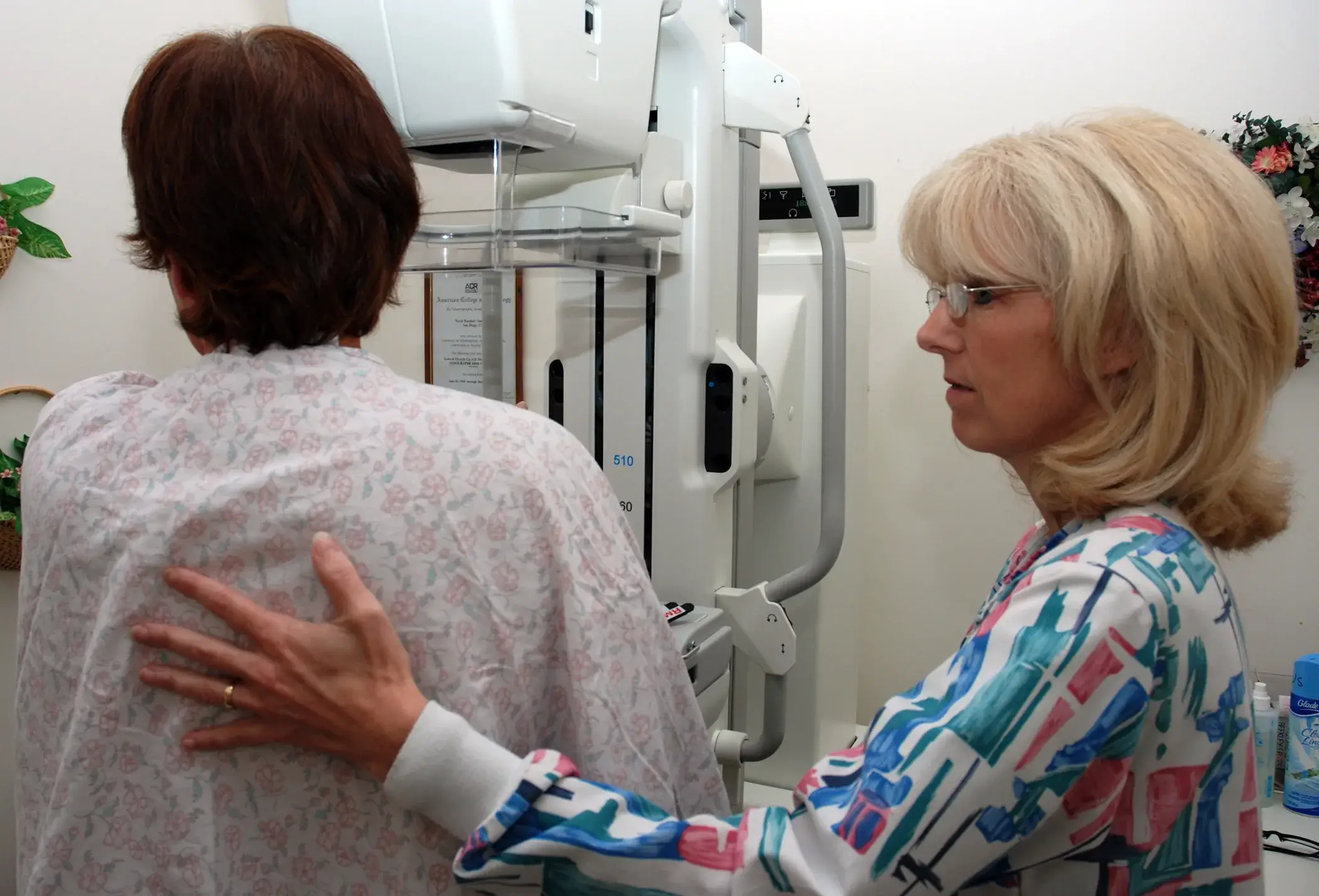
In 2016, Geoffrey Hinton, now a Nobel laureate in physics, gave the bluntest advice in the recent history of applied AI: in his view, people should stop training radiologists, because within five years deep learning would read images better than they do. He added that we have plenty of radiologists already, and compared the practicing professional to a coyote already over the edge of the cliff, simply not yet looking down.8
Ten years later, the scorecard reads almost like comedy. The New York Times reported in May 2025 that the Mayo Clinic in Rochester grew its radiology staff by 55 percent since the prediction, up to roughly 400 radiologists. The American College of Radiology forecasts the specialty's physician supply will grow another 26 percent over the next thirty years. Mayo runs more than 250 AI models concentrated in radiology and cardiology, described by its department chair as tools to "make us better".9 According to a perspective article published in 2025, about three quarters of FDA-cleared AI-based medical devices target radiology, and specialist shortages remain severe: the UK expects 40 percent of consultant posts unfilled by 2028.10 Fortune put specialty salaries at up to $571,000 in early 2026.11
Hinton has since walked the prediction back: he spoke too broadly and meant only image analysis, and he says he got the timing wrong though not the direction. Maybe. What the case already demonstrates is that the automatable part — recognizing patterns in pixels — was the beginning of diagnosis, not its end. Imaging demand grew faster than AI could absorb it, and the remaining work demands more specialization, not less.910

Eleven minutes for two
Customer service offered the cleanest full-scale test, because one company published the numbers first and the retreat afterward.
February 2024: Klarna presents its OpenAI-powered customer service assistant. Within a month it handles 2.3 million conversations, two-thirds of the company's service chats, doing the equivalent work of 700 full-time agents. Errand resolution drops under two minutes from eleven before, repeat inquiries fall 25 percent, and the company estimates a $40 million profit improvement for the year.12 Klarna had frozen hiring around that time, then let headcount sink 22 percent to roughly 3,500 employees, mostly through attrition.1314
May 2025: CEO Sebastian Siemiatkowski tells Bloomberg that Klarna is hiring humans again, explaining that the chatbot produced lower-quality outcomes and that it is critical for the brand that customers know there will always be a human if they want one.1314
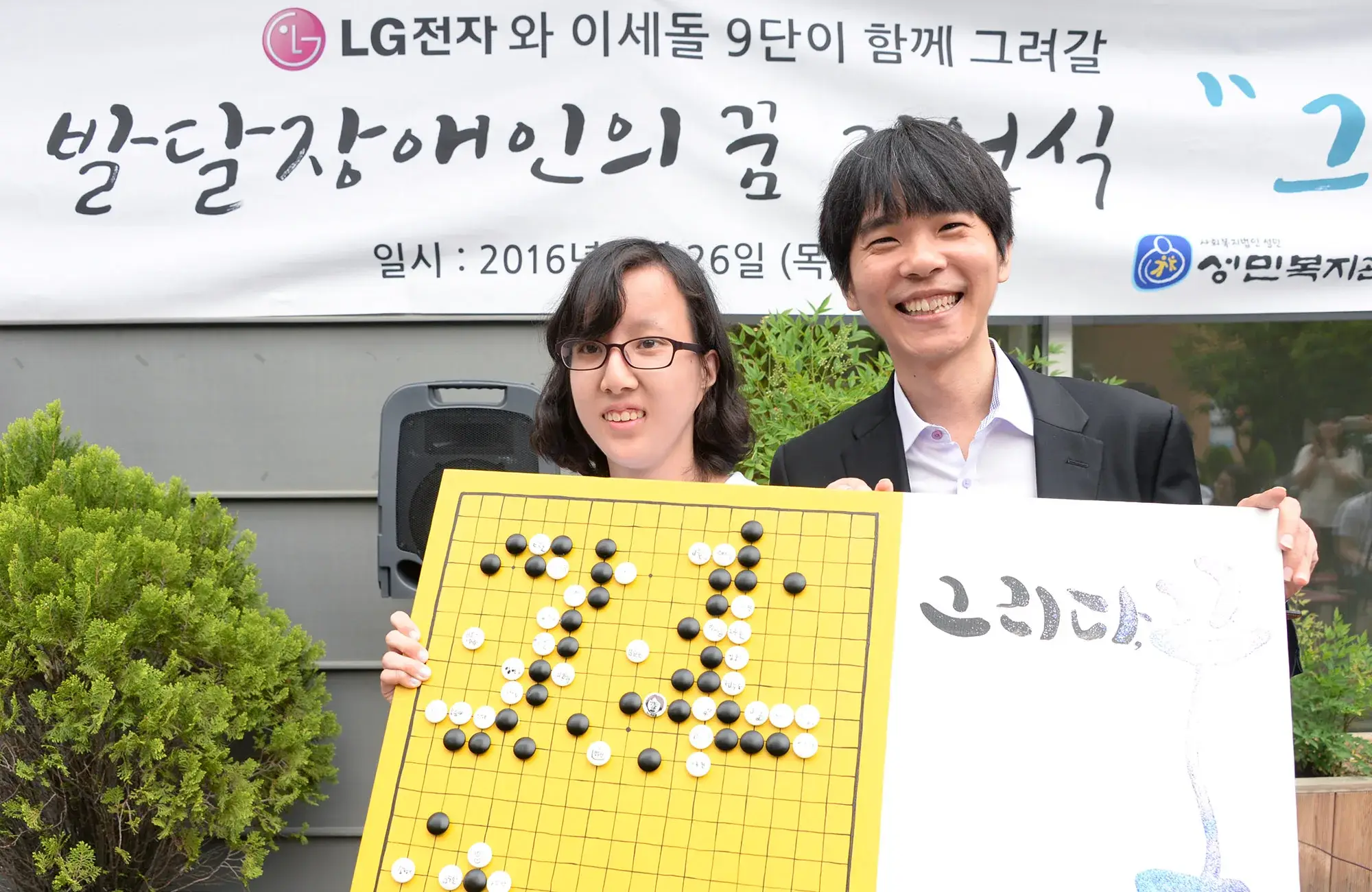

Wait — the image above shows Lee Sedol, and I'll get there. Finishing Klarna first, because one nuance keeps things honest: the 700-agent-equivalent figure never meant 700 layoffs. Klarna's service agents worked for external outsourcing partners, and the company clarified that when Klarna needed less support, those people were reassigned to other clients. The February 2024 communication deliberately blended technical performance with workforce compression; the company denied any direct link.15 What is unambiguously documented is the hiring freeze, the accepted attrition, and the explicit return to human staff once quality disappointed.
The task/job reading here is almost clinical. The task — resolving a standard ticket — got nailed: faster, cheaper, identical satisfaction scores on simple cases. The job of customer service at a company that lends money includes something else: being seen as accountable for your financial problems. That part, invisible in ticket metrics, is what brought the humans back. You can call the reversal cynical or lucid; either way it validates the distinction rather than refuting it.
Slower, feeling fast
Developers deserved a serious measurement, because they are generative AI's loudest self-declared beneficiaries. METR, an independent AI evaluation organization, ran the most careful randomized controlled trial available: in 2025 they recruited 16 experienced developers, drew 246 real tasks from open-source repositories those developers knew for five years on average, randomly assigned every task to an AI-allowed or AI-disallowed condition, and let them use tools of their choice such as Cursor Pro with Claude 3.5/3.7 Sonnet.16
Before starting, developers forecast that AI would shorten their tasks by 24 percent. Afterward, they estimated a 20 percent gain. The clock says the opposite: 19 percent longer with AI.16
METR frames its own result honestly: a snapshot of early-2025 tools in one setting, not a verdict on the future of assisted coding. In February 2026 the organization explained that follow-up data had become hard to interpret because of selection effects, and changed its protocol.17 Whether +19 percent ages well or badly, nobody knows yet.
But the gap between feeling and stopwatch tells our story exactly. Writing code is the visible, measurable slice of the activity; generating code is fast and feels like progress. The real bundle also includes deciding what deserves to exist, reviewing, arbitrating, staying accountable for the result — and that bundle didn't move in the right direction. Pai's phrasing applies again: implementation got squashed, decisions arrive sooner, and decisions are what cost.
A collapsed world
Now Lee Sedol, because an essay that only inspects its friendly examples isn't worth much.
March 2016: AlphaGo beat the best player of his generation four games to one. Lee won game four with move 78, so unexpected it was called divine — the only human match victory against that system.18 November 2019: he announces his retirement, telling Yonhap that even if he became number one again, an invincible entity would sit above him.19 July 2024, in the New York Times: losing to AI, he says, meant his entire world collapsing; he could no longer enjoy the game, so he stopped.20
The case doesn't refute the thesis; it draws its border. When a profession is defined entirely by performing the task — being the human who plays best — automating the task removes the heart of the job, and little survives around it. Go as a practice survived and even flourished: professionals study engine moves, amateurs play in greater numbers. Go as top-level competition lost its meaning for the man who embodied that summit. Elevator operators met the extreme version of the same mechanism, when reliability and trust caught up with the machine. So the useful question to ask in front of any automation announcement becomes: what share of this job is pure task performance, and how much lives around it?
Around the task
Setting the four cases side by side shows what "around" concretely means.
For the teller: selling, advising, carrying the relationship. For the radiologist: integrating the image into a patient's story, making the call, answering for it in front of patient and team. For customer service: embodying a company that can be held accountable. For the developer: choosing what deserves to exist, reviewing, arbitrating, owning the outcome. Pai lists the same things on the software side: noticing users ask for the wrong thing because they lack vocabulary for the right one, seeing two individually sensible features make the product worse together, picking one defensible direction among several, bringing people along, shipping, living with it.1 His defense of the product manager role is tested by experience rather than theory, which is why it lands.
Three clarifications complete the picture. First: none of this is a protection law. Acemoglu and Restrepo measure precisely that reinstatement is weakening, and the teller may well end up joining the elevator operator; the task/job distinction explains what happens, it doesn't promise everything will be fine.45 Second: surviving jobs are not identical to themselves afterwards — the relationship teller wasn't doing the 1970 teller's job, and Bessen notes skill requirements climbed. "The profession survived" does not mean "every person landed softly." Third: flattering numbers usually come from the company itself, as at Klarna; treating them as measurements rather than communication is the minimum prudence.
The agency scale
That leaves the consequence for tool builders. If the value sits around the task, then "where do we put an agent?" is the wrong opening question, and Pai replaces it explicitly with: what is this person trying to do, which parts are tedious, where are they blocked on missing expertise, which part is the reason for everything else?1
A Stanford team built the best dataset available today to test that idea at scale: 1,500 workers across 104 occupations surveyed on 844 tasks, capturing for each the agent autonomy level workers want, checked against AI experts' assessment of what is technically feasible. They call it the Human Agency Scale, from H1 (agent handles everything alone) to H5 (human presence essential).2122
Two findings give Pai's intuition empirical flesh. The level workers most often want is H3, equal partnership, dominant in 47 of 104 occupations — neither total delegation nor a discreet tool, but a teammate. And on 47.5 percent of tasks, workers want to keep more agency than experts consider technologically necessary; the gap reaches two full levels on 16.4 percent of tasks.21 Translated: a substantial chunk of the sector's automation effort builds products the affected people don't want as-is, while actual demand points toward finer collaboration shapes than the binary automation-versus-augmentation debate.
Pai ends his essay with a phrase he suspects sounds printed on a cloud provider's tote bag: turn intelligence into a ladder. The rest of the essay gives the slogan precise content. He spent years becoming a programmer before touching the leverage code represents; the question he cares about is whether artificial intelligence can lower the prerequisites for accessing that leverage, for people who have no time, money or desire to reorganize their lives around a terminal.1
That is also the most honest question to put to every agent demo. Not "which task did it automate?" — that answer always arrives, spectacular. But: who keeps judgment, who carries responsibility, who coordinates, and does the tool leave the profession bigger than it found it?