A prototype usually comes after the idea. You draw something, reduce it, make it, then check whether the physical object behaves as expected.
At TAKK, salazarsequeromedina and Ensamble Studio, the order is messier. They make things while some decisions are still open. The weight of a part, how it can be held, the resistance of a joint, a salvaged fragment or a form produced by hand can still redirect the project.7
The prototype is no longer merely a small proof. It becomes a question put to matter.
That sounds like a concern for architects. It is not. It suggests a simple rule for almost any maker: when an important unknown depends on the physical world, continuing to solve it inside a file may be the slowest method available.
Matter answers
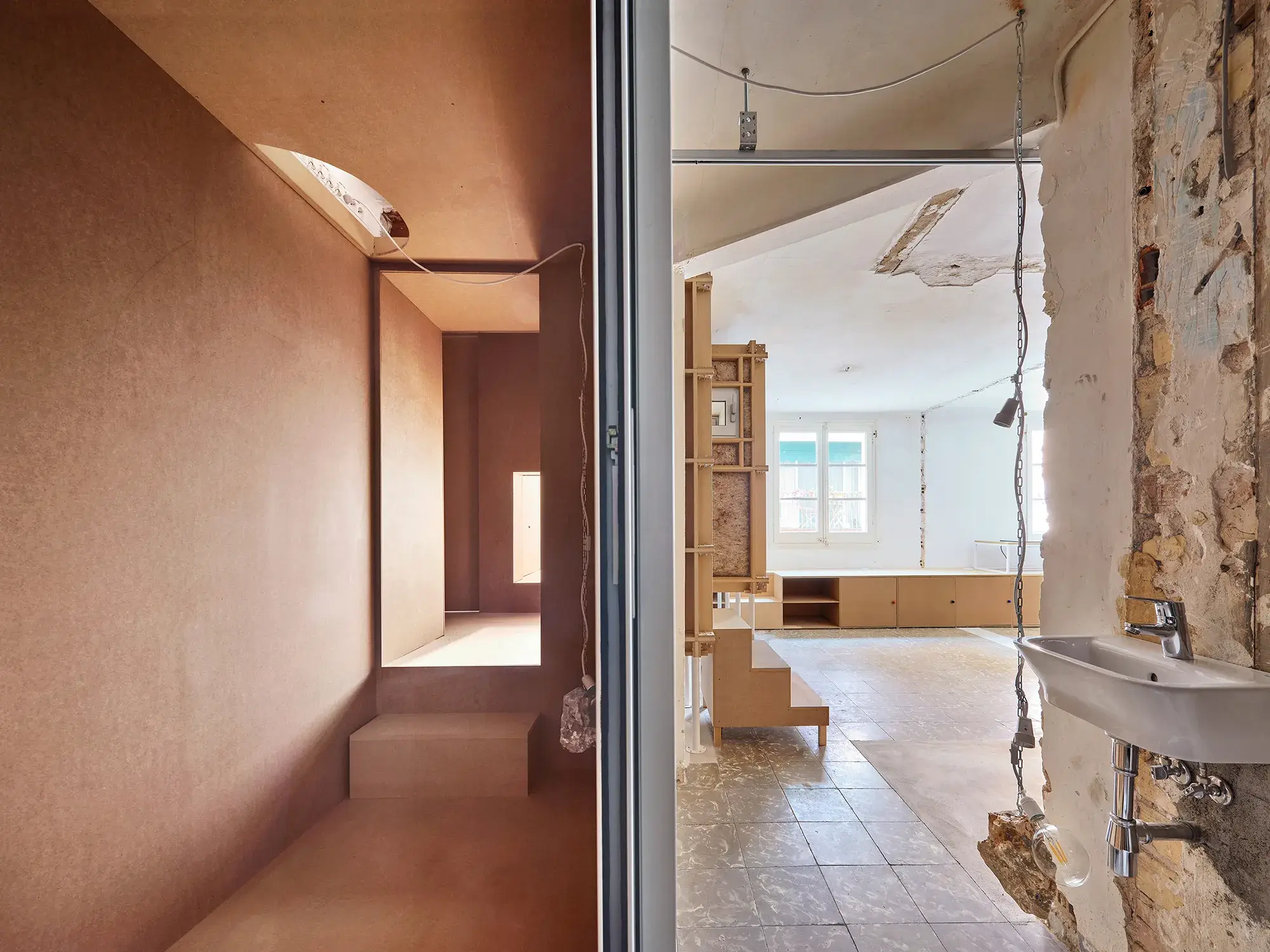
TAKK's 10K House is a 50-square-metre apartment renovation in Barcelona with a stated material execution budget of €10,000.1 The constraint is not hidden behind the project. It organises it.
The studio reduces the palette sharply: standard MDF panels, local sheep wool and reused components. New elements are raised on old table legs so water and electrical services can pass underneath. Parts are CNC-cut from drawings, then dry-assembled with standard screws by the architects and client.1
On a drawing, that system can already look resolved. In the hand, different questions appear. Can two people actually carry a part? Does the screw land where a screwdriver can reach it? Does a panel flex during assembly? Can the system be taken apart without destroying its neighbours?
This is where the prototype earns its place. It moves a decision closer to the moment when being wrong becomes expensive. A misplaced detail discovered on screen is abstract. The same detail discovered when four panels refuse to meet is suddenly very educational.
This is not a rejection of digital work. TAKK develops projects through detailed digital drawings and uses CNC fabrication.7 The useful distinction is between digital precision and complete knowledge. A model can know a dimension to a tenth of a millimetre without knowing whether the person assembling the object can physically fit a tool into the joint.
Nothing stays final
For salazarsequeromedina, prototyping asks a different question: what happens to the thing after its first life?
For Entramados Materiales, made for the 2025 League Prize, the practice worked with cheap off-the-shelf materials, offcuts, demolition fragments and found objects. The structures are dry-assembled without adhesives so they can be dismantled and reconfigured.2
Its three main typologies have intentionally unstable names: Shelf/Tower, Table/Canopy, Bench/Bridge. They are not quite furniture and not quite buildings. The practice presents them as open-ended structures rather than finished solutions.2
In an Architectural League interview, Laura Salazar and Pablo Sequero explain that material process informs the outcome through economy of means, scarcity, offcuts and reuse.3 That is more interesting than attaching an environmental virtue to a finished form. The actual availability of pieces changes the form that can exist.
A prototype can then become a store of reusable decisions. A failed fragment is not automatically waste. An abandoned joint can reappear elsewhere. A temporary structure can be dismantled before its materials move into another use.
That changes what failure means. If a prototype produced knowledge and its components can enter another loop, making it disappear is not necessarily losing it.
Form shows up
Ensamble Studio takes the idea in another direction: fabrication can produce geometry that did not exist before the test.
The practice describes its office as a laboratory for research and prototyping, with design and construction treated as inseparable processes.4 Its manifesto is unusually clear about the method: thinking with the hands and controlling processes more closely than predetermined results.4
The Truffle is almost an absurdly perfect demonstration. To make the small building on the Spanish coast, the team excavated the ground, piled earth around the hole, built an inner volume from hay bales and poured concrete between them. Once the concrete hardened, the earth was removed and the resulting mass was cut with quarry machinery to reveal its interior.5
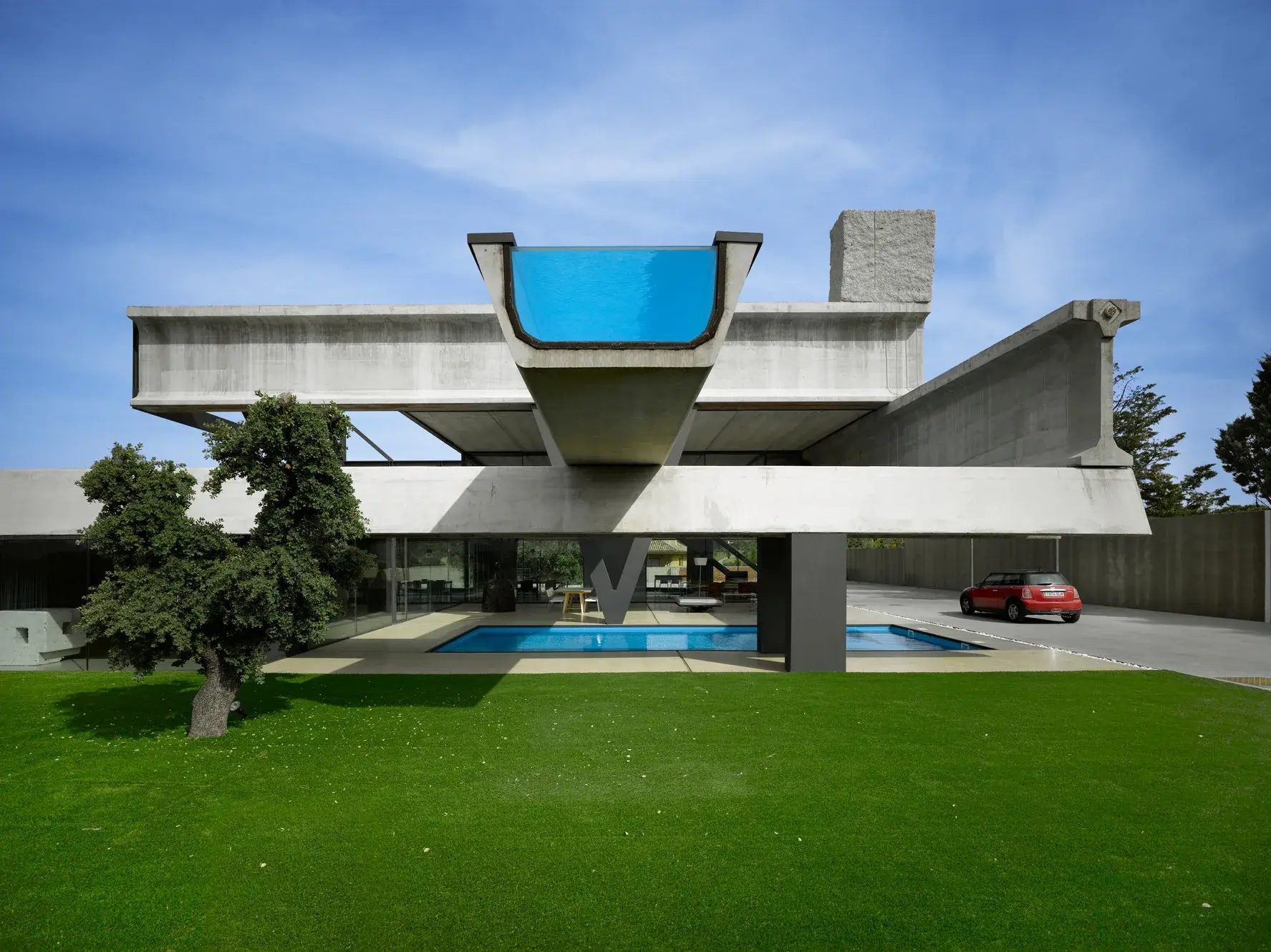
Making is not reproducing a geometry settled elsewhere. The process owns part of the authorship. Concrete pressure, earth acting as formwork and the final cuts create information that would be difficult to invent convincingly in a drawing alone.
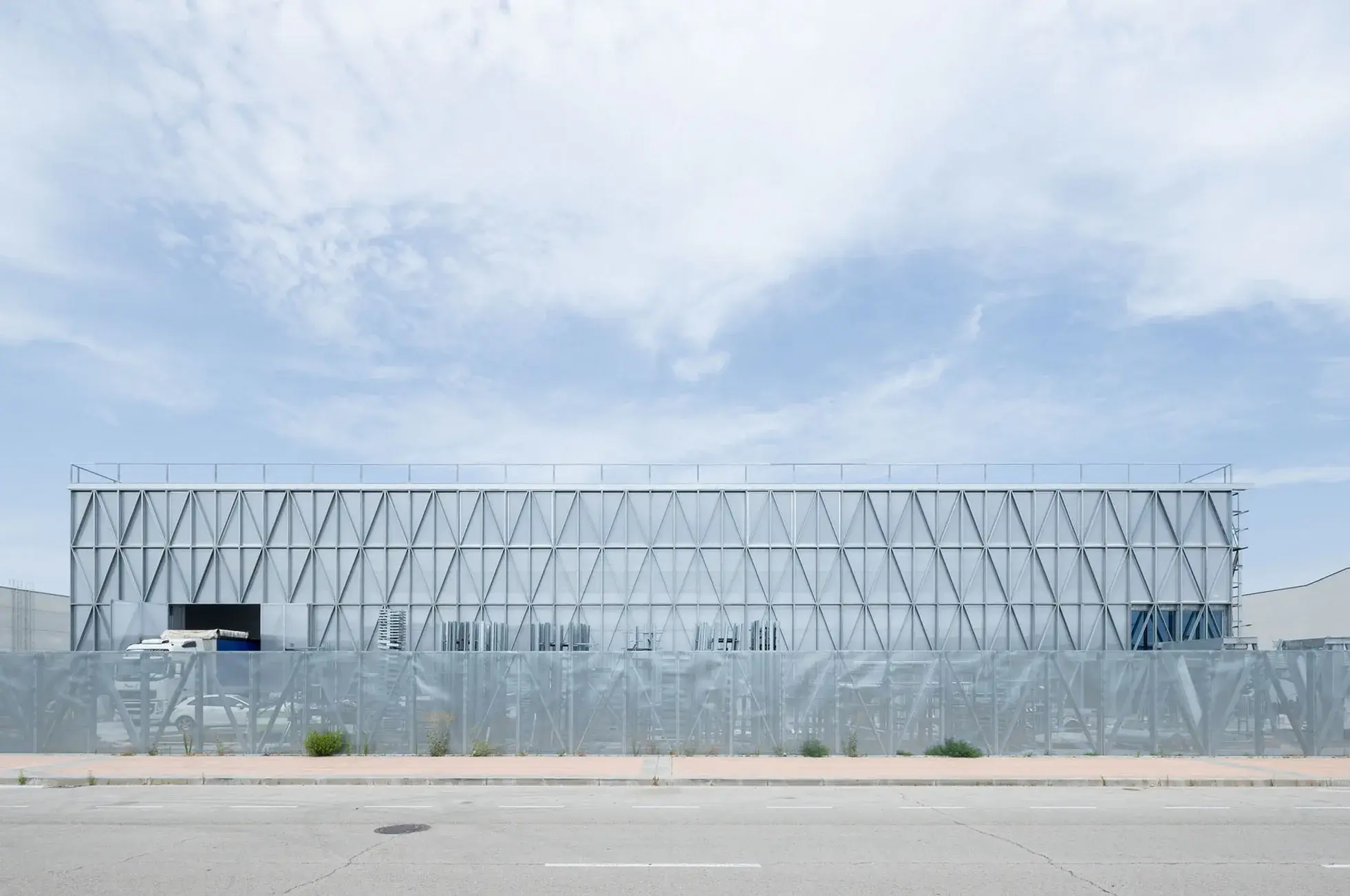
The same logic becomes infrastructure at Ensamble Fabrica, the Madrid workshop-laboratory completed in 2019. The studio describes it as a place for developing prototypes, prefabricated components and systems that can later be assembled on site.6 Fabrication is not a contracted phase after design. It remains inside the design loop.
The right prototype
The shared idea is therefore not “make more models”. It is to choose a physical object that can answer an unknown that still matters.
TAKK asks: can this system actually be assembled with the materials, budget and people available?
salazarsequeromedina asks: can this thing change, come apart and keep value after its current configuration?
Ensamble Studio asks: what can this process teach us about a form we do not yet know how to draw?
The contrast matters because it prevents the useless advice to “prototype more”. Prototypes consume time and material. If a prototype can no longer change a decision, it risks becoming a handsome validation object made after the difficult thinking is already over.
A better starting question is the inverse: which important decision is still too abstract?
For furniture it might be the real weight of a tabletop. For electronics, heat trapped inside an enclosure. For clothing, a fold that only exists in motion. For software connected to machinery, the gesture of a person standing in front of the device. For a workshop, the path a material takes between two stations.
The useful prototype does not have to be faithful to the final object. It has to be faithful to the problem.
That idea also appears beyond these three practices. In the 2026 Málaga exhibition Archipiélagos. Arquitectura sin centro, curator Álvaro Carrillo describes building a physical model as a way to leave the computer, slow time down and think, while presenting a younger generation of practices working under tight budgets and material constraints.8
We can simulate an extraordinary amount before making anything. Good. But a simulation answers the questions we thought to ask. An MDF panel that is too heavy, an unreachable screw or concrete that settles into an unexpected shape has a less comfortable advantage: it can ask a better question than we did.