In the late 1990s, a rapper could spend weeks with the same beatmaker partly because there were not fifty alternatives sitting one click away. You had to find somebody who owned the machines, knew how to use them, had records, knew what to listen for inside those records, and could turn a few seconds of material into a track. The relationship could come with arguments, refusals, imposed ideas and, eventually, a sonic color that stuck to the group.
In 2026, BeatStars displays more than 11 million uploaded tracks, more than 10 million creators, and more than $450 million paid to creators.3 An artist can search by style, mood, BPM or the name of another artist, open ten tabs, hear twenty seconds from each, and buy a license without ever speaking to the person who made the instrumental.
That is a remarkable improvement if you live somewhere with no local producer scene. It is also a strange place for the producer to end up.
The video that started this article asks the question directly: has the beatmaker become disposable? Its author remembers a time when knowing how to operate the machines made a producer valuable almost by default. Today, he says, an artist can receive hundreds of beats and move to the next tab without even remembering a producer's name.1
It is a compelling intuition. It is also perfectly designed to become a “things were better back then” story. So I tried to break it.
I looked at the tools, marketplaces, licensing systems, loopmakers, streaming interfaces and a small set of French album credits separated by twenty-four years. The result is more useful than nostalgia: the beatmaker did not disappear. Parts of the old job were distributed across several people, several pieces of software and several platforms.
What could once be concentrated in one person can now become a chain. A loopmaker writes the melody. A beatmaker adds drums. Another producer rearranges it. The artist chooses. A marketplace sells the license. A distributor sends metadata. Spotify finally decides what it can display in the credits.
The job is still here. It was split into pieces.
When knowing the machine was already part of the value
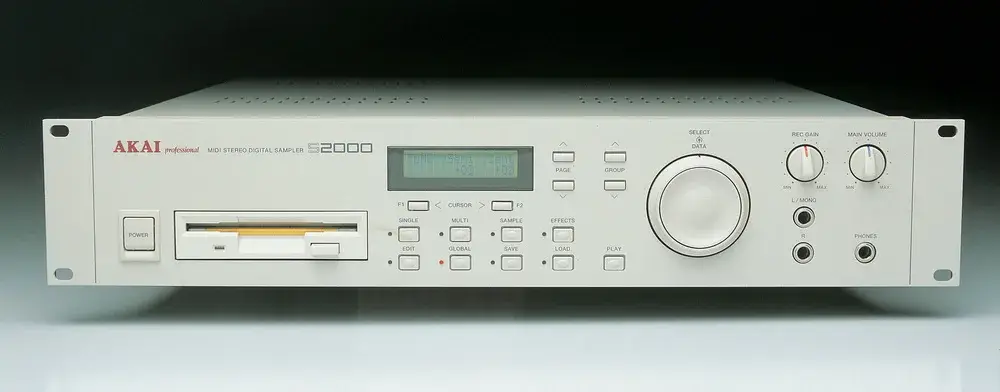
The source video keeps coming back to the Akai S2000 as a symbol of an era. It is not a random museum prop. When Sound On Sound reviewed the sampler in 1995, the base machine cost £999.2 The magazine actually considered that aggressive pricing for a professional sampler.
That does not mean an S2000 was mandatory for rap production, or that every bedroom studio required the same investment. There were other samplers, second-hand gear, workarounds, borrowed machines and people who could do an absurd amount with very little. But the S2000 gives the old barrier a concrete scale. Serious sampling could begin with a single box that represented a serious budget for a teenager.

Money was only one part of the friction. Sampling meant finding source material, capturing it, chopping it through an interface that had little in common with a modern touch screen, then sequencing around real limits in memory and storage. Learning was different too. There was no endless supply of instant video tutorials for every obscure menu. You watched someone else, read a manual if you had one, experimented, and memorized the sort of nested commands apparently designed by engineers who believed all musicians secretly wanted a second career in menu navigation.
That difficulty had a simple economic effect: it reduced the supply of available producers.
Scarcity did not guarantee talent. Owning a sampler did not turn anyone into DJ Mehdi or Imhotep. But it increased the practical value of someone who could produce well. Once a crew found a person capable of building a coherent sound and understanding its rappers, replacing that person took actual work.
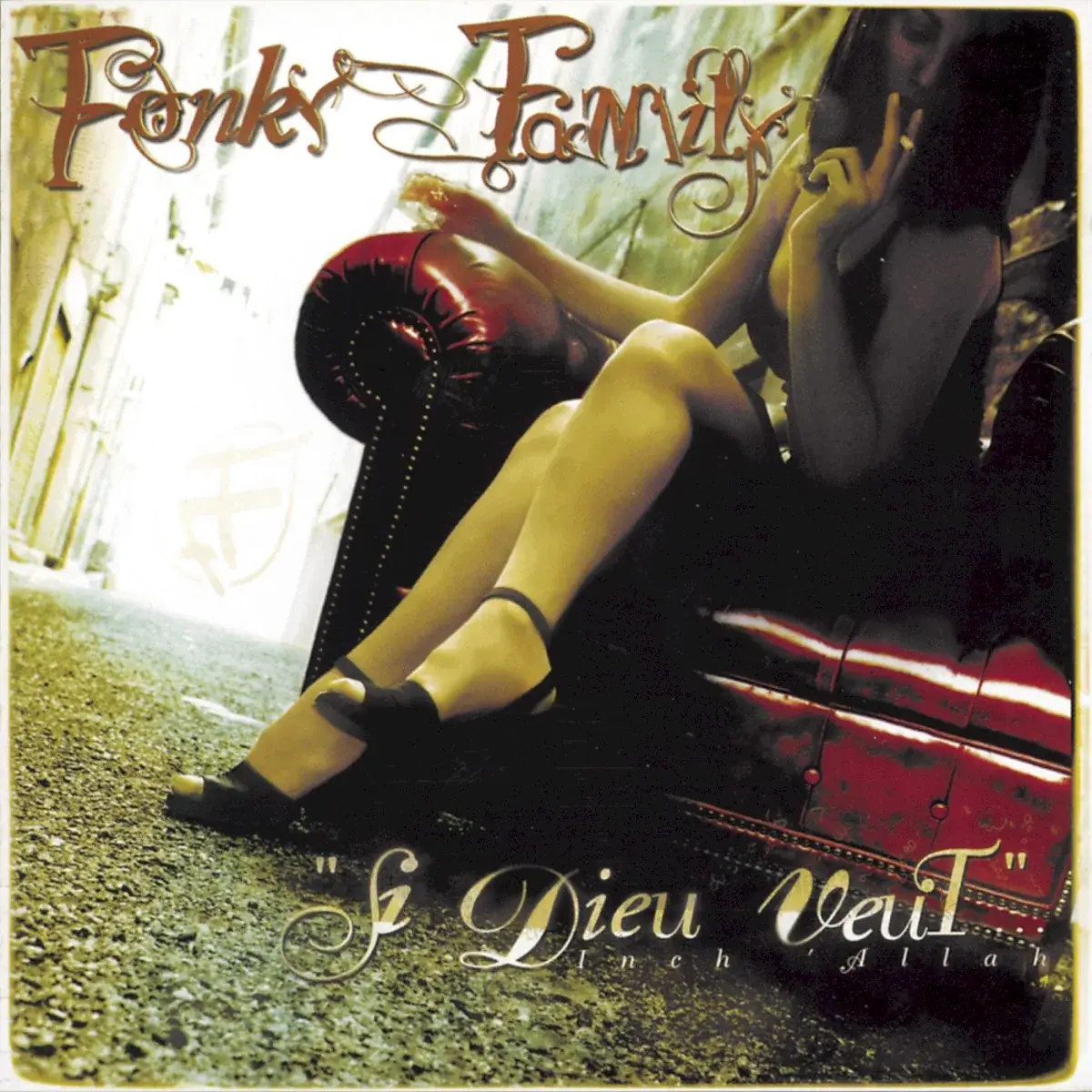
Fonky Family offers a useful image of that integration. In Qobuz's credits for Si Dieu veut..., Pone and Djel repeatedly appear together as producers and composers.18 That does not prove every group in the 1990s worked around such a tight production core. It shows one very visible model of the period: the producer could be inside the team rather than outside it with a cloud folder and a license price.
That proximity also changed creative power. A beatmaker could bring in a strange idea and insist. They could make something that was not yet a search category. They could say no. They could let a track sit unfinished for three days instead of delivering five “same vibe” variations before dinner.
Talent still matters now. Back then, talent was also helped by something far less romantic: friction.
Then the scarcity of the hardware collapsed
Today, production rarely requires finding an available rack in a studio. A laptop is usually enough. Sometimes a phone is enough.
BandLab says its platform has more than 100 million creators and fans.8 That is obviously not the same thing as 100 million professional beatmakers. It indicates something else: software-assisted music creation has become accessible at a scale that would have sounded ridiculous in the rack-sampler era.
That lower barrier created something genuinely valuable. People who would never have entered a commercial studio can learn, record, publish and collaborate. A teenager in the Netherlands can make a beat in his room and sell it to an American rapper. That is essentially the YoungKio and Lil Nas X story.
In November 2018, Lil Nas X bought a $30 license for the beat that became Old Town Road. YoungKio was based in the Netherlands. He had almost decided not to upload the instrumental because he thought it was too different from what was popular. According to his account to ABC News, the contract also gave him 50 percent of the publishing.11
That detail matters. The marketplace reduced the cost of the meeting almost to zero. No shared label. No studio appointment. No local scene. The two had not even met in person when the song started taking off. Yet the standardized contract did not automatically erase the producer's economic value. In this specific case, YoungKio credited the contract with helping preserve his share when the song became enormous.11

That is the first contradiction of the modern system: the same infrastructure that makes a producer easier to replace also makes that producer dramatically easier to discover.
You can produce from almost anywhere. You can sell almost anywhere. Reaching an artist is no longer reserved for producers who happen to live near a studio, a label or an established scene.
In return, everyone enters the same queue.
Eleven million tracks: abundance becomes the problem
In 2026, BeatStars says it has more than 11 million uploaded tracks, more than 10 million creators and more than $450 million paid to creators.3
Those are BeatStars' own figures. They are not an independent audit and they do not tell us how many accounts earn a living. They do tell us how large the shelf has become.
A marketplace at that scale changes the relationship before any music is made together.
BeatStars presents tracks as comparable objects: artwork, play button, price, tags, genre and, often, promotional offers.4 The interface does exactly what it should do. It helps an artist find something useful quickly.
That is also where the feeling of disposability starts.
Replacing a producer embedded in a team means replacing a relationship. Replacing a file in a grid means opening the next file.
Calling the beat a product is not an insult here. BeatStars is explicitly a marketplace. Producers set prices, sell licenses and run offers. Its help center says the same beat can be sold non-exclusively as many times as the producer wants, while an exclusive license can only be sold once.5 A BeatStars buying guide historically described $15 to $100 as common non-exclusive prices and $100 to $1,000 or more for exclusives.6
A beat therefore becomes an unusual economic object. It can be unique as a creation and multiple as a licensed asset. Several artists can legally use the same instrumental under different terms. The producer is no longer paid only for a session or a project. They can manage a catalogue of rights.
That creates a whole second set of skills. Titles. Tags. Pricing. Contracts. Thumbnails. Customer messages. Upload cadence. Search behavior. The independent beatmaker can end up looking almost as much like a small online retailer as the romantic studio figure we imagine hunched over an MPC in a cloud of smoke.
The platform did not make the producer useless. It put the producer inside an almost infinitely expanding supply.
The “type beat” turned resemblance into search infrastructure
The cleanest symbol of this transition may be two words everyone in online production now understands: type beat.
Search for a famous rapper followed by “type beat” on YouTube or a beat marketplace and the promise is immediately legible. The producer is not simply saying, “here is my music.” The producer is saying, “if you want the sonic territory associated with this artist, start here.”
Pitchfork was already documenting unknown producers building substantial businesses from selling and leasing type beats in 2018.10 The mechanism is clever because it turns a visibility problem into a search problem. An unknown producer can temporarily borrow the demand attached to the name of Drake, Future or another established artist and direct some of that demand toward their own catalogue.
It also changes the cultural ideal.
In the producer-signature model, the dream is often that listeners recognize your sound before seeing the credit. In the type-beat model, the first commercial step may be making your sound recognizable as close enough to somebody else's.
Those paths are not mutually exclusive. Producers can begin with type beats, meet artists through them, develop a stronger identity, and eventually become the name other producers put in their own titles. Type beats can be an acquisition channel toward a much more personal career.
But the market still rewards the ability to answer an identifiable demand quickly.
“I need something dark in this direction.” “I want jersey.” “Give me a guitar like...” “I need drill.” If ten competent producers can answer the same brief well enough, bargaining power moves toward the person doing the choosing. It is ordinary economics, except the market stalls are full of kicks and 808s.
The beatmaker does not become disposable because the craft suddenly became easy. The beatmaker becomes easier to replace when the craft is perceived as substitutable.
That distinction matters.
Splice split the job again: the raw material became a service
The beat marketplace sells finished instrumentals. Splice goes one layer down and organizes the material used to build them.
Its desktop app lets producers browse and preview sounds, drag samples into a DAW, and audition material against the project's key and tempo through Splice Bridge.7
The useful reaction is not “that is cheating.” A sample pack has never arranged a song by itself. It does not know what to remove. It does not know why a guitar works better if it disappears just before the hook. Producers have always used existing material: records, session players, drum machines, presets, libraries, samples and interpolations. The fantasy of the creator producing matter from a perfect vacuum is mostly useful to people making documentaries about creators.
What changed is the fluidity.
Steps that once required separate searching and collecting now sit closer to the project. The sound is indexed. The tempo is known. Licensing is already considered. The sample can be previewed in musical context. That shortening of the path fits into what researcher Yngvar Kjus describes as the “platformization” of music production: DAW companies and adjacent ecosystems expand into sample sales, education, instruments, services and other markets around musical work.12
The studio becomes a service environment.
And when the studio becomes a platform, tasks that once sat inside one producer's routine can become separate specialties.
Then came the loopmaker
This is where the title of this article becomes literal.
In 2020, Pitchfork documented a role that had already become significant in American rap production: loopmakers create melodies, chord sequences, guitar parts or textures, package them as loops, then send those files to producers who are closer to artists.9
Vikas Prasad, then still in high school, said he selected around forty of his best loops every two weeks and sent them to established producers he had met through Instagram. If one was used, the recipient might slow it down, transpose it, chop it, rearrange it, or simply build drums around it.9
Jetsonmade described loops as a more efficient form of collaboration. When he created an email address specifically to receive loop submissions, it crashed within ten minutes.9
That tiny detail explains the new market better than most industry charts. A producer who once had to search for someone capable of providing strong melodic material can now open an inbox and be buried under it.
The loopmaker does not “replace” the beatmaker. The loopmaker handles a piece of the work, much as session musicians have always done. The difference is speed, distance and volume. Files can travel around the world before any artist is even attached to the track.
Pitchfork also documented the power imbalance this can create. An unknown loopmaker far away from a label ecosystem can provide a defining element of a hit while having much less negotiating leverage than an established producer with direct artist relationships. Loopmakers interviewed for the story described problems getting paid or credited.9
Fragmentation creates entry points. It also creates invisible floors underneath the credited name.
A track can carry the name of a known producer even though its central melody came from a teenager who does not yet know whether the song will ever be released. At industrial scale, this begins to look less like the classic artist-producer duo and more like a compact logistics chain for creative decisions.
The word “beatmaker” survives. It now covers very different situations: the person writing melodies, the person doing drums, the person assembling the parts, the person pitching the beat, the person directing a session, the person selling hundreds of licenses, and the person spending months shaping an album with one artist.
We still call all of it “making beats.” The end credits are starting to look like television.
Two 16-track albums make the shift visible without proving an industry-wide rule
To see whether fragmentation leaves a trace in actual credits, I took two French albums with sixteen tracks, released twenty-four years apart. This is not a statistical study. Two albums do not represent an industry. They simply make the organizational difference visible.
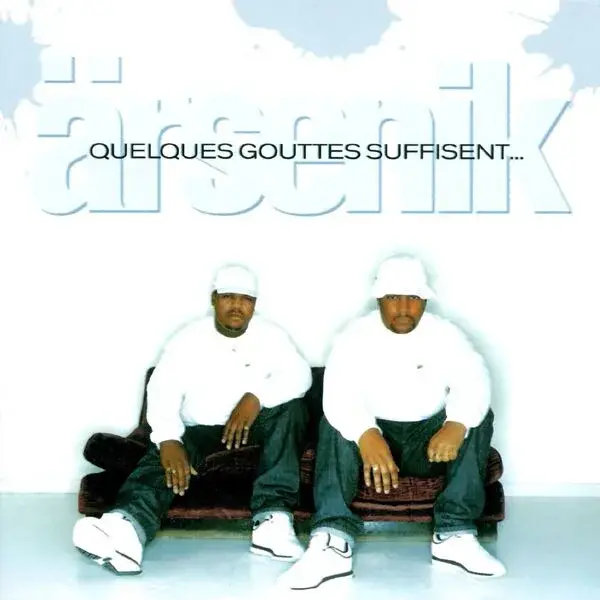
The first is Ärsenik's Quelques gouttes suffisent, released in 1998. In the credits displayed by Qobuz, Djimi Finger is listed as composer on fifteen of the sixteen tracks. The only exception in this version of the metadata is “Par où t'es rentré, je t'ai pas vu sortir,” which lists Chris as composer.15
The second is Tiakola's Mélo, released in 2022. In Qobuz's displayed credits, the sixteen tracks involve roughly twenty-four distinct composer names after obvious repeated names are deduplicated. Some tracks list one composer. Others list two, three or four.16


It would be easy to turn that image into a fake historical law. Plenty of 1990s albums used several producers. Plenty of recent records are still built around one tight production core. Qobuz metadata is not sacred scripture either. Names can vary, credits can be missing, and the distinction between composer and producer is not always represented the same way.
The contrast is still useful in these two cases.
On the Ärsenik album, the composer's name returns almost like another member of the group. On Mélo, the record's overall sound is built across a much wider circulation of specialists. Tiakola's 2024 BDLM VOL.1 makes the team model even more explicit: Qobuz describes the project as recorded with a large group of beatmakers including Boumidjal, Dany Synthé, Shiruken Music, Lyele and Richie Beats, while individual tracks can list several producers or composers.17
That is not automatically an artistic loss. A film is not less authored because it has a cinematographer, editor, composer, production designer and fifty technicians. The important question is where direction lives.
If no one assumes that direction, fragmentation can produce an efficient album without a clear sonic center. If somebody does, a record can have twenty producers and still feel coherent.
The issue is not the number of names. It is the difference between collaboration and interchangeability.
Visibility fragmented too
Even if the producer keeps a major influence on the track, the listener still has to encounter the producer's name.
Spotify says it displays the credits sent by labels and distributors, including producers, engineers, songwriters and featured artists.13 If information is missing or wrong, the label or distributor must resend the metadata. Spotify also notes that some distributors still do not support credits.13
It sounds like a small technical detail. It changes how audiences relate to the craft.
On a physical record, credits could live on the sleeve or in the booklet. Not everyone read them. Plenty of CDs spent their lives as coasters while perfectly good producer credits remained untouched inside the case. But the object at least provided a natural space for those names.
Streaming optimizes a different action: listening immediately.
Producer credits are available, but they do not sit at the same visual level as the performing artist. If the track arrives through a playlist, the surrounding context gets even thinner. A listener can know a song by heart and never encounter the names of the people who built its sound.
That is another way the role gets split. The producer keeps the creative contribution, while the identity of that contribution gets pushed into a secondary information layer.
The paradox is striking. It has never been easier for a beatmaker to publish work under their own name. It has also never been easier for a listener to hear a track without learning who produced it.
The producer with a strong signature did not disappear
If the new market had truly turned every producer into an interchangeable operator, eventually their personalities should become impossible to hear.
A 2024 case study by Tim Ziemer, Nikita Kudakov and Christoph Reuter offers a useful counterpoint. The researchers analyzed tracks associated with Dr. Dre, Rick Rubin and Timbaland using acoustic features related to dynamics, stereo space and spectrum. In their corpus, the producers occupied distinct sonic regions. The authors concluded that the producers had identifiable sound profiles and often exerted more influence over those profiles than the rappers studied alongside them.14
The researchers state the limitation clearly: this is a case study involving three unusual, highly influential producers. It does not prove that producers always dominate rappers across all hip-hop.14
It does destroy one lazy idea, though: shared software and shared sample sources automatically make production interchangeable.
Two people using the same DAW, the same sample and the same plug-in do not make the same decisions. They leave different amounts of space. They compress differently. They hear a different moment when one element should disappear. They make different mistakes and preserve different accidents.
Talent did not become a commodity when the tools did.
What became commoditized is access to production that is good enough to keep the song moving.
That helps explain why Metro Boomin can remain Metro Boomin while thousands of producers are technically capable of making something in his general direction. An artist may not only be buying drums and bass. They may be buying a name, an ear, trust, relationships, experience, and the chance that the producer suggests exactly the thing the artist did not ask for.

It also helps explain why some French producers are deliberately putting their own names back in front of the music. In 2025, Le Monde described Lyele and Tarik Azzouz releasing solo albums built around compositions that were more personal and eclectic than the material typically selected for other rappers' projects.19
That movement is almost the reverse of fragmentation. After years spent supplying music to other artists, the producer becomes the main artist and invites rappers into the producer's world.
Three beatmakers can share a job title while living in different economies
The single word now hides at least three businesses.
First there is the service beatmaker. This producer responds to a brief. They can work quickly, understand several styles and reproduce the broad direction of something already heard elsewhere. That requires real skill. It is also structurally replaceable: if the main value is meeting a standardized request, several people can meet it.
Then there is the catalogue beatmaker. This producer creates at volume, publishes consistently, thinks about search, sells licenses and turns inventory into revenue. Success depends as much on commercial regularity as on one long relationship with one artist. BeatStars and non-exclusive licensing made that model much easier to operate.35
Finally there is the producer-author. They may use exactly the same software and samples as the other two, but their value comes from taste and from the relationship with the artist. People come to them for decisions, sometimes precisely because they might reject the initial brief.
All three models can exist inside the same person during the same week. A producer can sell type beats to fund the business, send loop packs to collaborators, then spend four days locked in with an artist building a song neither of them knew how to describe beforehand.
That is why “has the beatmaker become disposable?” produces such an irritating answer.
Some beatmakers have become more substitutable. Beatmaking itself has become larger.
There are more entry points, more ways to get paid, more chances to collaborate across distance, and more specializations. Each new entry point also creates another layer in which someone can be forgotten, underpaid or reduced to a file in an inbox.
Democratization did not eliminate power relationships. It moved them.
Attention is now the most expensive machine
In 1995, the problem could be buying the sampler.
In 2026, the problem is often being the producer somebody listens to among millions of alternatives.
That may be the biggest shift in the whole story.
When the means of production are scarce, owning and mastering the tool creates leverage. When those means become abundant, leverage moves toward distribution, reputation and selection.
The 1998 producer could run out of RAM. The 2026 producer runs out of other people's available listening time.
That is why the peripheral skills became so important: tags, thumbnails, networks, upload cadence, email, placements, relationships with connected artists, and the ability to make sure the final credit actually survives the metadata chain. Platforms removed a lot of technical friction. They did not remove competition. They made competition global.
And that is where the memory in the source video stops sounding quite so nostalgic.
When its author asks how the person everybody once wanted on the team ended up hoping somebody would open an email, he is mostly describing a reversal in scarcity.1
Artists once struggled to find producers.
Now producers struggle to win artists' attention.
The hardest machine to acquire is no longer necessarily the sampler. It may be three minutes of serious listening from somebody who already received two hundred links.
The least replaceable beatmaker may be the one you cannot summarize as a service
It would be easy to end with “develop your identity.” True, and about as useful as telling a restaurant to make good food.
The better question is: what remains hard to substitute?
A sample library can supply texture. A loopmaker can supply melody. A marketplace can supply a finished instrumental. A license template can supply a contract. A tutorial can explain the rhythm everybody is using this month. None of those things know why one particular song needs to become emptier, slower, uglier or stranger to work with one particular artist.
Somebody still has to make that decision.
Sometimes it is the rapper. Sometimes the beatmaker. Sometimes an artistic director. Sometimes it is a small team that has worked together long enough to become impossible to split cleanly.
That may be where the old figure of the producer returns. Not as the gatekeeper of a scarce machine. As the keeper of a direction.
Beatmakers have never had more ways to produce. They have never had more ways to sell. They have never had more competitors or more potential collaborators.
The job did not become smaller. It became enormous, distributed, sometimes anonymous, and much harder to see as one coherent thing.
We keep calling all of this “making a beat” because at some point somebody has to choose a label for the dropdown menu.
But behind the final audio file there may now be a licensed sample, a melody emailed from another continent, drums added in a bedroom, a studio rearrangement, an automated license, a publishing agreement, and a credit that gets lost somewhere between the distributor and Spotify.
The beatmaker did not disappear.
You just have to look at all the pieces the job was split into.